
Introduction
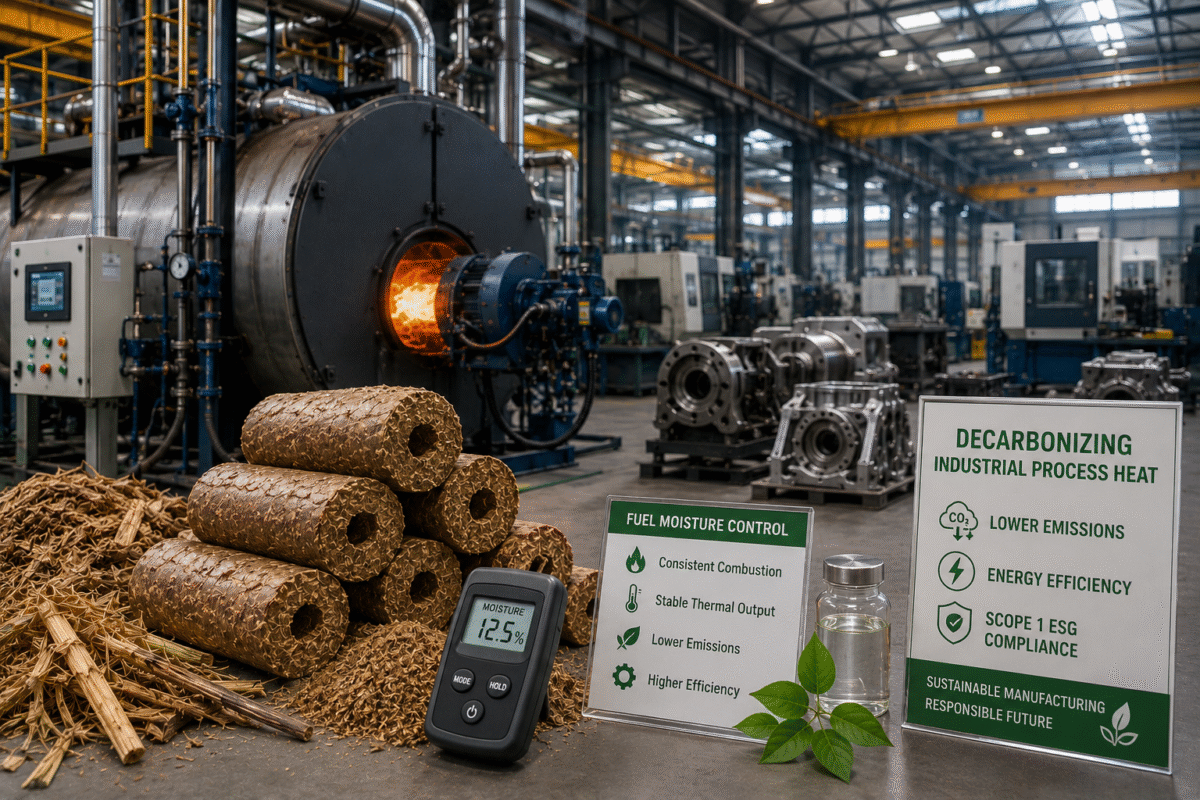
The global transition to renewable energy is no longer just an environmental checkbox; it is a core operational strategy for forward-thinking manufacturing companies. As plants replace fossil fuels like coal or furnace oil with agri-waste briquettes—compressed from agricultural residues like groundnut shells, rice husks, or stalks—they significantly lower their carbon footprint and align with corporate sustainability goals. However, switching to raw biomass introduces a highly volatile operational variable: fuel moisture content.
Enforcing strict moisture control in agri-waste briquettes is the unsung hero of biomass adoption. It stabilizes thermal output, protects expensive boiler infrastructure, maintains process precision, and ensures predictable manufacturing cycles.
The Science of Moisture: Why Wet Briquettes Kill Boiler Efficiency
To understand why fuel moisture matters, we must look at how agricultural waste burns. When an agri-waste briquette enters a boiler furnace, the combustion process occurs in distinct stages. First, any water trapped inside the briquette must be boiled off and vaporized. Only after this moisture is driven away can the solid carbon material ignite and release usable thermal energy.
When you feed a boiler with high-moisture briquettes, a massive chunk of the heat generated inside the furnace is instantly stolen by the wet fuel just to evaporate its own internal water. In thermodynamics, this is known as wasting the latent heat of vaporization.
The mathematical impact can be seen through the calculation of the Net Calorific Value (NCV) of the biomass fuel:
NCV = GCV – 6 X (M + 9H)
Where GCV is the Gross Calorific Value, M is the percentage of moisture, and H is the percentage of hydrogen in the fuel. As the moisture parameter (M) climbs, the actual energy available to create steam plummets. Instead of a clean, burning flame, high-moisture briquettes smolder, creating excessive white smoke, heavy fly ash, and severe temperature fluctuations inside the steam boiler.
The Operational Penalty: Process Volatility and Asset Wear
Manufacturing production relies heavily on thermal consistency, whether heat is used for drying, evaporation, curing, or chemical extractions. Because industrial utility systems operate within narrow tolerances, even a minor temperature or steam pressure drop inside the process line can lead to a compromised production batch, clogged nozzles, and hours of unplanned cleaning downtime.
When thermal output swings wildly because of wet fuel, operators often over-compensate by ramping up draft fans or fuel feed rates. This creates a destructive cycle:
-
Thermal Shock: Localized cold zones followed by rapid heat spikes crack expensive refractory brick linings.
-
Equipment Corrosion: Smoldering wet biomass produces volatile gases that combine with moisture to form corrosive acids, directly attacking boiler tubes and flue linings.
-
Slagging and Fouling: High moisture alters ash chemistry, causing alkali metals in the biomass to fuse with silica at lower temperatures. This creates a glassy buildup (slag) on furnace walls, heavily reducing heat transfer.

The Material Penalty: Storage Degradation and Handling Challenges
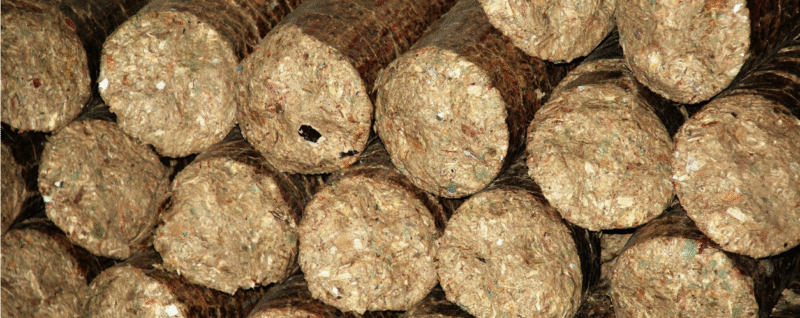
Raw agricultural waste is inherently organic. When agri-waste briquettes are manufactured or stored with a moisture content exceeding 12% to 15%, they lose their structural integrity and become highly susceptible to degradation.
Damp briquettes act like a sponge, absorbing environmental humidity and gradually crumbling back into loose dust. This creates severe material handling issues, as structural crumbling jams automated screw feeders, hoppers, and conveyor systems. Furthermore, high moisture combined with warm storage conditions creates an environment ripe for biological degradation and mold development, compromising indoor air quality near the fuel handling systems. By enforcing a strict inbound fuel moisture threshold of less than 10%, factories preserve the shelf-life and physical strength of their fuel supply.

Briquette Moisture Matrix: Impact and Actions
|
Briquette Moisture Level |
Thermal Stability Impact |
Structural & Storage Risks |
Operational Recommendation |
|
Below 10% |
Excellent. Consistent flame, maximum NCV output. |
Negligible risk. Long shelf-life, crisp structural integrity. |
Ideal for high-efficiency and precise manufacturing processes. |
|
10% to 13% |
Manageable. Minor steam fluctuations, acceptable baseline. |
Low risk if used within short timelines in well-ventilated areas. |
Standard operational baseline for everyday utility production. |
|
13% to 16% |
Poor. Boiler smoldering, increased fly ash, pressure drops. |
Moderate risk. Briquettes begin to soften and crumble; initiates slagging. |
Requires immediate blending with dry fuel or pre-heating. |
|
Above 16% |
Critical. Severe thermal dropouts, excessive smoke, high tube fouling. |
High risk. Rapid fuel degradation into dust; clogs ash handling systems. |
Reject batch. Extreme risk of asset wear and operational failure. |
Operational Protocols for Stabilizing Biomass Feedstocks
To turn biomass from an unpredictable commodity into a reliable, utility-grade energy source, industrial plants must establish rigid material handling and testing protocols:
A. Digital Moisture Testing at the Intake Gate
Never accept a vendor’s word on biomass quality. Every single truckload of agri-waste briquettes entering the facility must be sampled immediately at the security gate. Using portable handheld pin-type or infrared biomass moisture meters, operators should take multiple readings from different depths of the delivery. Any batch exceeding the maximum allowable threshold should be flagged for price penalties or outright rejection before it ever unloads.
B. First-In, First-Out (FIFO) Storage and Weatherproofing
Biomass is highly hygroscopic, meaning it absorbs moisture directly from floor sweat and humid air. Fuel sheds must be fully weatherproofed with elevated concrete flooring to prevent groundwater seepage. Implementing a strict First-In, First-Out (FIFO) inventory system ensures that older inventory is consumed before it has a chance to absorb ambient humidity or degrade structurally.
C. Waste Heat Recovery for Pre-Drying
Advanced facilities utilize a smart circular engineering approach. The boiler’s hot flue gases or waste heat from the factory floor can be redirected into an enclosed conveyor tunnel or drying hopper. Passing incoming briquettes through this zone pre-dries the fuel just before it enters the furnace. This ensures a uniform, bone-dry feedstock enters the combustion chamber regardless of external monsoon, winter, or high-humidity weather conditions.

The Green Synergy: Aligning Operations with ESG and Carbon Accounting
Beyond operational ease, controlling fuel moisture has a massive direct impact on a company’s sustainability metrics and financial bottom line. Under global carbon accounting frameworks and statutory compliance audits, a factory’s carbon efficiency is calculated based on the mass of fuel consumed versus energy generated.
When you burn wet briquettes, you are forced to burn a significantly higher total weight of biomass to achieve the exact same megawatt-hour of thermal heat. In your annual environmental audits, this efficiency drop inflates your total resource consumption metrics and artificially drives up calculated carbon intensity figures per unit of finished product sold. Dry fuel keeps your carbon data lean, transparent, and attractive to global market buyers who closely scrutinize supply chain sustainability.

Conclusion: Green Transition Without the Chaos
Switching your manufacturing plant to renewable agri-waste briquettes is a phenomenal step toward absolute industrial sustainability. However, environmental sustainability cannot come at the cost of asset health or manufacturing precision. By implementing strict fuel moisture control protocols, plant managers ensure that their green transition remains completely stable, highly cost-effective, and operationally reliable. In the world of modern industrial manufacturing, clean and predictable energy is the ultimate formula for sustainable success.