

Compliance Foundation Program
Carbon Market Foundation Program
CBAM is now in its definitive period and CCTS is taking shape at home. Build a working command of carbon accounting, carbon credits, and the two frameworks reshaping trade and disclosure for Indian business — in two focused evening sessions.
Why this can’t wait?
CBAM
The EU is charging for carbon at the border
The EU’s Carbon Border Adjustment Mechanism has moved past its transitional phase into a definitive period, requiring importers of steel, aluminium, cement, fertilisers, hydrogen, and electricity to buy certificates against embedded emissions. Indian exporters in these sectors now need verified, defensible emissions data to keep pricing competitive and contracts intact.
CCTS
India is building its own carbon market
The Carbon Credit Trading Scheme, run under the Energy Conservation Act framework, is India’s domestic mechanism for pricing and trading carbon reductions — sitting alongside and eventually linking to schemes like PAT. Understanding how obligations, credits, and verification work here is becoming as important as export compliance.
In the news right now
Jan 2026
CBAM’s definitive period takes effect.
Following two years of reporting-only obligations, the European Commission’s implementing acts brought CBAM’s certificate and verification requirements into force on 1 January 2026—the first annual surrender falls due 30 September 2027.
Jan 2026
CCTS coverage widens to ~490 entities
The Ministry of Environment, Forest and Climate Change notified emission intensity targets for petroleum refining, petrochemicals, and textiles, extending India’s Carbon Credit Trading Scheme to seven sectors and roughly 490 obligated entities.
Jul 2026
First CCTS compliance filings fall due
Obligated entities under the scheme must submit their first compliance filings by 31 July 2026, with exchange-based trading of carbon credit certificates expected to follow in the second half of the year.
Ongoing, 2026
CBAM and CCTS are being linked
Policy analysts point to CBAM’s built-in provision for crediting a carbon price paid in the country of origin — meaning a credible domestic price under CCTS could reduce what Indian exporters would otherwise pay at the EU border.
The regulatory stakes, in numbers
~490
Entities already obligated under CCTS, across 7 sectors
€100
Penalty per excess tonne for CBAM non-compliance
31 Jul
2026 deadline for the first CCTS compliance filings
2027
First CBAM certificate surrender for 2026 imports
The two-day schedule
Foundations — Carbon Accounting & CBAM
GHG / Carbon Accounting
Carbon accounting fundamentals
Scope 1, 2, and 3 emissions under the GHG Protocol; activity data, emission factors, and building a defensible inventory.
CBAM: mechanics and exposure
Covered sectors, certificate obligations, embedded emissions calculation, and what the definitive period means for Indian exporters.
Markets — CCTS & Carbon Credits
India’s Carbon Credit Trading Scheme
Scheme structure, obligated entities, credit issuance and trading, and how CCTS relates to existing energy efficiency mandates.
Carbon credits, compliance vs. voluntary
How credits are generated, verified, and retired; reading a project methodology; and avoiding common integrity pitfalls.
The numbers behind the program
100+
Professionals trained
4.8★
Average rating
4 hrs
Live, hands-on across
2 days
4 Modules:
CBAM · CCTS · Carbon Accounting · Carbon Credits
What You’ll Learn
- Scope 1, Scope 2, and Scope 3 emissions
- Activity data and emission factors
- Carbon calculation methodologies
- Common reporting challenges
- Practical examples and exercises
Who Should Attend
- Sustainability & ESG professionals
- Exporters to the EU in covered CBAM sectors
- ESG consultants and advisory teams
- Corporate ESG, EHS, and trade compliance teams
- Students and researchers in climate policy
- Business owners and finance leaders
What’s Included
- Two live, expert-led sessions (Day 1 & Day 2)
- Reference materials
- Practical examples
- Certificate of completion
- Direct Q&A with the facilitator
- No upsells—a learning-focused session
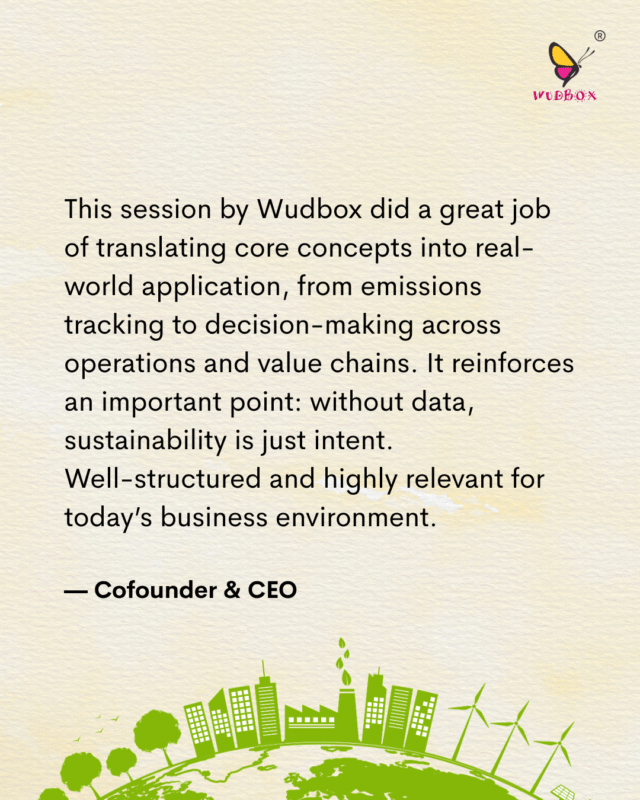
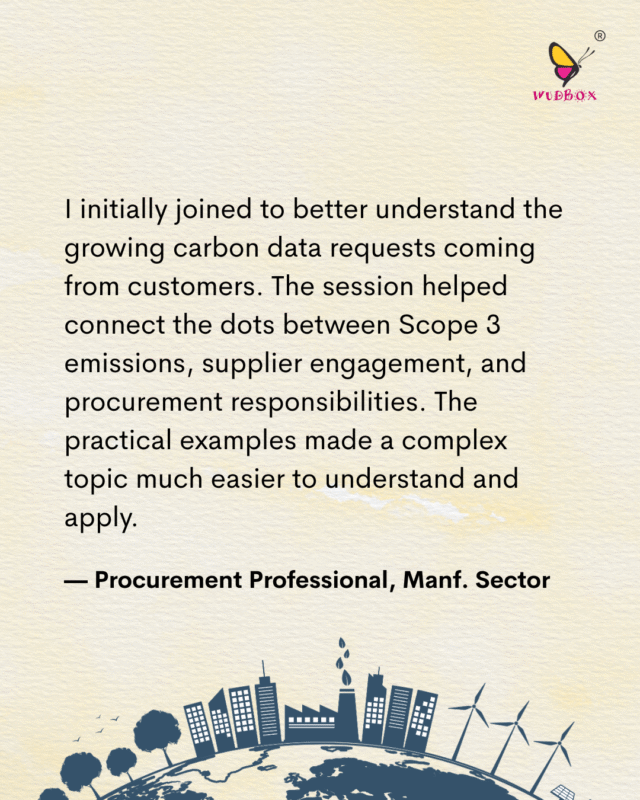
Feedback from our Previous Sessions

Register for the Carbon Market Foundation Program
Seats are limited to keep both sessions focused and interactive. Registering early secures your spot for both days.
This is a learning-focused program—no upsells, no course promotions. Just a clear, working introduction to how carbon markets and disclosure actually operate.
With India’s first CCTS compliance filings due 31 July 2026 and CBAM certificate exposure already accruing on 2026 imports, teams are moving early to close this knowledge gap before the next reporting cycle.
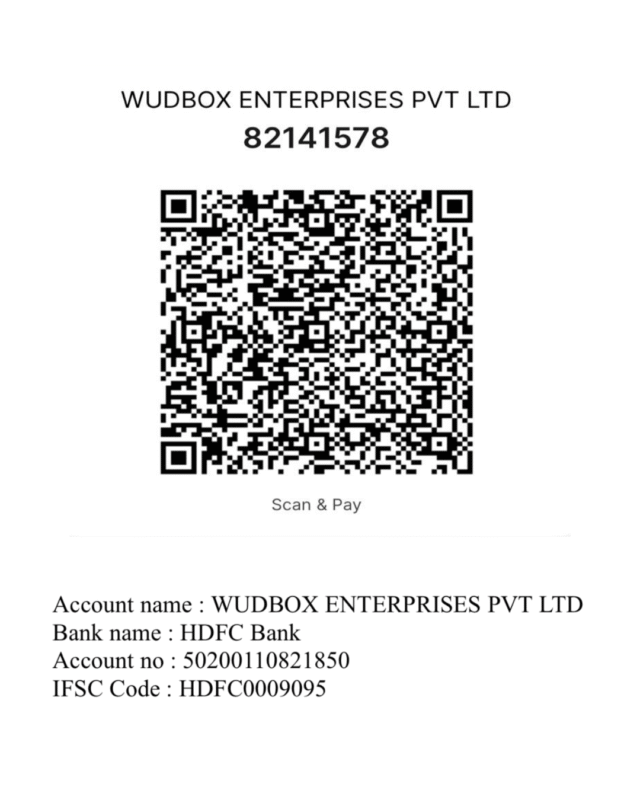
Payment Information
-
Program Fee: ₹4,999/- for both days
-
Duration: 2 Days
-
Mode: Live Online
Note: Filling out this form does not complete your registration. Your seat will be confirmed after payment.
Carbon Accounting & GHG Protocol: The Fundamentals
A) What is carbon accounting?
Carbon accounting is the process of measuring and reporting the greenhouse gas (GHG) emissions an organisation produces. It gives businesses a factual baseline — how much carbon they emit, from which activities, and where reductions are possible. As regulators, investors, and customers increasingly demand emissions transparency, carbon accounting has moved from a voluntary practice to a core business requirement in India and globally.
B) What are Scope 1, 2, and 3 emissions?
The GHG Protocol—the global standard for emissions measurement—categorizes emissions into three scopes:
- Scope 1 — Direct emissions from sources your organization owns or controls, such as fuel combustion in company vehicles or on-site machinery.
- Scope 2—Indirect emissions from purchased electricity, steam, or heat that your organization consumes.
- Scope 3—All other indirect emissions across your value chain—from supplier activity, employee commuting, business travel, and product end-of-life.
Most organizations find that Scope 3 accounts for the largest share of their total footprint, yet it is the hardest to measure accurately.
C) Why does this matter for Indian businesses right now?
SEBI’s Business Responsibility and Sustainability Report (BRSR) framework now requires listed companies to disclose GHG emissions. Accurate Scope 1 and 2 reporting is mandatory for the top 1,000 listed companies, with Scope 3 disclosures increasingly expected. Getting carbon accounting right is no longer optional — it directly affects regulatory compliance, investor ESG ratings, and supply chain eligibility for global clients.
Frequently asked questions
No prior knowledge required. The session is designed for professionals at all levels, including complete beginners.
This is a live, interactive session. Recordings are not available — this keeps the cohort quality high and ensures Q&A participation.
This is a fully live, instructor-led session. You can ask questions in real time and interact with the trainer throughout the 4 hours.
Yes, all participants receive a certificate from Wudbox after the session, which you can add to your LinkedIn profile.
Absolutely. The session covers GHG Protocol methodology, which directly maps to what SEBI’s BRSR requires for Scope 1 and Scope 2 disclosures—making it immediately applicable for Indian listed companies and their consultants.
No special software required. Just a stable internet connection and a laptop or desktop is recommended for the best experience.
Yes. While the session is accessible to beginners, it goes into calculation methodologies, emission factors, and reporting challenges that even professionals with 1–2 years of ESG experience find valuable.
Yes. If you’d like to register more than one person from your team, reach out on WhatsApp at +91 9811126365 for group pricing.
You don’t need to prepare anything in advance — just show up ready to learn.
Since this is a live cohort with limited seats, we encourage attending on the day. If you have concerns, please reach out to us in advance on WhatsApp.
This is a structured, 4-hour deep dive with a practitioner — not a surface-level overview. You get live Q&A, India-specific examples, real calculation exercises, reference materials, and a certificate. It’s designed to give you job-ready skills, not just awareness.