
Introduction
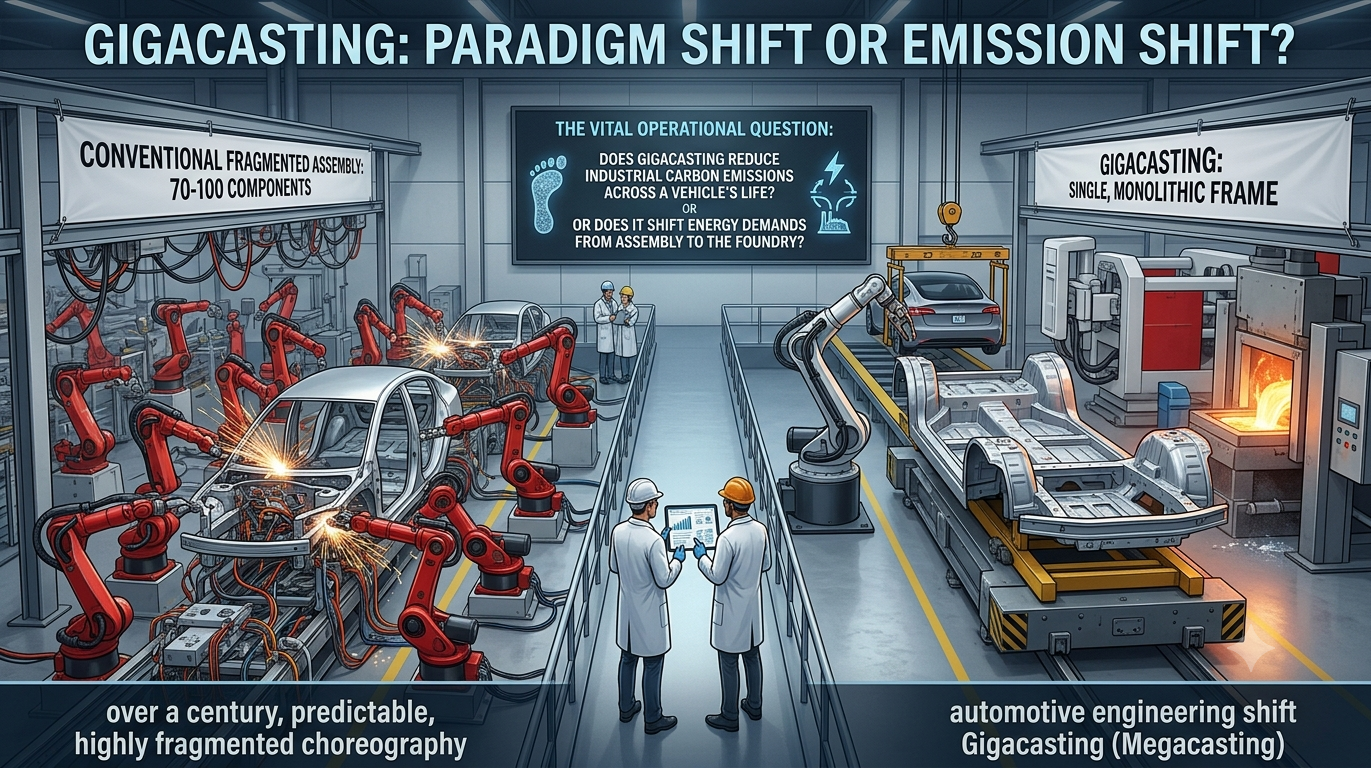
For over a century, the core blueprint of automotive assembly has relied on a predictable, highly fragmented choreography. Steel and aluminum sheets are stamped by massive presses, shipped to a body shop, and painstakingly stitched together by thousands of robotic arms performing spot welds, rivets, and structural adhesive bonds.
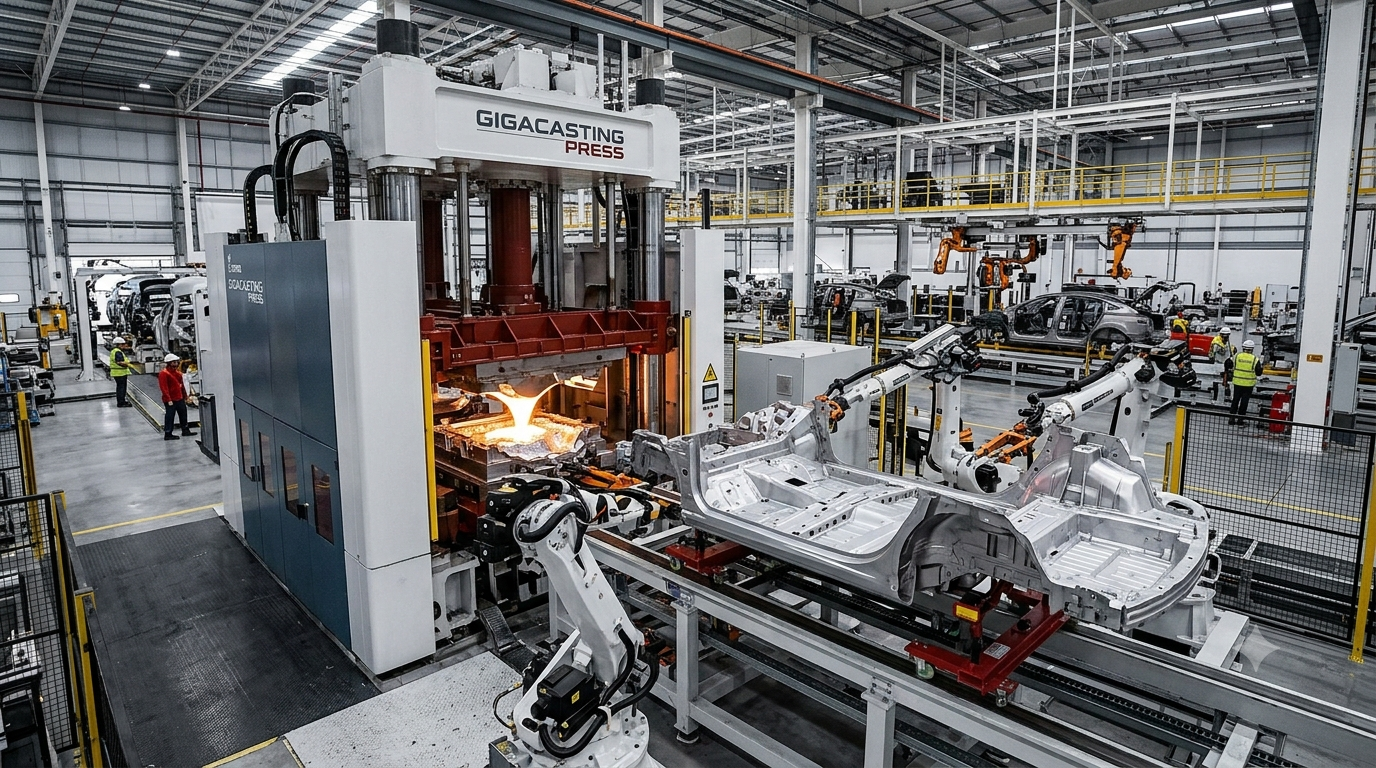
Today, that paradigm is facing an automotive engineering shift. Driven by a focus on simplifying electric vehicle (EV) architectures and lowering weight, the global automotive supply chain is pivoting toward Gigacasting (also known as Megacasting). By substituting an entire assembly of 70 to 100 separate sub-components with a single, monolithic high-pressure die-cast aluminum frame, carmakers are altering shop-floor economics.
However, as Tier 1 component manufacturers and OEMs adopt this technology, a vital operational question emerges: Does Gigacasting reduce industrial carbon emissions across a vehicle’s life, or does it shift energy demands from assembly to the foundry?
1. Deconstructing the Process: Structural Consolidation
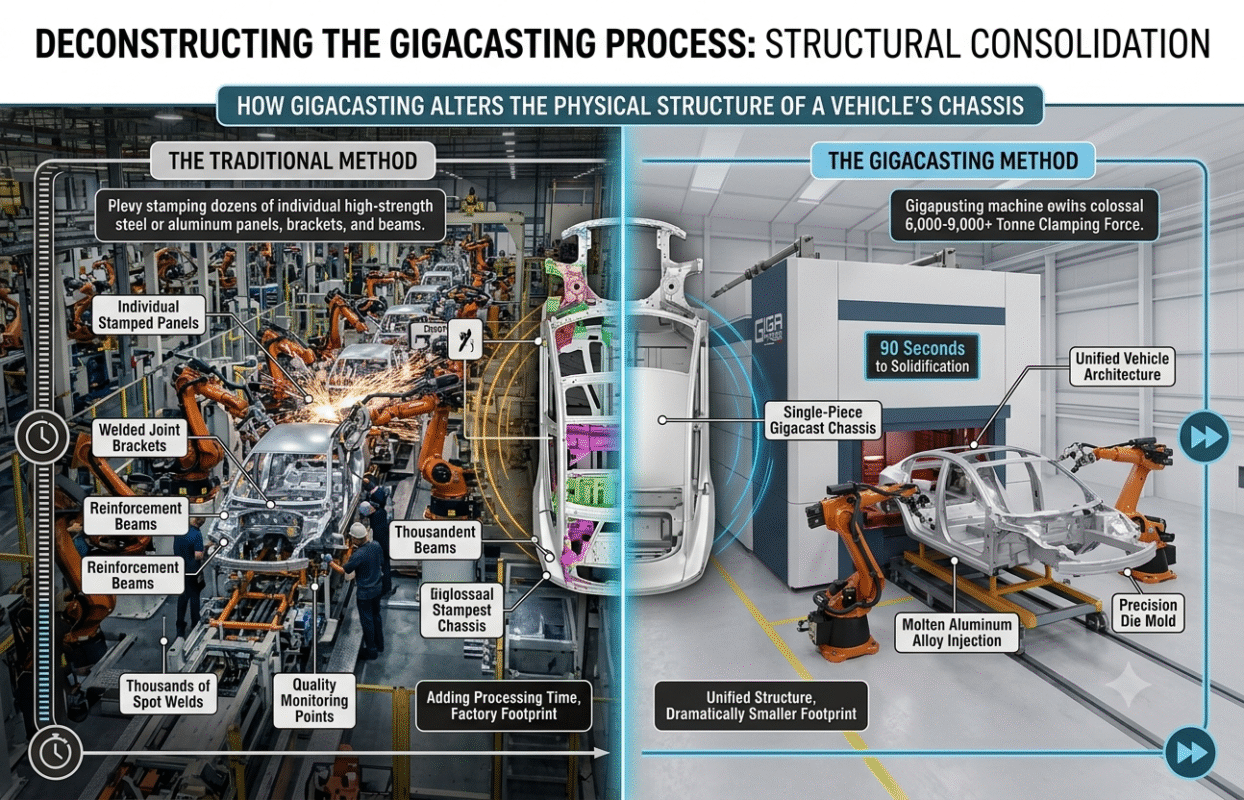
To understand its energy and carbon footprint, one must look at how Gigacasting alters the physical structure of a vehicle’s chassis.
- The Traditional Method: A rear underbody structure requires stamping dozens of individual high-strength steel or aluminum panels, brackets, and beams. These are joined at a network of automated weld stations, adding processing time, factory footprint, and quality monitoring.
- The Gigacasting Method: A single, massive high-pressure die-casting (HPDC) machine—exerting clamping forces ranging from 6,000 to over 9,000 tonnes—injects molten aluminum alloy directly into a precision mold. Within approximately 90 seconds, the liquid metal solidifies into a unified rear or front vehicle architecture.
Operational Footprint Comparison
|
Operational Metric |
Traditional Stamping & Robotic Welding Assembly |
High-Pressure Gigacasting Cell Consolidation |
|
70 to 100 individual parts per sub-assembly |
1 unified, integrated monolithic casting |
|
Large, multi-station robotic body shop lines |
Single compact, high-tonnage casting cell |
|
Thousands of spot welds, rivets, structural glues |
Virtually eliminated within the casting zone |
|
High (stamping off-cuts can average 30–40%) |
Very low (sprues and runners are instantly remelted) |
|
Dispersed electricity across automated weld networks |
Concentrated thermal energy for aluminum melting |
2. Upstream Energy Demand: The Melting Point Challenge
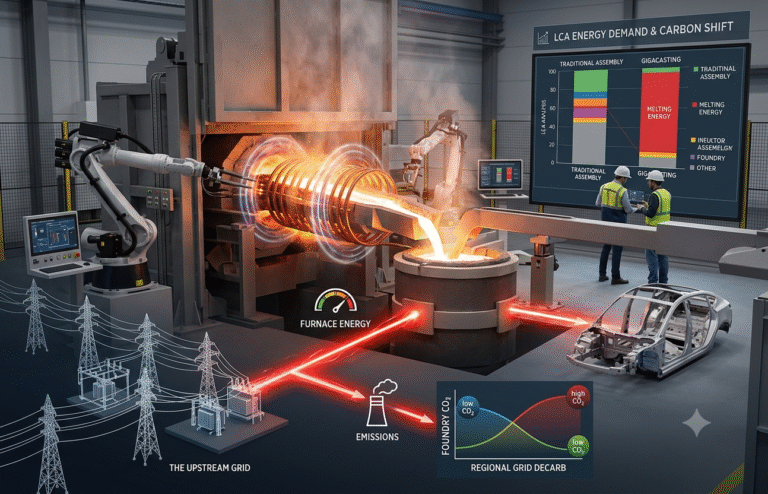
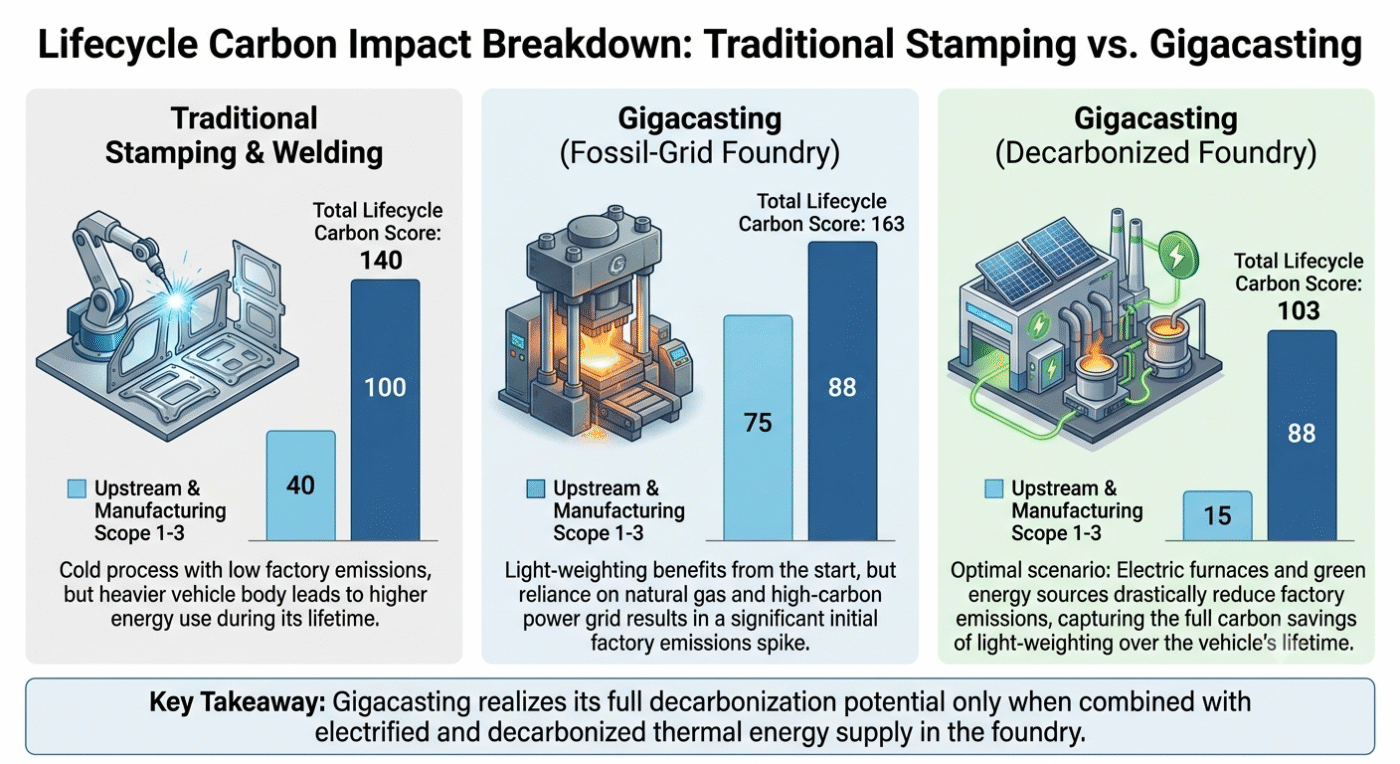
The primary decarbonization challenge for Gigacasting centers on its localized Scope 1 and Scope 2 emissions profiles. Stamping sheet metal is a cold mechanical process; while the machines draw electricity, they do not require high-temperature thermal energy on the shop floor.
Casting, by contrast, is an energy-intensive thermal process. Aluminum has a melting point of approximately $660^circtext{C}$ ($1,220^circtext{F}$). To continuously feed a 9,000-tonne Giga Press, foundries must maintain pools of liquid metal.
- The Fossil-Fuel Variable: If a manufacturing facility relies on natural gas-fired furnaces to melt its raw aluminum and draws electricity from a high-carbon power grid to operate the press hydraulics, its localized carbon footprint will spike compared to a traditional stamping line.
- The Decarbonization Solution: For Gigacasting to lower net operational emissions, the shop-floor infrastructure must transition to cleaner energy alternatives. This involves:
- Replacing gas-fired melting infrastructure with clean industrial electric induction or plasma arc furnaces.
- Powering the high-tonnage hydraulics, thermal management systems, and holding furnaces via dedicated Green Power Purchase Agreements (PPAs) or on-site solar microgrids.
3. The Lifecycle Carbon Balancing Act
While the manufacturing phase of a gigacast component carries a heavy initial thermal load, its primary environmental efficiency justification emerges across the entire operational lifecycle of the vehicle.
Upstream, Manufacturing, and Vehicle Use-Phase Dynamics
The chart below illustrates how initial factory emissions compare against continuous carbon savings during the vehicle’s operating life, provided the manufacturing foundry transitions to a clean energy mix:
Explaining the Vehicle Use-Phase Efficiency
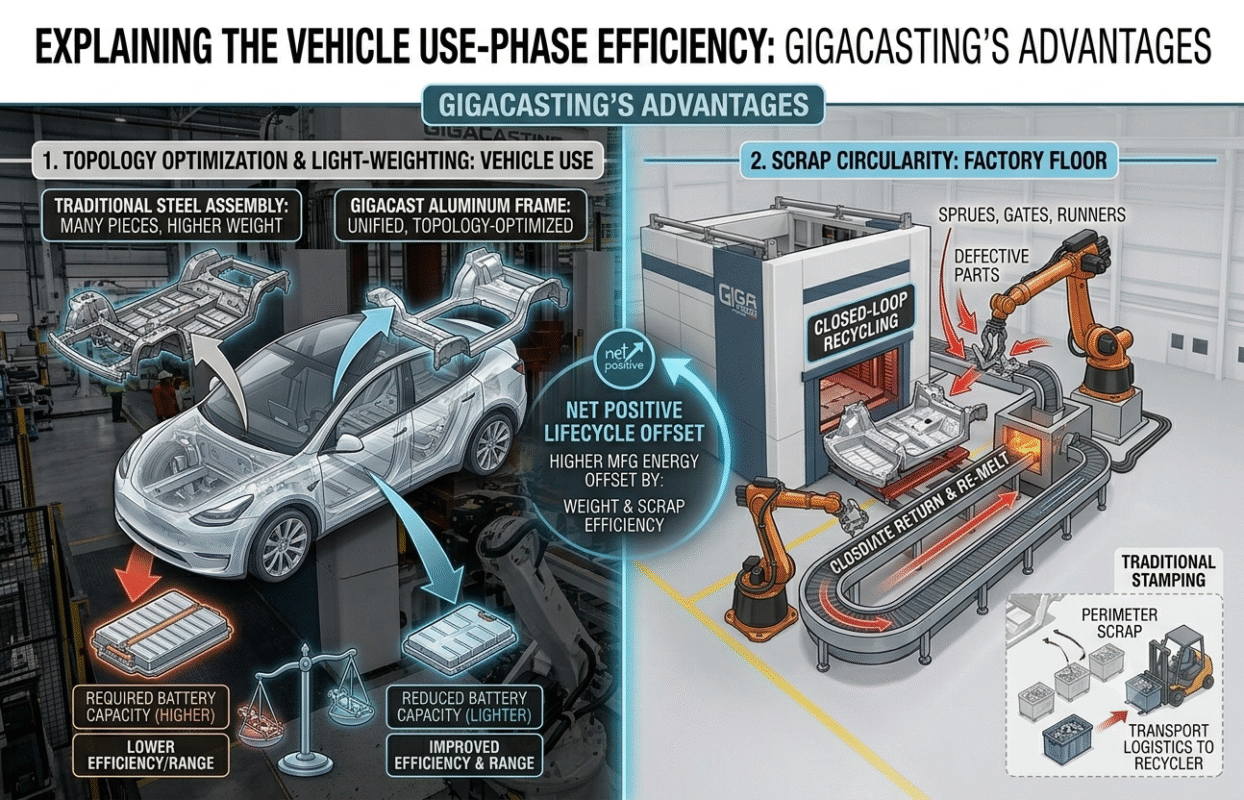
The primary offset for the higher initial manufacturing energy demand lies in topology optimization and light-weighting:
- Weight Shaving: Integrated aluminum castings lower the overall weight of the vehicle structure compared to traditional multi-piece steel assemblies. In electric vehicles, every kilogram shed improves energy efficiency per mile, extending driving range and reducing the required capacity (and upstream manufacturing footprint) of the battery pack.
- Scrap Circularity: Stamping lines produce massive amounts of perimeter scrap metal that must be collected, baled, shipped back to a secondary recycler, and re-melted. In a Gigacasting cell, any excess metal from the injection channels (sprues, gates, and runners) or defective parts can be instantly cut off and returned back into the co-located holding furnace. This establishes an immediate, closed-loop recycling system right on the factory floor, avoiding transport logistics.
4. Operational Challenges & Systemic Roadblocks
Despite the structural weight and assembly benefits, component manufacturers must navigate technical and systemic challenges before declaring Gigacasting an outright win for corporate decarbonization targets.
Critical Implementation Hurdles
- The Recycling Purity Dilemma: Gigacasting requires specialized aluminum alloys that possess exceptional fluidity to fill the intricate channels of a giant mold before cooling, while maintaining rigorous crash-test strength without undergoing secondary heat treatment. Creating these specific properties out of post-consumer recycled scrap is difficult due to micro-contaminants (like iron or zinc). If a supplier is forced to rely heavily on virgin primary aluminum (which is highly carbon-intensive to refine via mining), the initial carbon debt of the vehicle increases.
- The Post-Accident Repairability Factor: In traditional manufacturing, a minor or moderate collision means an aftermarket shop can unbolt a damaged bumper bracket, straighten a side rail, or weld in a small replacement sheet. If a single, giant gigacast rear underbody suffers a structural crack or severe deformation during an accident, it cannot be easily repaired. Insurance companies may choose to write off the entire vehicle for minor structural damage, shortening the operational lifespan of the car and inflating its net lifetime footprint.
- Capital Expenditure (CapEx) Friction: Installing a fully automated gigacasting cell—including the press, robotic extractors, vacuum systems, quenching tanks, and advanced X-ray quality inspection machinery—requires massive upfront capital investments that frequently exceed $20 million to $30 million per line. For Tier 1 suppliers operating on thin margins, justifying this expenditure requires guaranteed long-term volume commitments from OEMs.
5. Strategic Roadmap for Component Manufacturers
For automotive component manufacturers looking to align with global net-zero supply chain mandates, navigating the Gigacasting shift requires a balanced, phased approach.
- Master the Sub-Assembly Transition: Rather than attempting to deploy 9,000-tonne presses immediately, suppliers can invest in medium-tonnage “Megacasting” infrastructure (such as 4,000 to 5,000-tonne systems already emerging in regional manufacturing hubs). This allows teams to master the single-piece casting of smaller, complex structural sub-assemblies like EV battery enclosures, shock towers, and powertrain cradles.
- Co-Develop Secondary Alloy Metallurgies: Partner directly with secondary aluminum smelters and OEM material science teams to validate high-fluidity alloys that incorporate high percentages of post-industrial or post-consumer recycled content, directly tackling the Scope 3 raw material footprint.
- Electrify Early: Ensure that any roadmap to expand casting capabilities is coupled with a structural transition away from fossil-fuel thermal heating, anchoring the foundry’s future around industrial induction melting and renewable energy sourcing.
Conclusion
Gigacasting is far more than an optimization of the assembly line; it is a fundamental realignment of automotive design. When executed within an electrified factory floor and paired with advanced recycled metallurgy, it serves as a powerful lever to strip embedded carbon out of the next generation of mobility.