
Introduction
Why Scope 3 Now and Why It Matters for Nutraceuticals
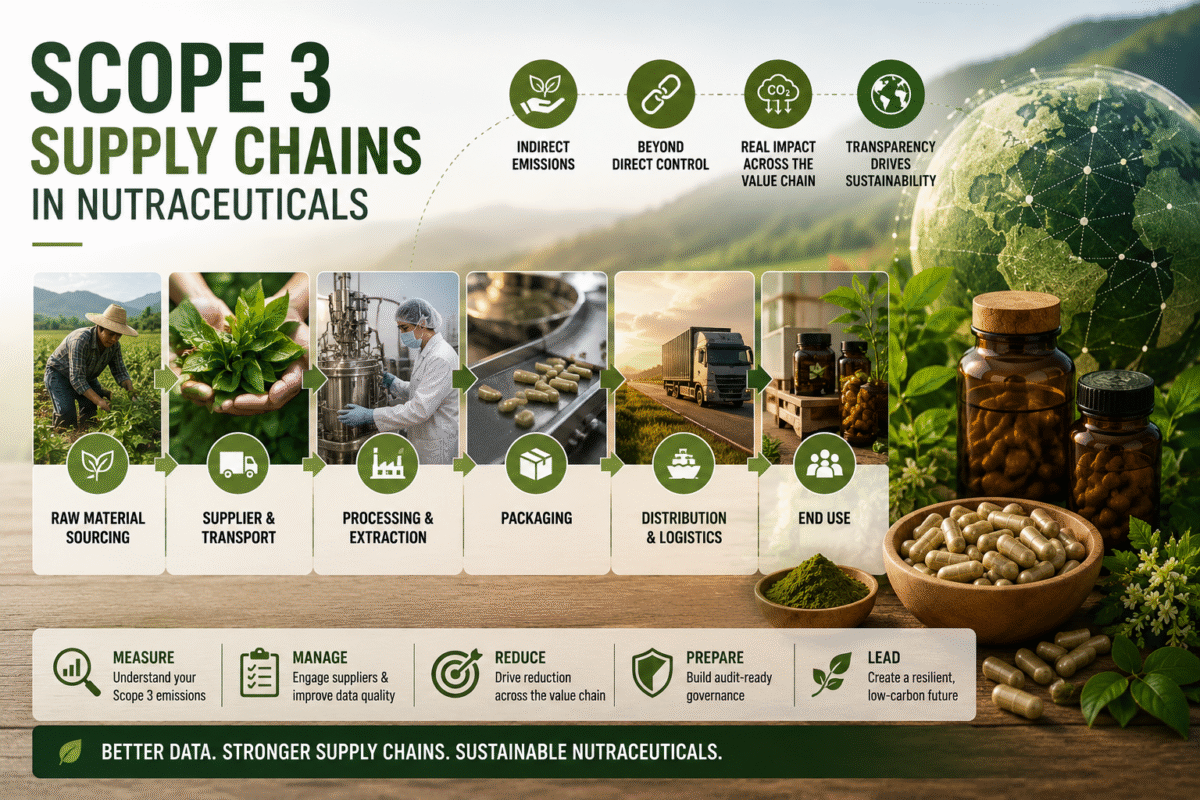
The global sustainability landscape is shifting rapidly, and the nutraceuticals industry stands at a critical inflection point. As regulatory frameworks tighten, institutional buyers raise procurement standards, and consumers demand greater supply chain transparency, companies that cannot demonstrate measurable progress on their carbon footprint will find themselves increasingly locked out of premium markets.
For nutraceutical exporters, the challenge is uniquely complex. Unlike manufacturing-heavy industries where Scope 1 and 2 emissions dominate, the nutraceuticals sector carries 60–80% of its total carbon footprint in Scope 3 — specifically in the purchased goods and services of Category 1. This means that farming practices, drying methods, solvent use, and extraction energy for ingredients like turmeric, ashwagandha, and boswellia are not peripheral concerns; they are the emissions story.
“The same ingredient sourced from different farms can produce wildly different carbon intensities. Generic database averages are no longer sufficient — auditors expect primary or hybrid data per ingredient cluster.”
Here is a practical six-pillar approach to building a stronger Scope 3 programme for nutraceutical supply chains.
1. Start With Ingredient-Level Emissions Hotspots
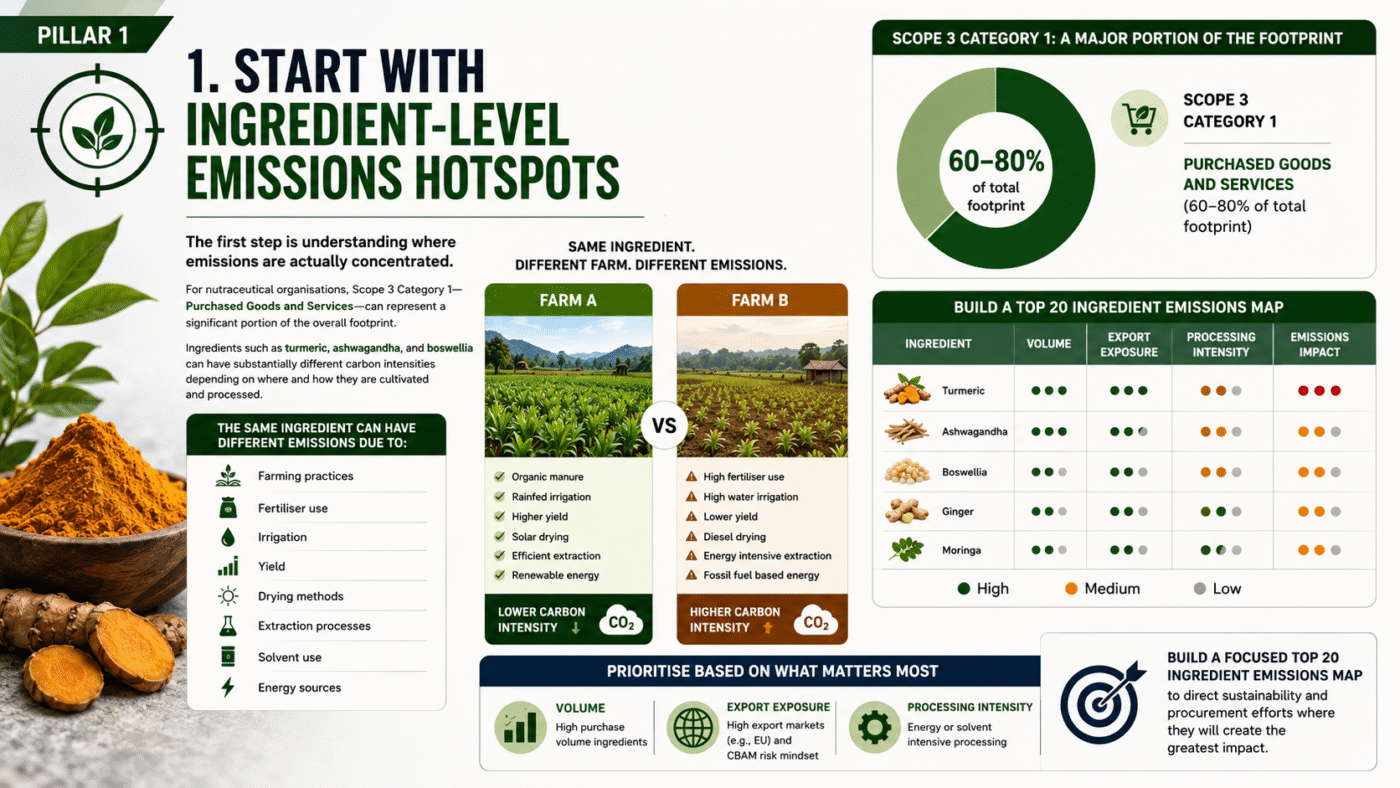
The first step is understanding where emissions are actually concentrated.
For nutraceutical organisations, Scope 3 Category 1—Purchased Goods and Services—can represent a significant portion of the overall footprint. Ingredients such as turmeric, ashwagandha, and boswellia can have substantially different carbon intensities depending on where and how they are cultivated and processed.
The same ingredient sourced from two different farms may have very different emissions because of differences in:
- Farming practices
- Fertiliser use
- Irrigation
- Yield
- Drying methods
- Extraction processes
- Solvent use
- Energy sources
Instead of trying to measure everything at once, companies can build a Top 20 ingredient emissions map and prioritise ingredients based on volume, export exposure, and processing intensity.
This helps sustainability and procurement teams focus resources where they can have the greatest impact.
2. Build a Tiered Supplier Data Model
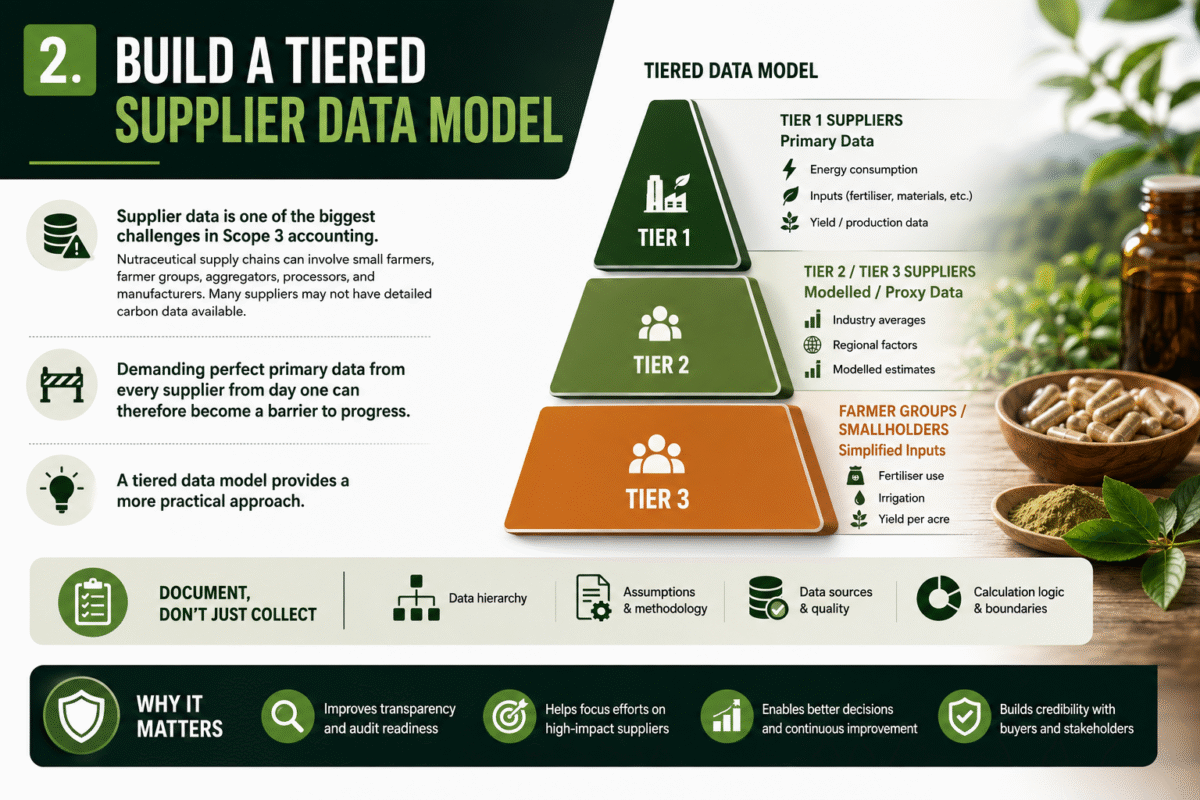
Supplier data is one of the biggest challenges in Scope 3 accounting.
Nutraceutical supply chains can involve small farmers, farmer groups, aggregators, processors, and manufacturers. Many suppliers may not have detailed carbon data available.
Demanding perfect primary data from every supplier from day one can therefore become a barrier to progress.
A tiered data model provides a more practical approach.
For high-priority Tier 1 suppliers, companies can work towards primary data covering areas such as energy consumption, inputs, and yield. For Tier 2 and Tier 3 suppliers, modelled or proxy data may initially be required.
For farmer groups, simpler inputs such as fertiliser use, irrigation, and yield per acre can provide a starting point.
The important point is not simply collecting numbers. Companies should also document their data hierarchy, assumptions, and methodology so the resulting calculations are transparent and defensible.
3. Develop Product Carbon Footprints
Once ingredient and supplier data improves, the next step is moving towards Product Carbon Footprints (PCFs).
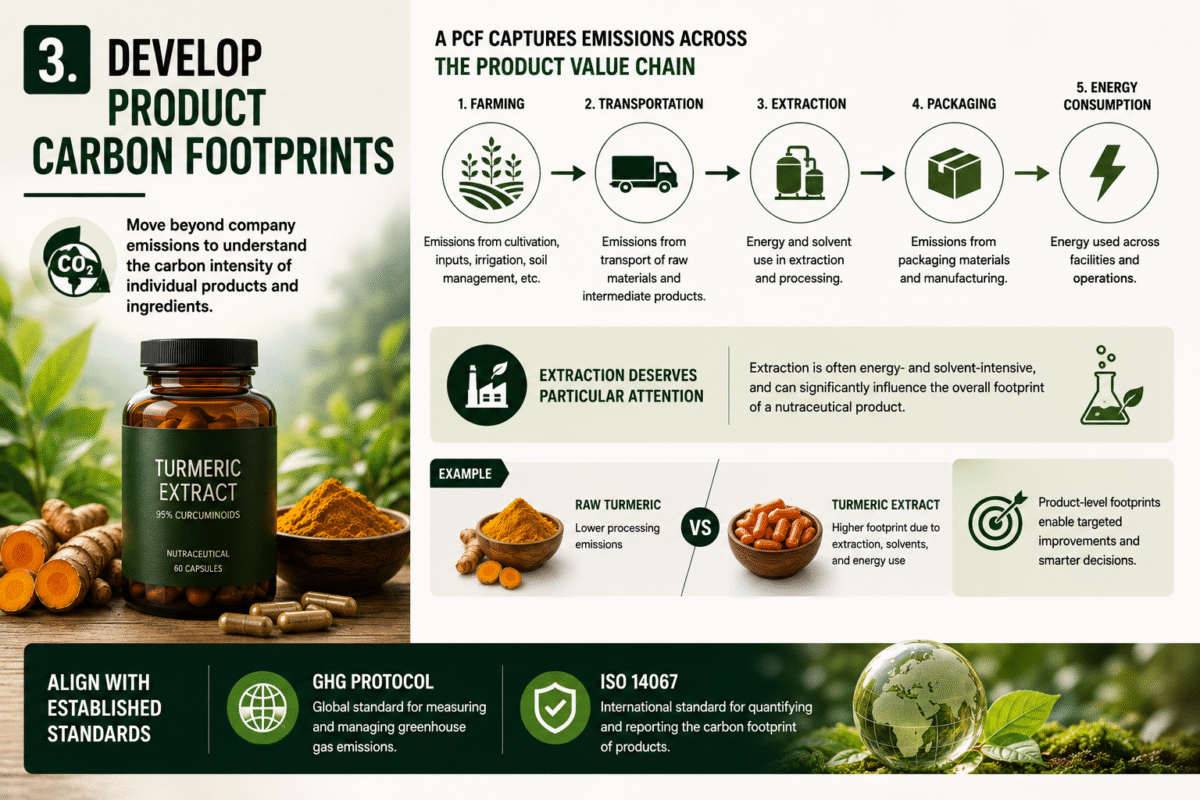
For nutraceutical products, a PCF should capture relevant emissions across the product’s value chain. Depending on the product and methodology, this can include:
- Farming emissions
- Transportation
- Extraction
- Packaging
- Energy consumption
Extraction deserves particular attention because it can be an energy- and solvent-intensive stage.
For example, a turmeric extract may have a significantly different footprint from the raw turmeric ingredient because additional processing introduces energy and material requirements.
Building product-level carbon footprints allows companies to move beyond a company-wide emissions number and understand the carbon intensity of individual products and ingredients.
The document recommends alignment with established frameworks including the GHG Protocol and ISO 14067.
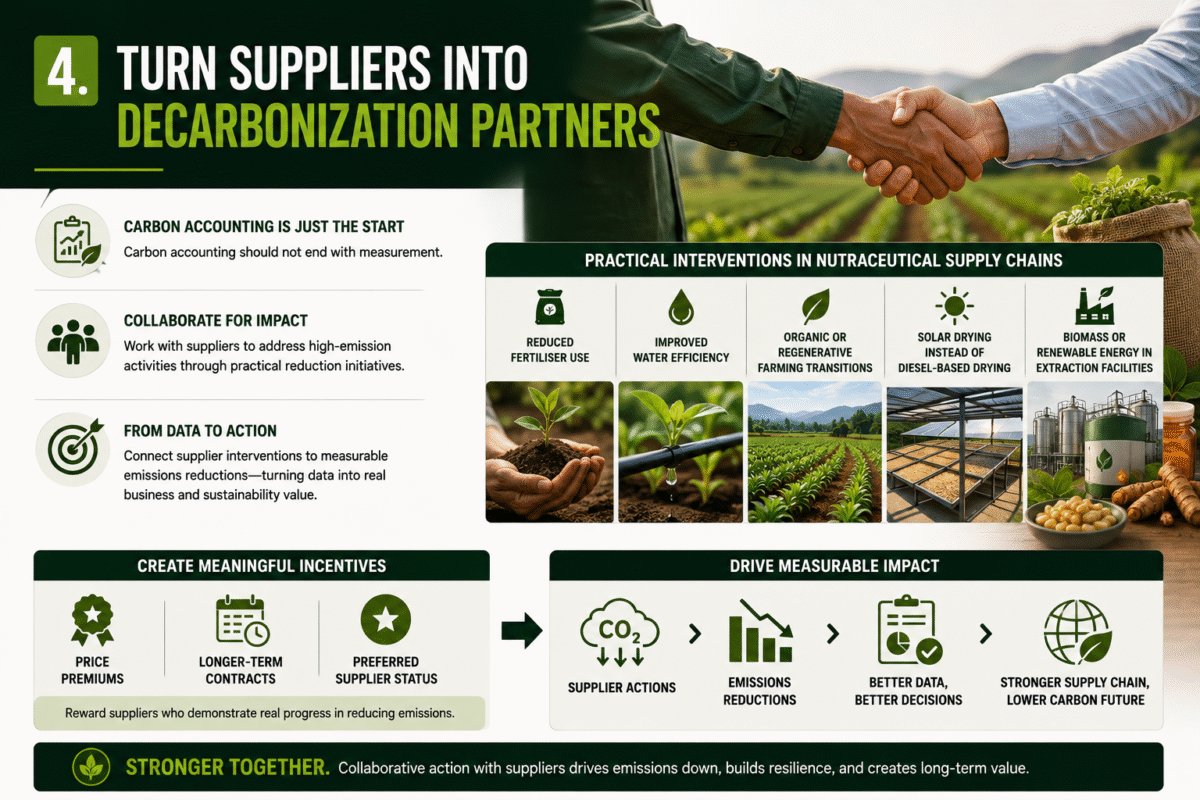
4. Turn Suppliers Into Decarbonization Partners
Carbon accounting should not end with measurement.
Once high-emission activities and suppliers have been identified, companies can work with suppliers on practical reduction initiatives.
In nutraceutical supply chains, potential interventions can include:
- Reduced fertiliser use
- Improved water efficiency
- Organic or regenerative farming transitions
- Solar drying instead of diesel-based drying
- Biomass or renewable energy in extraction facilities
Companies can also introduce incentives such as price premiums, longer-term contracts, or preferred supplier status for suppliers demonstrating progress.
The objective is to create a direct connection between supplier interventions and measurable emissions reductions. This turns carbon data from a reporting exercise into a procurement and operational improvement tool.
5. Prepare for CBAM-Style Buyer Requirements
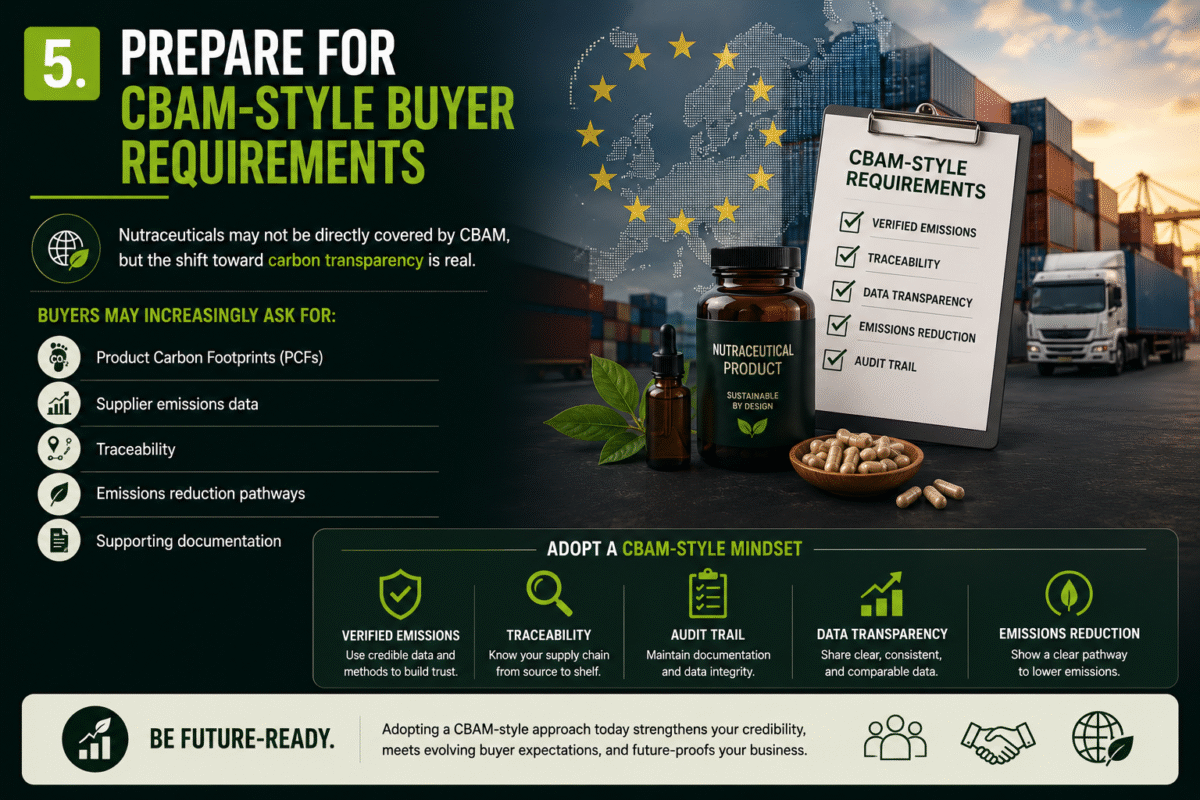
Nutraceuticals are not directly covered by CBAM according to the document’s current framing. However, that does not mean nutraceutical exporters should ignore the broader shift towards carbon transparency.
Their customers—including pharmaceutical companies, food companies, and EU distributors—may increasingly ask suppliers for information such as:
- Product Carbon Footprints
- Supplier emissions data
- Traceability
- Emissions reduction pathways
- Supporting documentation
For this reason, nutraceutical companies can benefit from adopting a CBAM-style mindset around verified emissions, traceability, and audit trails—even where CBAM does not directly apply to their products.
6. Build Governance That Can Survive an Audit
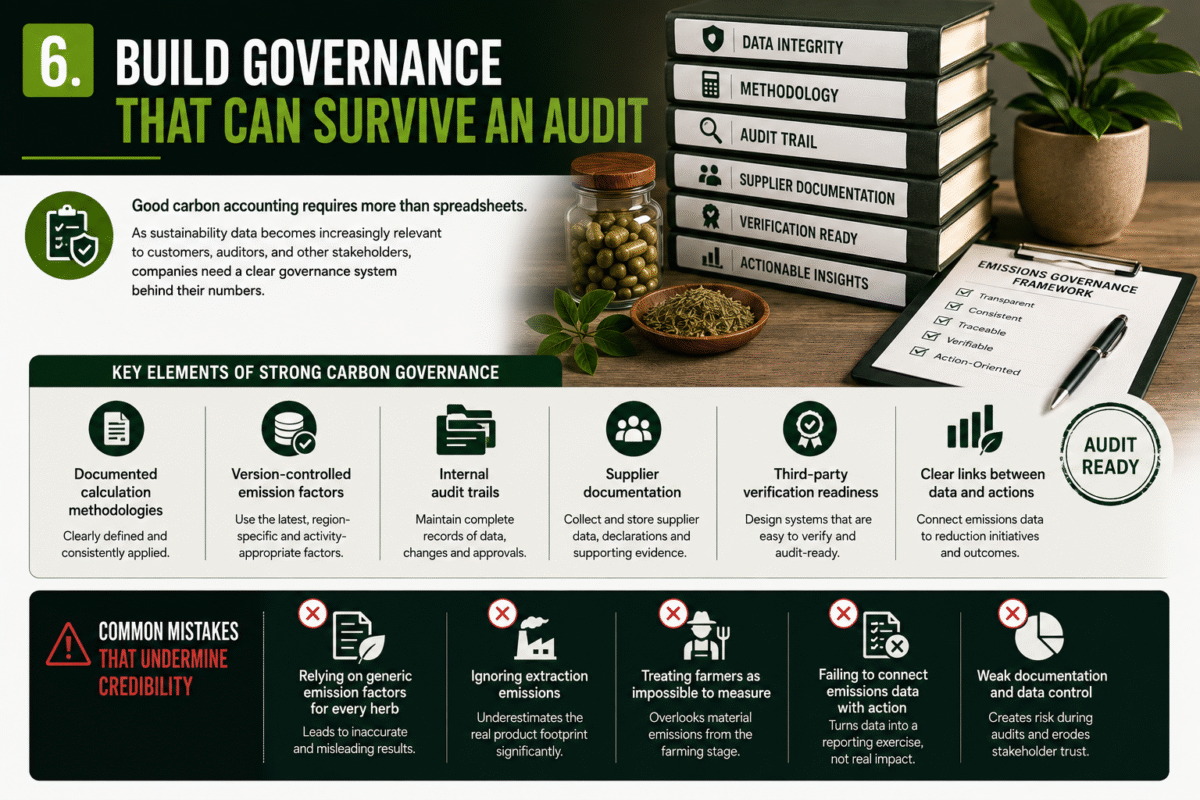
Good carbon accounting requires more than spreadsheets.
As sustainability data becomes increasingly relevant to customers, auditors, and other stakeholders, companies need a clear governance system behind their numbers.
This includes:
- Documented calculation methodologies
- Version-controlled emission factors
- Internal audit trails
- Supplier documentation
- Third-party verification readiness
- Clear links between emissions data and reduction actions
Several common mistakes can undermine the credibility of a Scope 3 programme. These include relying on generic emission factors for every herb, ignoring extraction emissions, treating farmers as impossible to measure, and failing to connect emissions data with actual reduction initiatives.
Building a Future-Ready Nutraceutical Supply Chain
Scope 3 accounting can initially appear overwhelming because nutraceutical supply chains span multiple tiers, geographies, farming systems, and processing stages.
But the solution is not to wait for perfect data.
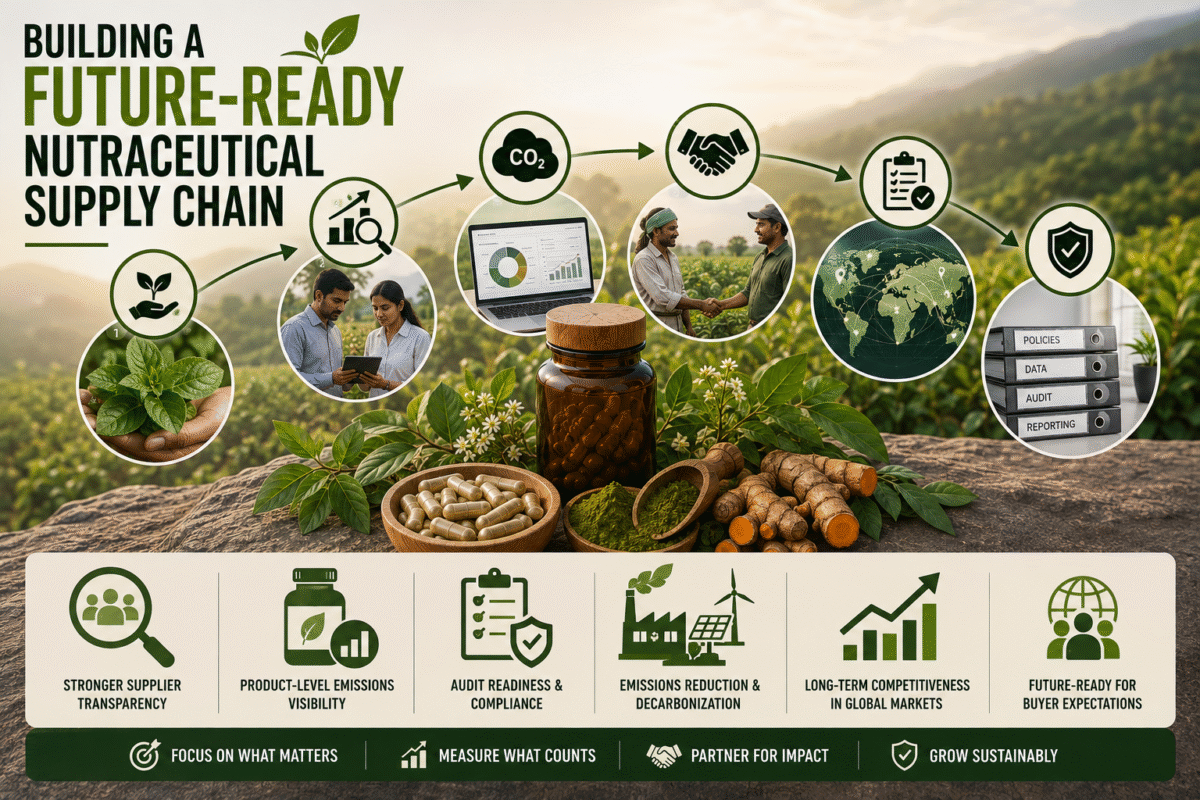
A stronger approach is to start with the highest-impact ingredients, improve supplier data progressively, develop product-level carbon footprints, engage suppliers in decarbonization, prepare for evolving buyer expectations, and build governance around the entire process.
For nutraceutical exporters and ingredient manufacturers, better Scope 3 management can provide more than improved carbon reporting. It can strengthen supplier transparency, product-level emissions visibility, audit readiness, and long-term competitiveness in sustainability-conscious markets.
The companies that begin building this capability today will be better positioned to respond as carbon data becomes an increasingly important part of global procurement and supply chain decisions.
Key Takeaway
Scope 3 for nutraceuticals is ultimately a supply chain problem—not just a reporting problem.
The goal is to move from “What is our carbon footprint?” to “Where are our emissions coming from, which suppliers and processes drive them, and what can we do about them?”
That shift—from measurement to management—is what makes a Scope 3 programme useful for the business.