
Strategic Energy Transition & Metallurgical Assessment
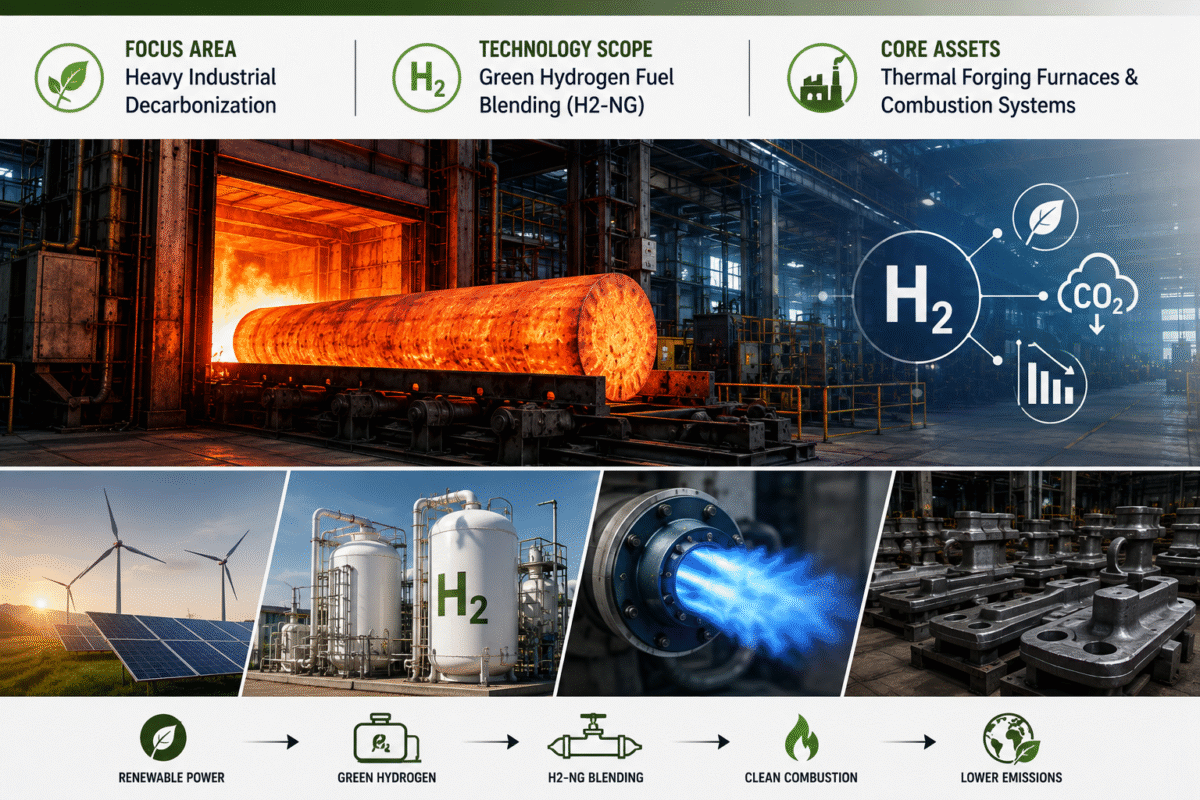
Focus Area: Heavy Industrial Decarbonization
Technology Scope: Green Hydrogen Fuel Blending (H2-NG)
Core Assets: Thermal Forging Furnaces & Combustion Systems
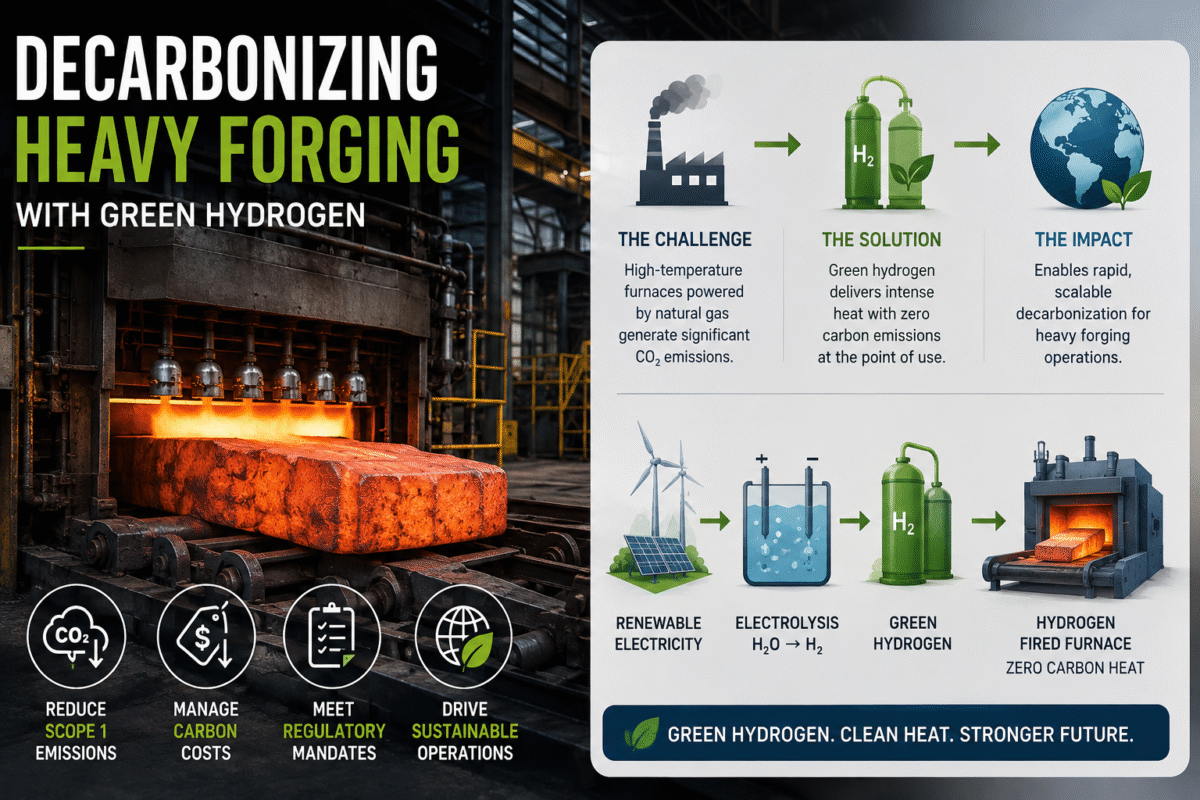
Industrial heavy forging remains one of the most carbon-intensive manufacturing sectors, historically relying on high-temperature combustion of natural gas to achieve the necessary thermal soak for massive alloy ingots and billets. As international carbon regulations tighten, carbon pricing mechanisms expand, and Scope 1 emissions mandates intensify, decarbonizing these high-thermal-head processes has moved from a long-term corporate sustainability ambition to an immediate operational necessity.
While electrical induction heating presents a compelling alternative for smaller geometries and continuous high-throughput lines, large-scale, batch-oriented heavy forging furnaces continue to depend on direct flame combustion to maintain thermal uniformity across heavy structural masses. In this operational context, green hydrogen—produced through water electrolysis powered by renewable electricity—serves as a primary vector for rapid and scalable thermal decarbonization.
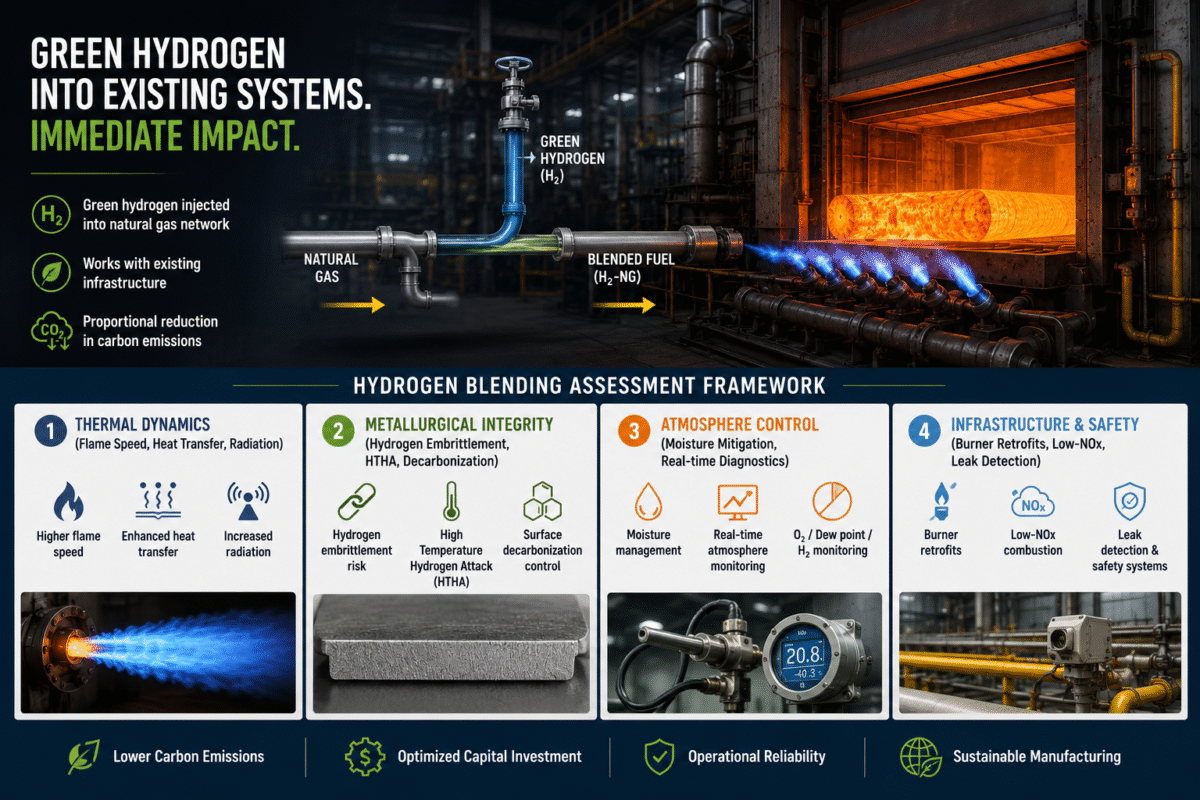
Injecting green hydrogen into existing natural gas distribution networks and burner headers allows industrial facilities to achieve immediate, proportional carbon reduction without requiring the total capital replacement of existing furnace infrastructure. However, substituting methane with hydrogen is not a simple drop-in fuel exchange. Hydrogen possesses dramatically different physical, chemical, and thermodynamic combustion properties.
Evaluating the viability of hydrogen injection requires an integrated assessment across four critical domains:
Hydrogen Blending Assessment Framework
1. Thermal Dynamics (Flame Speed, Heat Transfer, Radiation)
2. Metallurgical Integrity (Hydrogen Embrittlement, HTHA, Decarbonization)
3. Atmosphere Control (Moisture Mitigation, Real-time Diagnostics)
4. Infrastructure & Safety (Burner Retrofits, Low-NOx, Leak Detection)
How Hydrogen Changes Furnace Heat and Flames
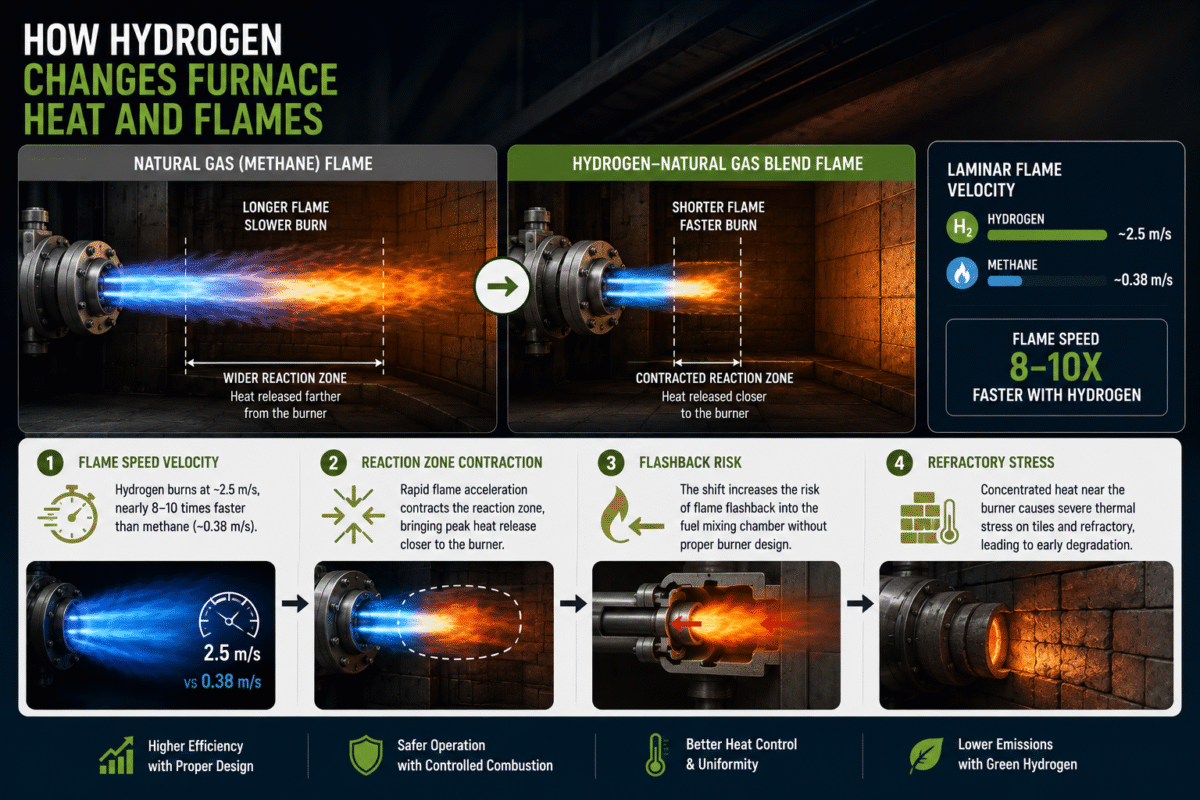
Introducing green hydrogen into a natural gas combustion stream alters the fundamental fluid dynamics and thermodynamic profile of the furnace flame. The most pronounced technical change lies in the laminar flame speed.
- Flame Speed Velocity: Hydrogen burns with a laminar flame velocity of approximately 2.5 m/s—nearly eight to ten times faster than that of methane (approx 0.38 m/s).
- Reaction Zone Contraction: Rapid flame acceleration contracts the combustion reaction zone, pulling the peak release of thermal energy much closer to the burner nozzle.
- Flashback Risk: Without precise aerodynamic re-engineering of burner stoichiometry and fuel injection velocity, this shift elevates the risk of burner flashback into the fuel mixing chamber.
- Refractory Stress: The concentrated combustion zone induces severe thermal stress on surrounding burner tiles and localized refractory linings, leading to premature structural degradation.
Key Heat Transfer Shift: Heat Radiation and Soot
Methane flames emit substantial radiative heat through incandescent carbon particles (soot). Conversely, hydrogen flames burn with virtually zero carbon luminescence, radiating thermal energy predominantly through elevated water vapor emissions. Furnace heat transfer models must be adjusted to account for this transition from carbon-dominated radiant heat to vapor-based convective and non-luminous radiative heat.
In addition to accelerated flame speed, hydrogen combustion raises the adiabatic flame temperature:
- Hydrogen Peak Flame Temp: approx 2110 °C (in ambient air)
- Natural Gas Peak Flame Temp: approx 1960 °C (in ambient air)
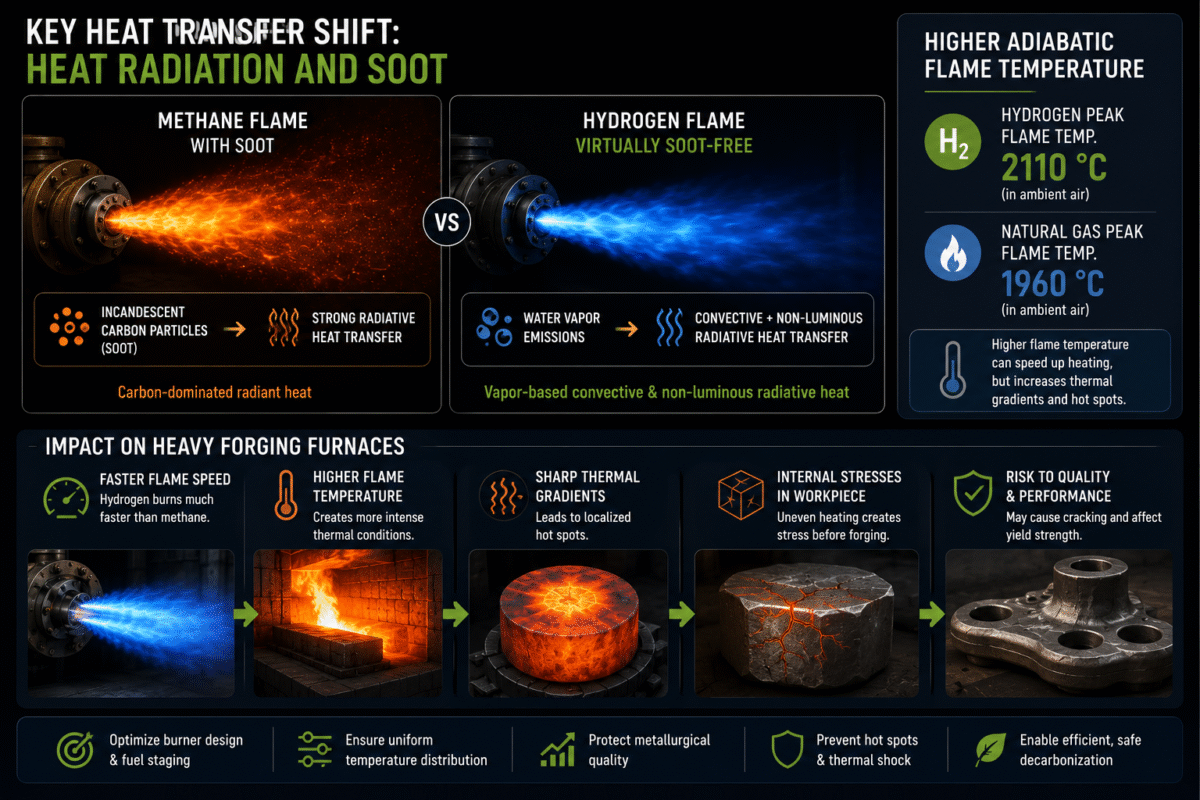
While a higher flame temperature can theoretically accelerate heating cycles, it simultaneously introduces sharp thermal gradients within the furnace chamber. In heavy forging, uniform temperature distribution across the workpiece is critical to ensure homogeneous yield strength and prevent localized cracking during initial forging passes. Unmanaged hot spots created by localized hydrogen combustion can create internal stress fields within large alloy ingots before metalworking even commences.
Impacts on Steel Quality and Metal Damage Risks
While thermal management is a primary operational concern, the impact of hydrogen combustion on workpiece metallurgy represents the single most significant risk to product quality and component structural integrity. The chemical combustion of hydrogen yields water vapor as its primary reaction product:
2H₂ + O₂ → 2H₂O
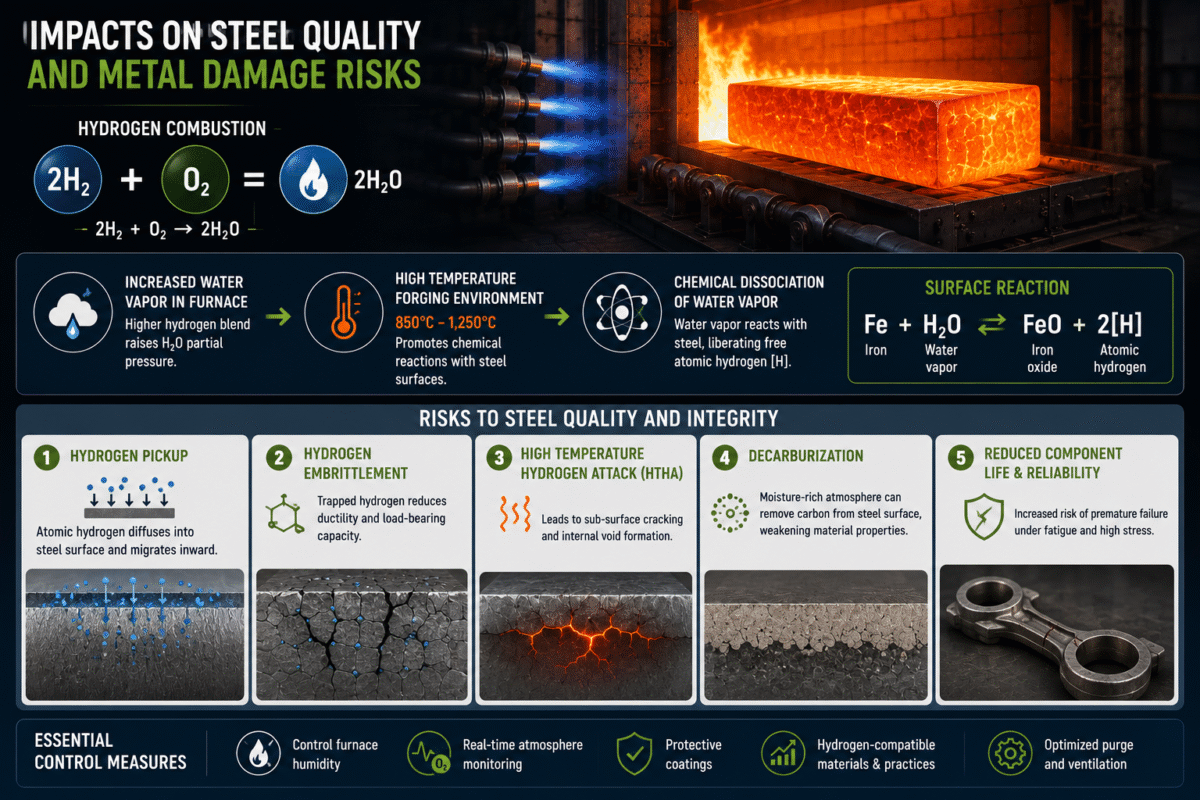
As the volumetric ratio of hydrogen in the fuel blend increases, the partial pressure of water vapor within the furnace atmosphere rises proportionately. At elevated forging temperatures (850 °C to 1,250 °C), atmospheric moisture reacts aggressively with exposed steel surfaces, initiating chemical dissociation that liberates free atomic hydrogen (H):
Fe + H2O ⇌ FeO + 2[H]
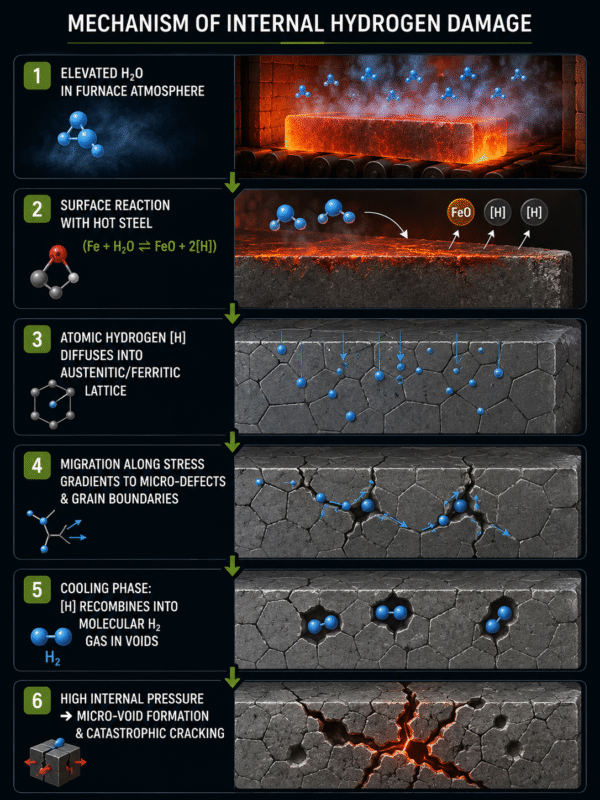
High-Temperature Hydrogen Attack (HTHA) and internal hydrogen embrittlement induce micro-void formation and grain boundary cracking. When the component is subjected to heavy mechanical deformation under a forging press or open-die hammer, these internal micro-fractures propagate catastrophically. High-strength low-alloy (HSLA) steels, tool steels, and nickel-base superalloys are exceptionally sensitive to this damage mechanism.
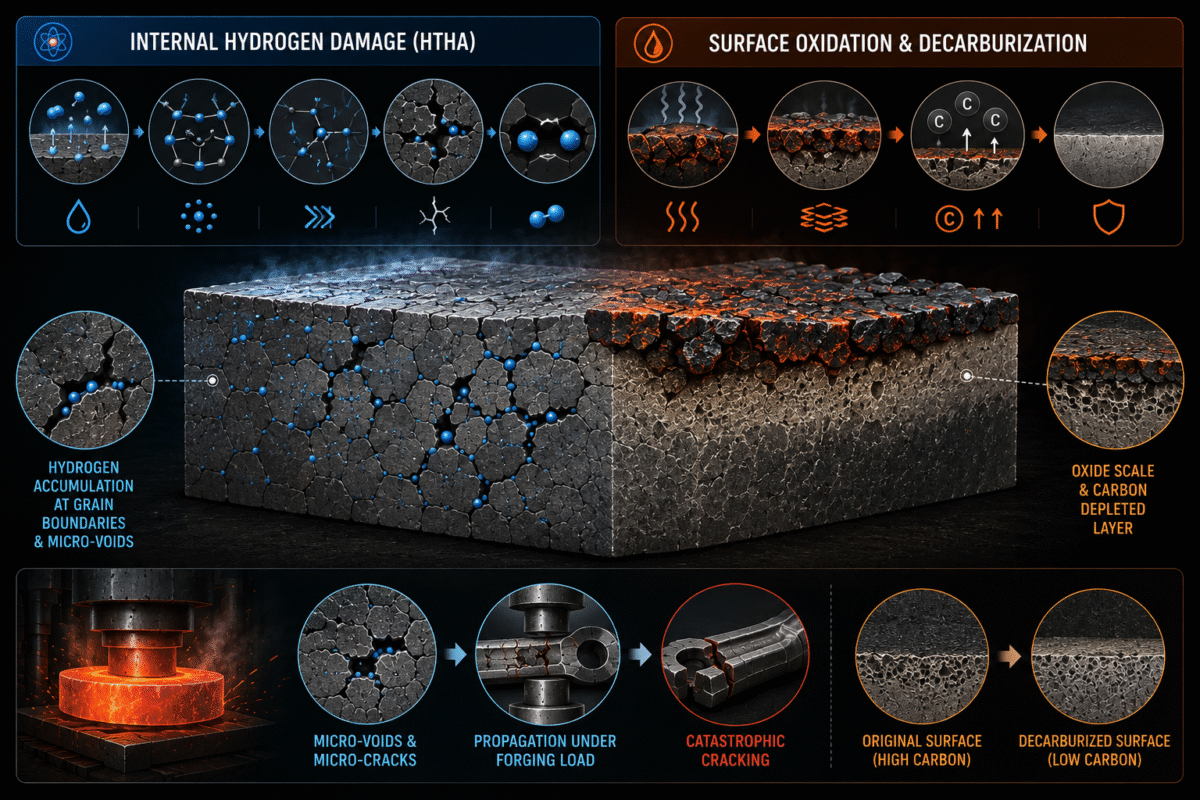
Furthermore, elevated water vapor levels accelerate high-temperature surface oxidation (scaling) and surface decarburization. Water vapor acts as a potent oxidizing agent, rapidly reacting with surface carbon in high-carbon alloys. This depletion of superficial carbon alters the microstructural hardness of the outer component boundary, necessitating extensive post-forge machining or rendering components out of specification.
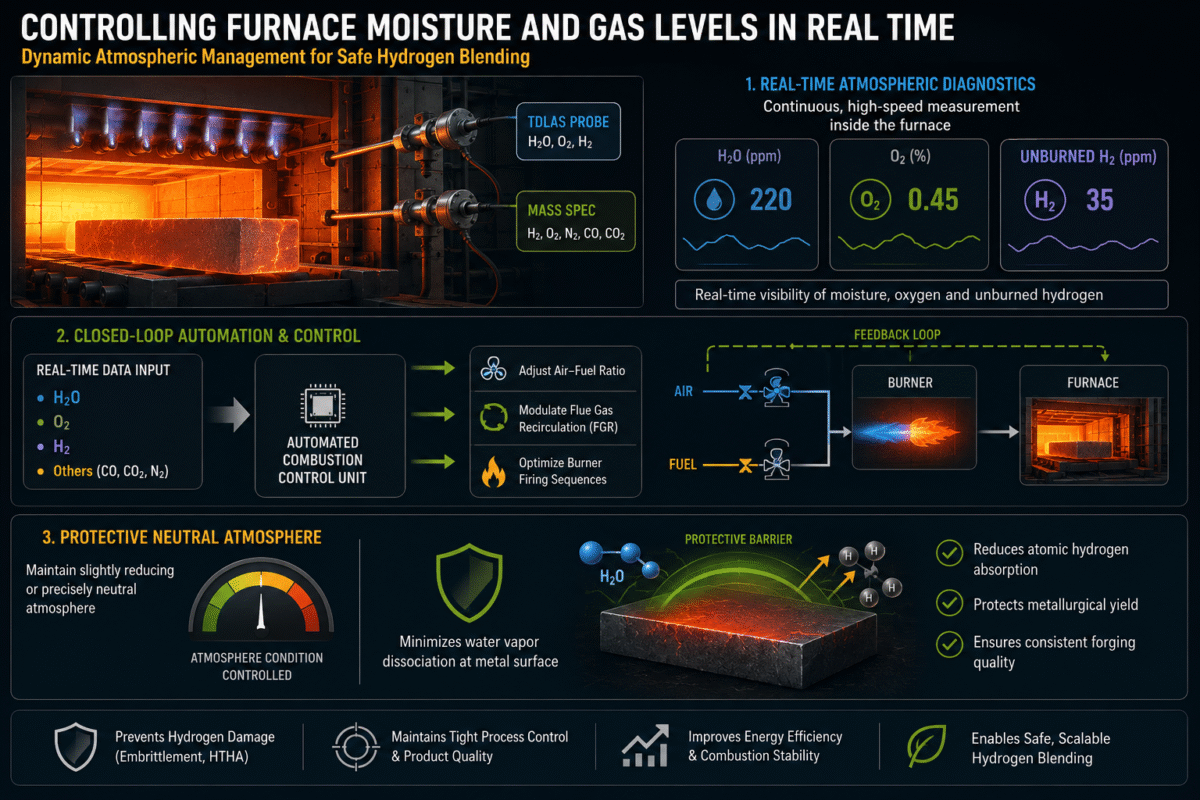
Controlling Furnace Moisture & Gas Levels in Real Time
To safely implement hydrogen blending without compromising metallurgical yield, forging facilities must transition from traditional, static combustion controls to dynamic atmospheric management systems. Standard pneumatic air-fuel ratio controls derived from consistent natural gas heating values are insufficient because hydrogen requires less air for stoichiometric combustion per unit volume, but delivers only one-third of methane’s volumetric energy density.
Maintaining tight control over furnace atmospheric dew point and oxygen activity is essential:
- Diagnostic Tools: Facilities must integrate continuous, high-speed atmospheric diagnostic tools like Tunable Diode Laser Absorption Spectroscopy (TDLAS) and mass spectrometry into the heating chamber for real-time monitoring of H₂O, O₂ , and unburned H₂ concentrations.
- Closed-Loop Automation: Moisture data fed back into automated combustion control units allows dynamic modulation of the air-fuel ratio, adjustment of Flue Gas Recirculation (FGR), and fine-tuning of burner firing sequences.
- Protective Neutralization: Maintaining a slightly reducing or precisely controlled neutral atmosphere minimizes water vapor dissociation at the metal surface, creating a protective barrier against atomic hydrogen absorption during long soaking cycles.
Equipment Upgrades and Emissions Management
From an asset management perspective, hydrogen blending offers a progressive path to deep decarbonization that allows industrial operators to leverage existing capital assets. Empirical testing demonstrates that natural gas distribution piping and standard industrial burners can typically accept hydrogen blends of up to 20% by volume with minimal hardware modifications, yielding an immediate carbon dioxide reduction of 7% to 8%.
Scaling beyond 20% hydrogen toward higher blend ratios (50% to 100% H₂ ) requires targeted capital expenditure:
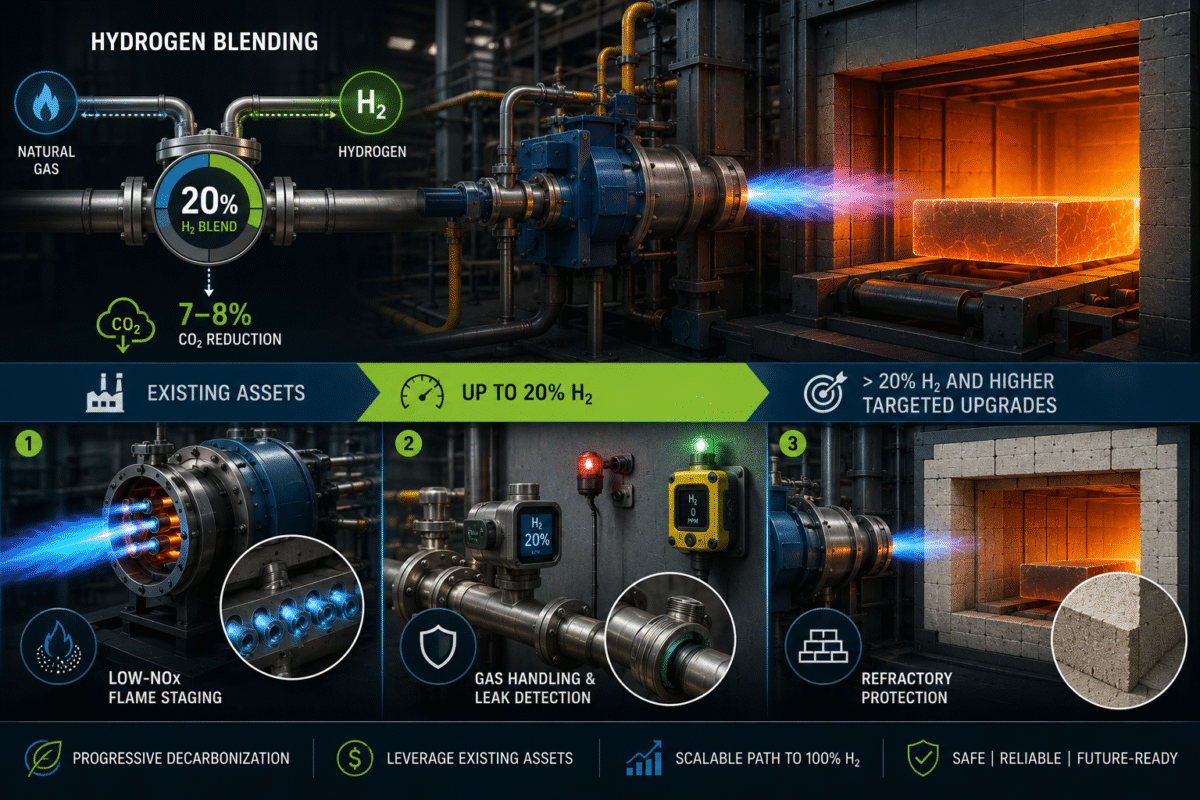
- Low-NOx Flame Staging: Higher combustion temperatures accelerate thermal nitrogen oxide (NOx) formation via the Zeldovich mechanism. Purpose-built low-NOx burners utilizing staged fuel/air injection or internal flue gas recirculation are required.
- Gas Handling & Leak Detection: Piping headers require upgraded seal materials suited for hydrogen’s low molecular weight, mass flow meters calibrated for low-density gas, and fast-acting optical flame and gas detectors.
- Refractory Protection: High-density alumina refractories or specialized ceramic fiber coatings must be installed near burner ports to withstand localized thermal radiation and high-velocity gas erosion.
Step-by-Step Adoption Plan
To systematically manage technical, operational, and metallurgical risks, heavy forging operators should adopt a structured, three-phase implementation framework:
|
Phase |
Primary Objective |
Key Technical Scope |
Decarbonization Impact |
|
Phase 1 Feasibility & Baseline |
Atmospheric Baseline & CFD Simulation |
Model furnace heat transfer profiles; install TDLAS atmosphere sensors; audit gas piping integrity. |
Baseline established; zero immediate risk. |
|
Phase 2 Low-Blend Validation |
10%–20% H₂ Volumetric Injection |
Calibrate mass flow controllers; run low-risk preheat trials; perform post-forge mechanical testing for embrittlement. |
7%–8% Direct CO₂ Reduction |
|
Phase 3 High-Blend Scale-Up |
50%+ H₂ Advanced Blending |
Install multi-fuel low-NOx burners; integrate closed-loop atmospheric controls; secure long-term green H₂ supply. |
30%–100% CO₂ Reduction |
Real-World Case Studies in Industry
Under the framework of India’s National Green Hydrogen Mission (targeting 5 MMTPA of green hydrogen capacity), several major steelmakers, forging conglomerates, and public sector undertakings in India have transitioned from theoretical evaluation to active industrial pilot implementations.
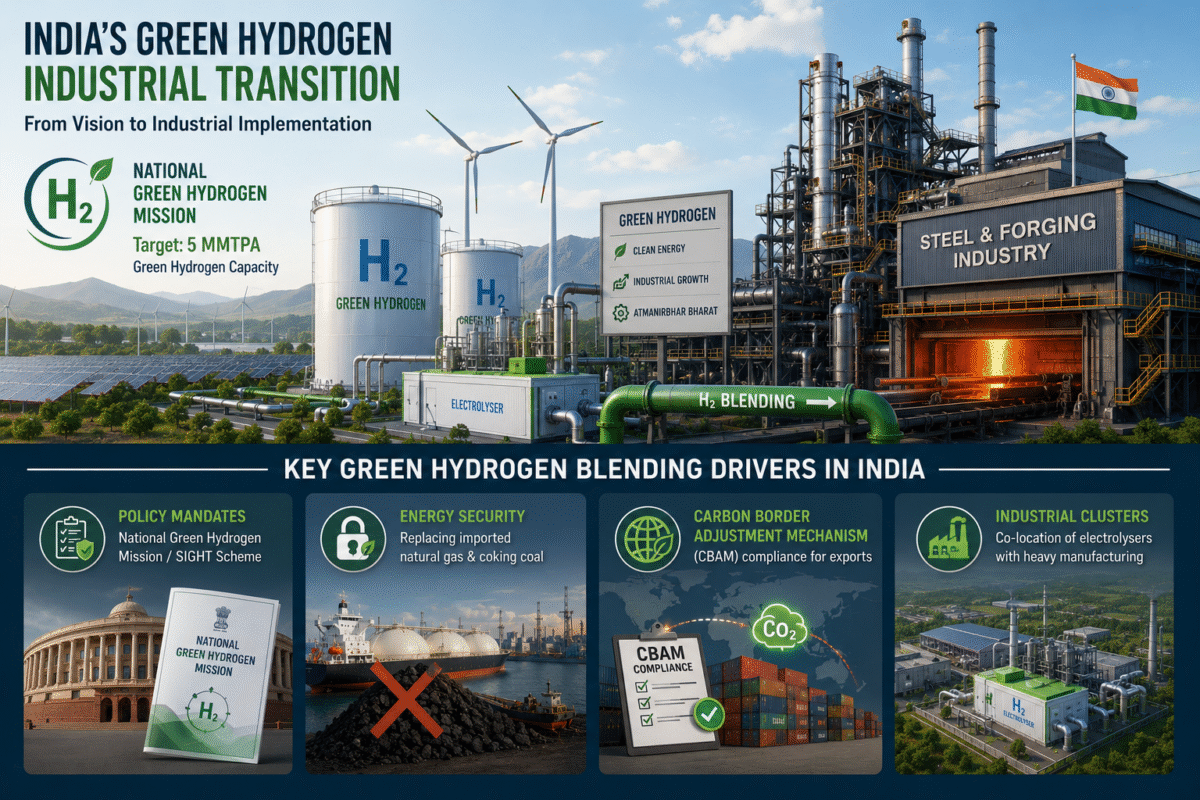
Key Green Hydrogen Blending Drivers in India:
- Policy Mandates (National Green Hydrogen Mission / SIGHT Scheme)
- Energy Security (Replacing imported natural gas & coking coal)
- Carbon Border Adjustment Mechanism (CBAM compliance for exports)
- Industrial Clusters (Co-location of electrolysers with heavy manufacturing)
Key Industrial Implementations & Pilot Initiatives in India
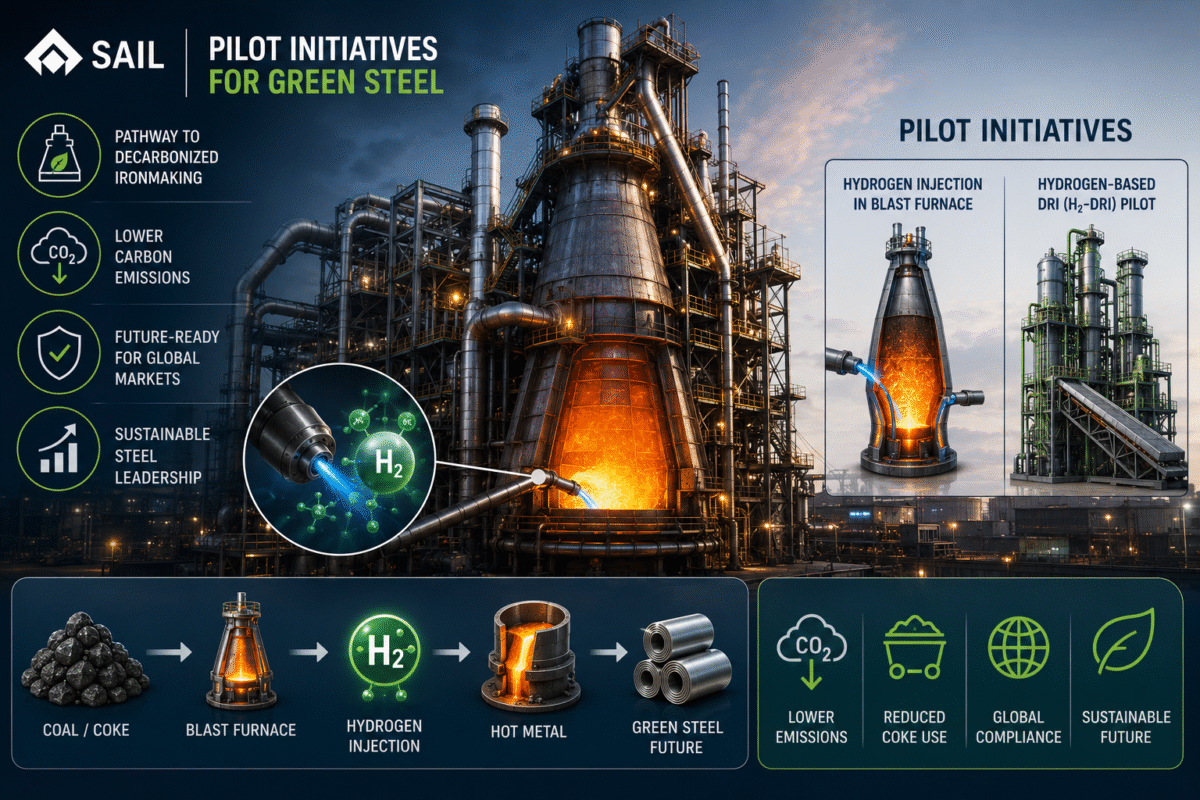
1. Steel Authority of India Limited (SAIL) – Industrial Hydrogen Injection & DRI Pilots
-
- Project Focus: Direct injection of hydrogen gas into Blast Furnaces (BF) to partially replace pulverized coal/coke as a reducing agent, and pilot development for Hydrogen-based Direct Reduced Iron (H2-DRI) production.
- Implementation Details: Under the National Green Hydrogen Mission (Ministry of Steel), SAIL has initiated pilot-scale hydrogen injection projects (e.g., at Bokaro Steel Plant with Primetals Technologies and via RDCIS research programs). The focus centers on tuyere-level gas injection dynamics, monitoring raceway combustion behavior, thermal load on tuyeres, and potential coke-rate reductions during ironmaking.
- Decarbonization Context: Formed as part of SAIL’s long-term green steel strategy to decarbonize primary ironmaking—the most carbon-intensive phase of integrated steel production—to reduce Scope 1 emissions intensity ahead of global carbon regulations like the EU’s Carbon Border Adjustment Mechanism (CBAM).
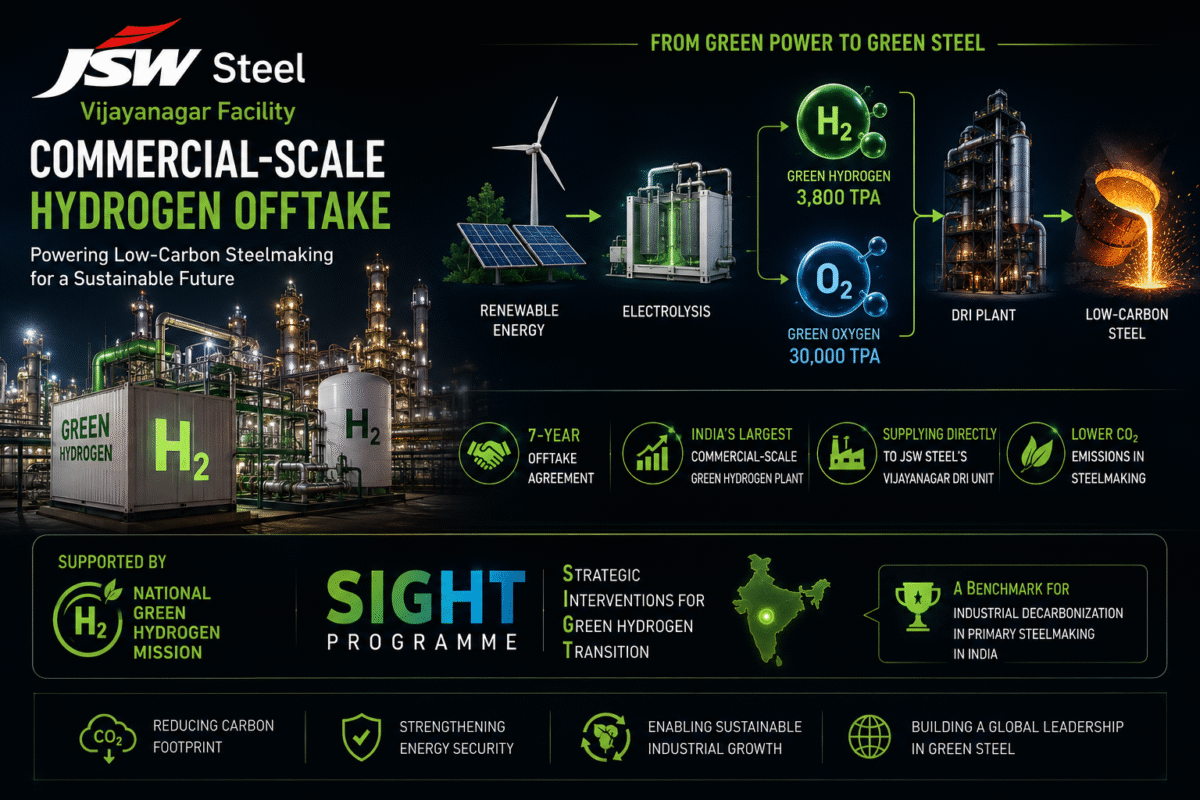
2. JSW Steel (Vijayanagar Facility) – Commercial-Scale Hydrogen Offtake
-
- Project Focus: Integration of green hydrogen into the Direct Reduced Iron (DRI) process for low-carbon steel production, together with the supply and utilisation of green oxygen.
- Implementation Details: JSW Energy commissioned India’s largest commercial-scale green hydrogen plant located adjacent to JSW Steel’s Vijayanagar plant in Karnataka. Under a 7-year offtake agreement, the plant supplies 3,800 tonnes per annum (tpa) of green hydrogen and 30,000 tpa of green oxygen directly to the DRI unit.
- Decarbonization Context: Supported by the Strategic Interventions for Green Hydrogen Transition (SIGHT) programme under the National Green Hydrogen Mission. This project serves as a key benchmark for industrial decarbonization in primary steelmaking in India.
3. Tata Steel (Jamshedpur Works) – Blast Furnace Hydrogen Injection Trials
-
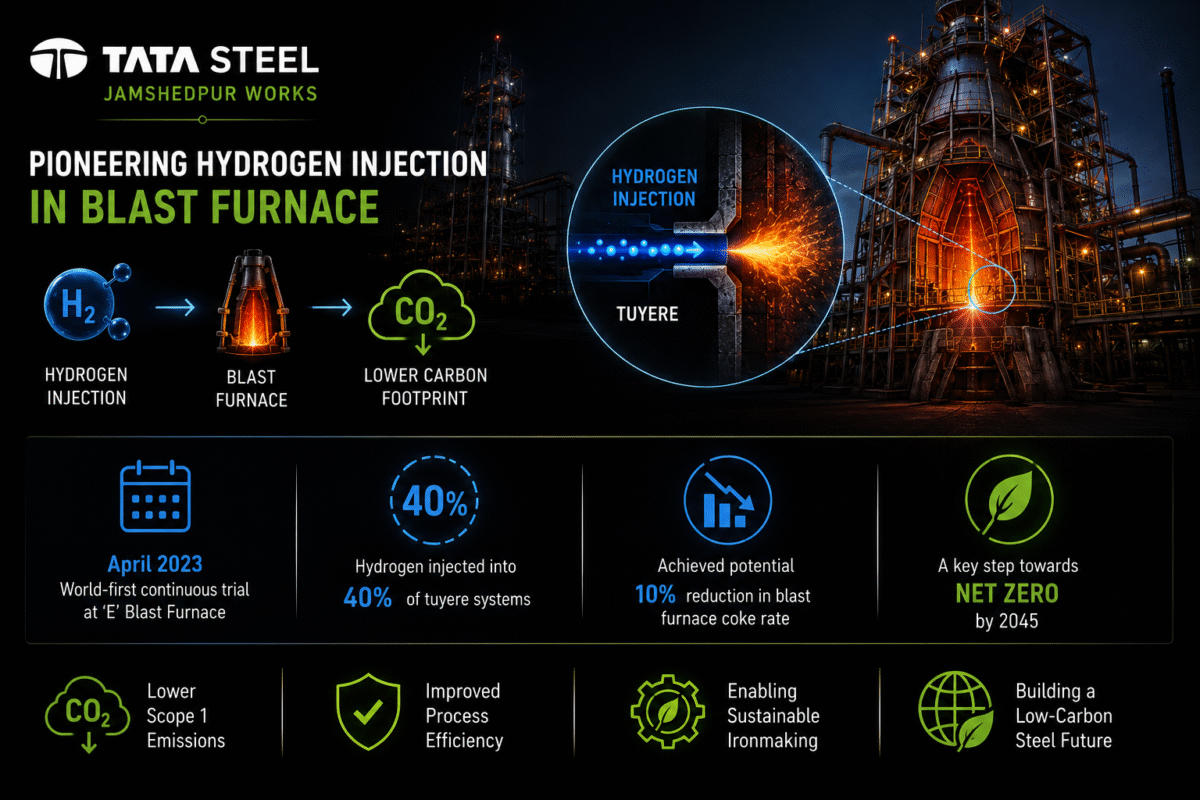
- Project Focus: Continuous injection of hydrogen gas into the blast furnace raceway to partially substitute fossil fuel/PCI input, and cut Scope 1 CO₂ emissions in primary ironmaking.
- Implementation Details: In April 2023, Tata Steel successfully executed a world-first continuous trial by injecting hydrogen gas into 40% of the injection systems (tuyeres) of the ‘E’ Blast Furnace at its flagship Jamshedpur Works. The trial evaluated raceway thermal dynamics, flame stability, top gas temperature, and demonstrated a potential 10% reduction in blast furnace coke rate.
- Decarbonization Context: The hydrogen trial forms part of Tata Steel’s Carbon Direct Avoidance (CDA) approach, which focuses on reducing carbon use directly within ironmaking processes. Tata Steel has stated an ambition to achieve less than 1.8 tCO₂/tcs carbon-emission intensity for Tata Steel India by 2030 and to reach Net Zero by 2045. Hydrogen-based steelmaking is one of the technologies being evaluated as part of this longer-term decarbonization pathway.
4. City Gas Distribution (CGD) Hydrogen Blending Pilots (GAIL & NTPC)
-
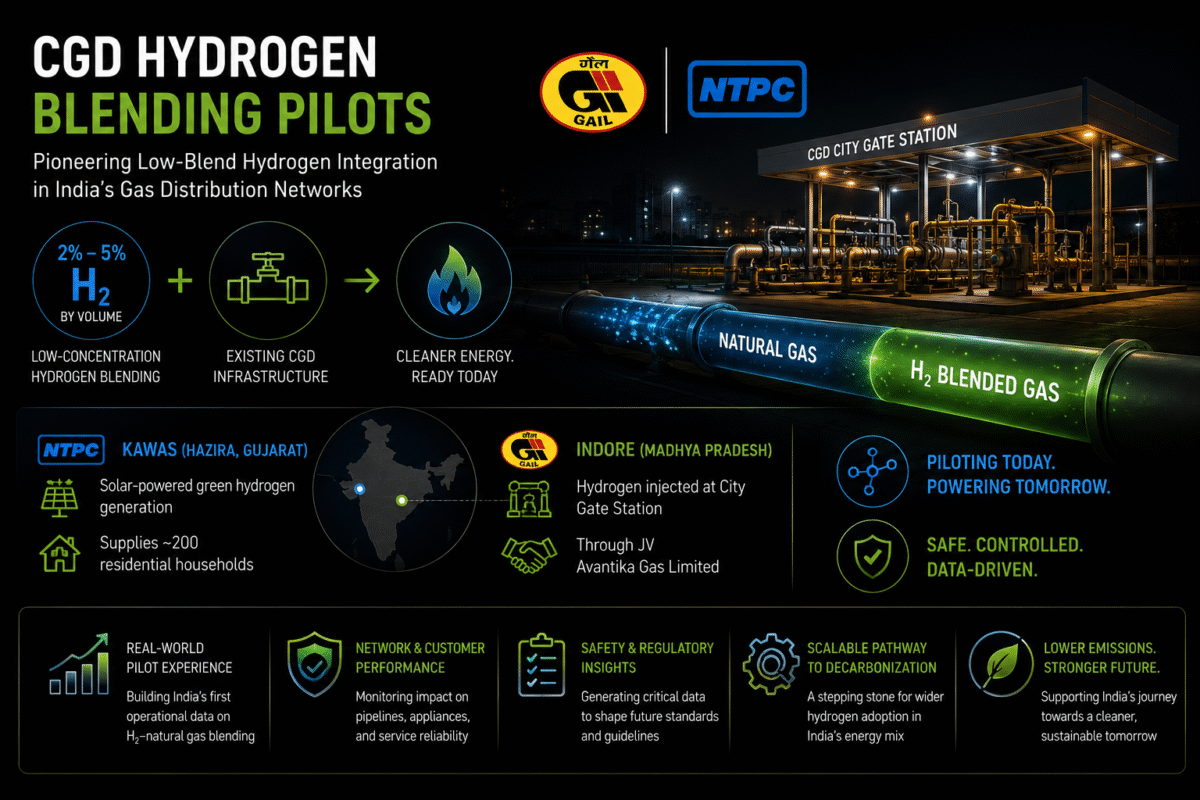
- Project Focus: Demonstrating low-concentration hydrogen blending into existing City Gas Distribution (CGD) and township natural gas pipelines.
- Implementation Details: NTPC and GAIL established landmark pilot projects—such as NTPC Kawas (Hazira, Gujarat) and GAIL Indore (Madhya Pradesh)—blending 2% to 5% hydrogen by volume into Piped Natural Gas (PNG) networks. NTPC Kawas utilized solar power to generate green hydrogen for ~200 residential households, while GAIL injected hydrogen at its Indore City Gate Station via its joint venture Avantika Gas Limited.
- Decarbonization Context: These projects provide Indian operating experience with hydrogen-natural-gas blending in existing gas-distribution infrastructure. They demonstrate that low-concentration hydrogen blending can be implemented under controlled operating conditions while generating data on network performance, customer applications, safety and regulatory requirements. However, the results should be treated as application- and blend-specific pilot evidence, rather than proof that all existing CGD pipelines or equipment can accommodate hydrogen at higher concentrations without modification.
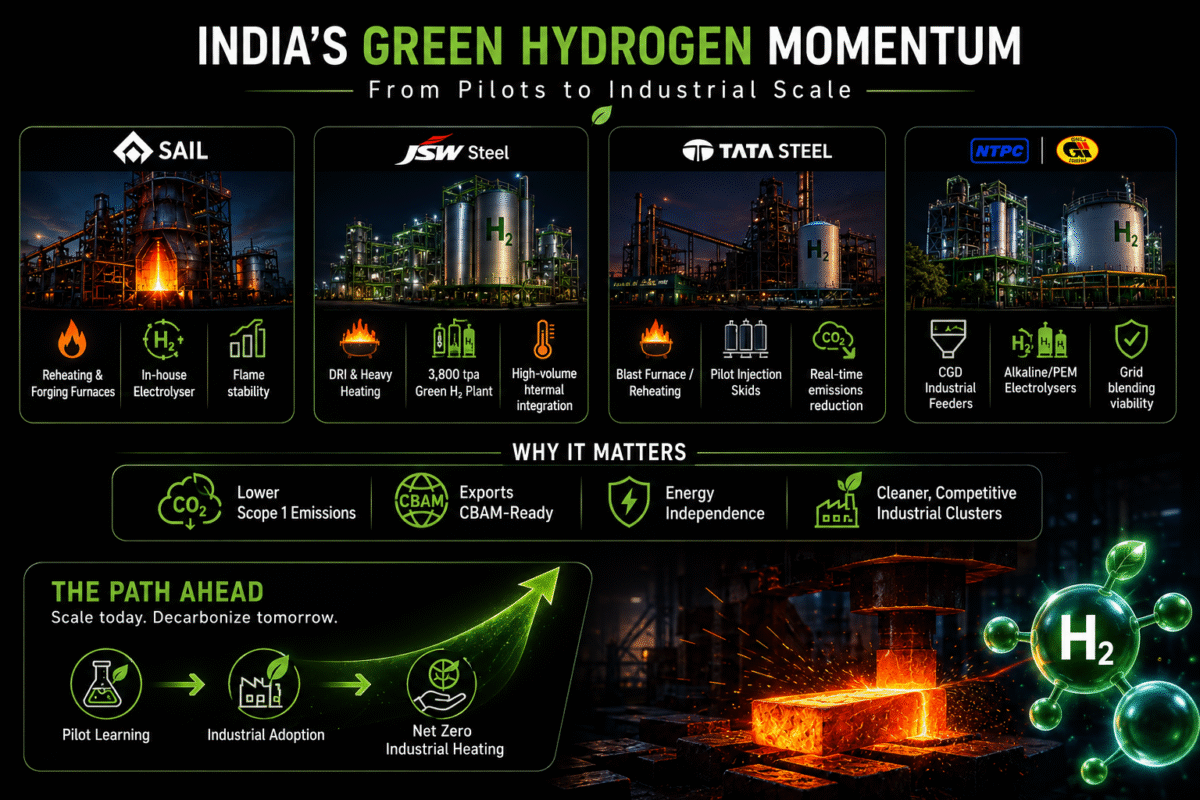
Summary Matrix: Indian Industrial Hydrogen Pilots
To calculate PCF, you need primary data from your supply chain. Use this template for your vendors:
|
Organization / Operator |
Operational Asset |
Hydrogen Source / Capacity |
Primary Technical Focus Area |
|
SAIL |
Reheating & Forging Furnaces |
In-house Pilot Electrolyser / Gas Blending |
Flame stability, scale formation, thermal soak profiles. |
|
JSW Steel (Vijayanagar) |
DRI & Heavy Heating Operations |
3,800 tpa Green Hydrogen Plant (JSW Energy) |
Replacement of natural gas; high-volume thermal integration. |
|
Tata Steel |
Blast Furnace / Reheating Burners |
Pilot Hydrogen Injection Skids |
Real-time burner response, gas consumption, emissions reduction. |
|
NTPC / GAIL |
CGD Industrial Feeders |
Alkaline/PEM Electrolysers (Kawas & Indore) |
Grid blending viability, valve integrity, low-blend safety limits. |
Injecting green hydrogen into forging burners represents one of the most promising frontiers for industrial thermal decarbonization. While the thermodynamic and metallurgical challenges—specifically elevated flame speeds, localized overheating, and moisture-induced embrittlement—are substantial, they are not insurmountable. By pairing advanced atmospheric sensing and low-NOx combustion engineering with a phased retrofit strategy, forge operators can achieve substantial Scope 1 carbon reductions while safeguarding metallurgical excellence and long-term asset reliability.