

INTRODUCTION
Balancing Operational Strength and Carbon Reduction
In the modern manufacturing world, corporate success is defined by how well a company can balance operational strength with carbon reduction. For companies running high-precision manufacturing, stamping, and metal-working lines, buying and throwing away cutting tools and dies represents a major hidden cost. It is also a massive, often overlooked source of carbon emissions.
Cemented tungsten carbide and High-Speed Steel (HSS) are the foundation of modern manufacturing. They are chosen for their extreme hardness, heat resistance, and long life. However, mining, refining, and making these specialized metals require a massive amount of energy. This process adds heavily to a company’s Scope 3 supply chain carbon footprint.
Historically, companies have managed drilling, milling, and blanking tools using a wasteful “take-make-dispose” approach. When a die or tool gets worn down, loses its exact shape, or cracks, it is usually treated as scrap and thrown away. This habit creates huge replacement costs. It also ignores the massive amount of carbon emitted to make new tools from raw ore.
“Moving to a standardized, closed-loop tooling system – built on clear regrinding and remanufacturing steps – offers a major business advantage. By reshaping worn tools instead of throwing them away, a company can sharply cut its raw material use, lower its spending, and make clear progress toward its carbon reduction goals.”
The High Carbon Cost of Making New Tools
To understand why closed-loop tooling is so effective for carbon reduction, we must look at how new tools are made. Producing cemented carbide relies on metals like tungsten, cobalt, and titanium. Mining these materials is highly invasive and energy-heavy.
Turning these raw materials into tungsten carbide requires processing temperatures that top 1,400°C. This demands huge amounts of electricity and heat. High-Speed Steel also requires complex blending with elements like molybdenum, chromium, and vanadium, followed by long, multi-stage heat treatments to make the steel hard enough for industrial use.
Because of this intense process, making one kilogram of new carbide or tool steel generates much higher carbon emissions per ton than making standard structural steel. When a factory throws away a worn drill bit, end mill, or blanking die, it throws away all the energy and carbon that went into making that material.
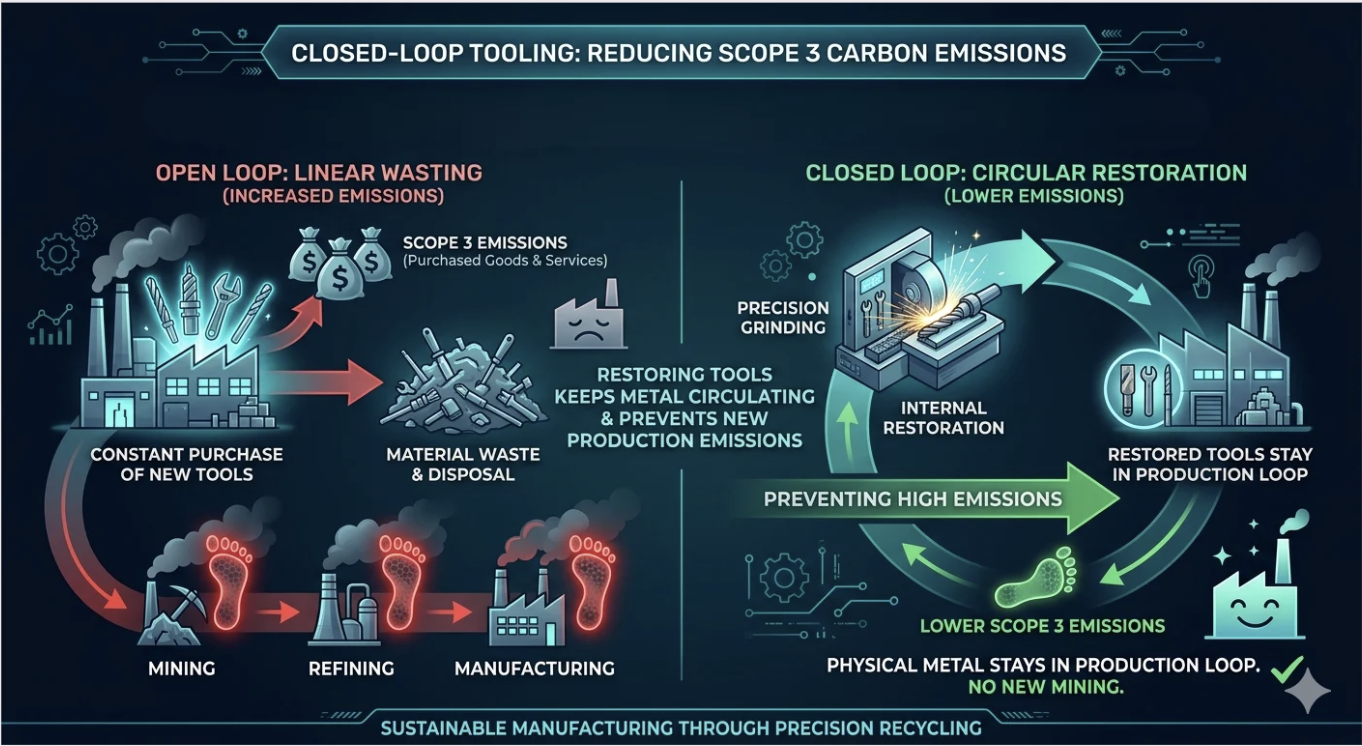
Understanding the Process: Regrinding vs. Remanufacturing
An effective closed-loop strategy uses two distinct methods depending on how badly a tool is worn: local maintenance (regrinding) and complete restoration (remanufacturing). Both methods stop tools from being thrown away too early, keeping performance high while protecting the environment.
1. Precision Regrinding for Milling and Drilling Tools
During normal daily operations, cutting tools like solid carbide end mills and drills suffer from tiny chips, edge wear, and peeling coatings. If these issues are ignored, the tool will quickly fail, damaging the parts being made. Precision regrinding solves this by shaving off a microscopic layer of the worn metal from the cutting edge using automated grinding machines.
This process does not just sharpen the edge; it completely rebuilds the tool’s original blueprint shapes and angles. When done correctly, a reground tool performs at 95% to 98% of the efficiency of a brand-new tool. Because this process removes only a tiny fraction of a millimeter of metal, a premium carbide tool can go through this cycle five to eight times before it becomes too small to use. This multiplies the life of the initial tool and spreads the original carbon footprint over a much longer period.
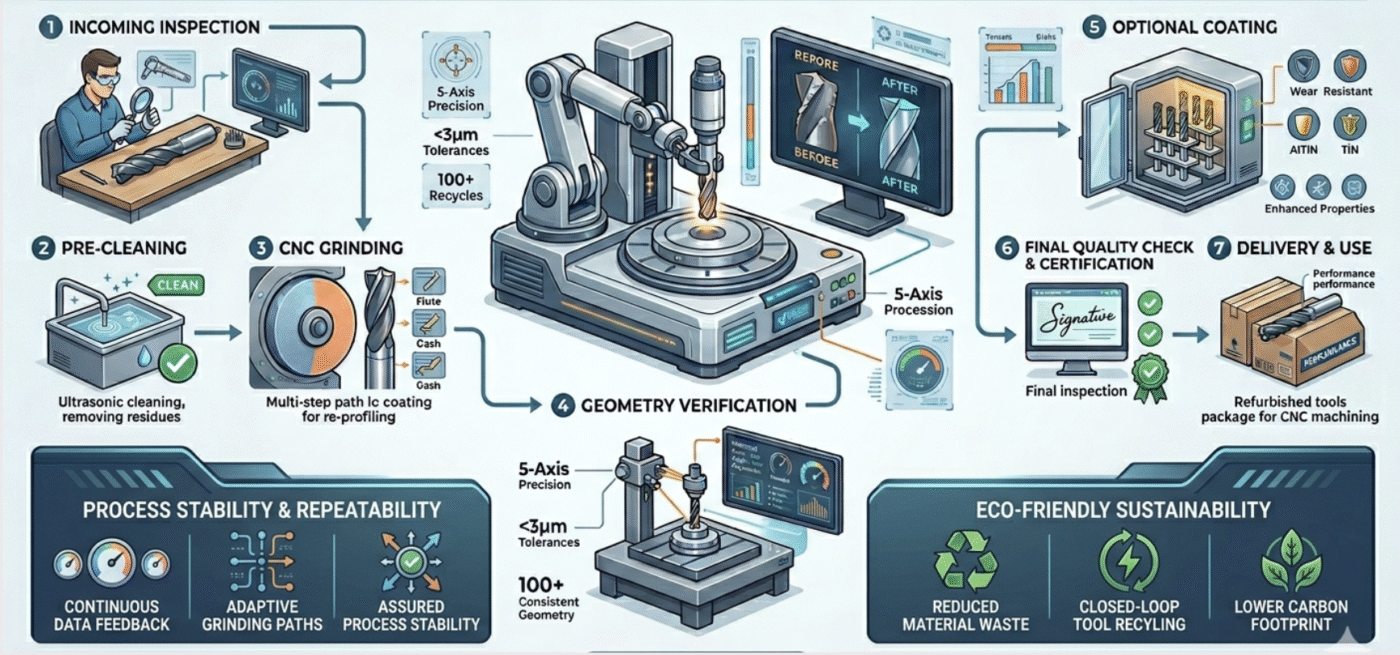
2. Remanufacturing for High-Value Blanking and Forming Dies
Large blanking and forming dies made from HSS or carbide handle massive mechanical pressure every day. Over long production runs, these large parts develop deep wear patterns, lose their shape, and suffer from metal fatigue that simple grinding cannot fix. This is where remanufacturing comes in. The tool is taken apart, checked with ultrasound to find hidden internal cracks, and rebuilt from the inside out.
Remanufacturing often uses advanced welding tech, like laser cladding, to add fresh, high-grade tool steel or carbide back onto the worn areas. The part is then machined using high-precision electrical or automated milling back to its exact original dimensions. Finally, it receives heat treatments and specialized protective coatings. This deep repair restores the structural strength of the die. It allows a part that would normally be thrown away to return to the factory floor with a brand-new warranty and a full second life, avoiding the high carbon cost of a total replacement.
The Key Benefits: Lower Carbon and Lower Costs
Switching to a closed-loop tooling system brings immediate, growing rewards for both corporate sustainability and daily operations.
1. Major Scope 3 Carbon Reductions
Because remanufacturing and regrinding are done locally using mechanical processes, they use only a small fraction (often less than 15% to 20%) of the energy needed to mine and melt raw metals for new tools. This creates an identical drop in the carbon footprint for every tool used.
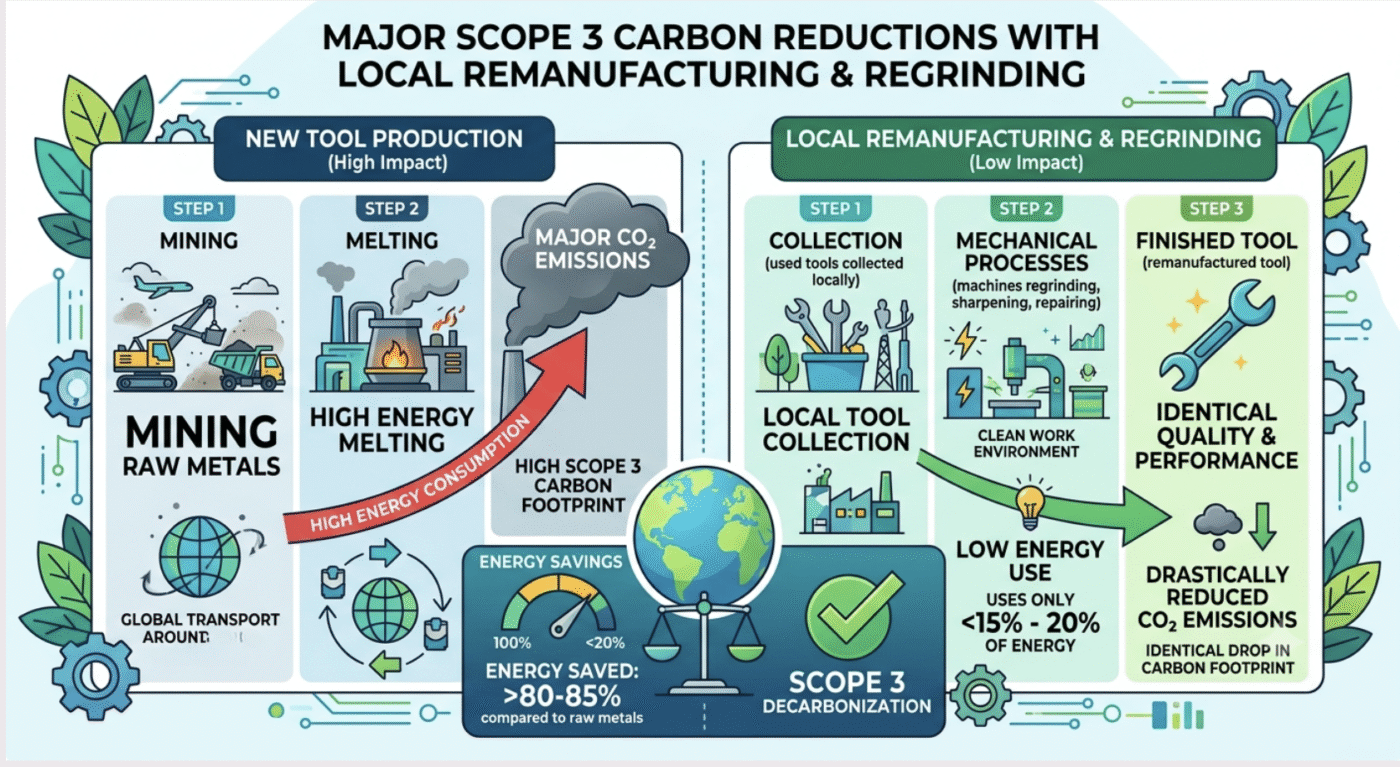
2. Lower Scope 1 and 2 Factory Emissions
Keeping tools sharp through regular grinding reduces the strain and energy pull on factory machines. Dull tools cause extra friction, which makes CNC machines and stamping presses draw more electricity. Keeping cutting edges sharp ensures machines run efficiently, lowering the factory’s Scope 2 electricity emissions.
3. Better Total Cost of Ownership
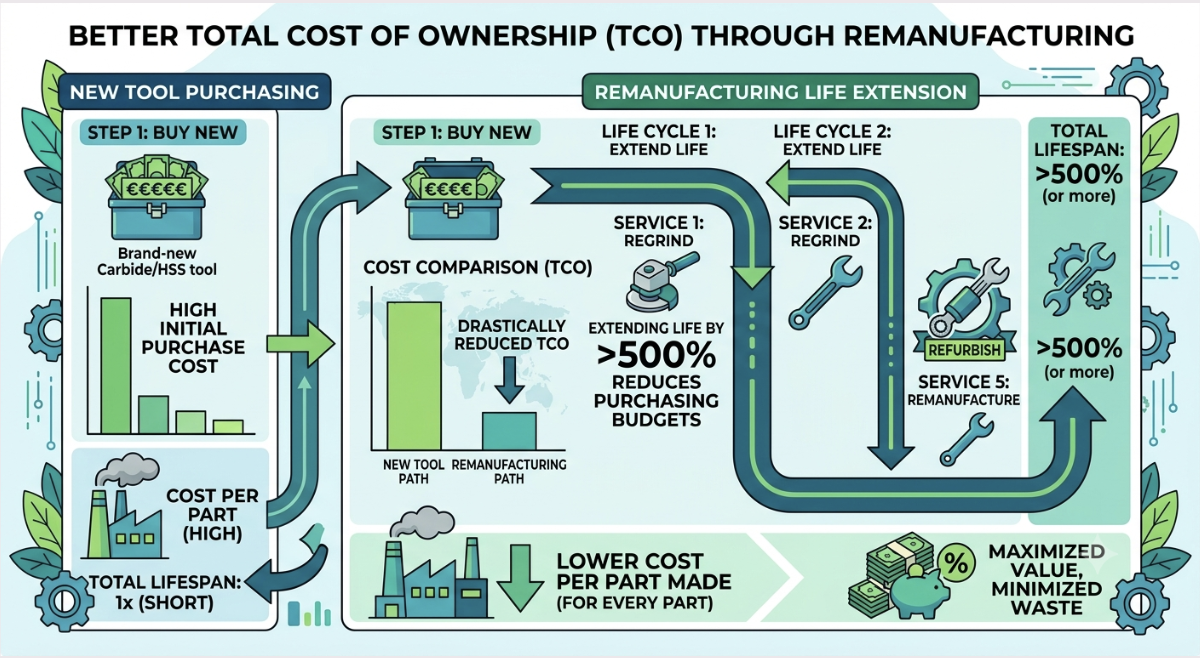
Buying a brand-new carbide or HSS tool can cost several times more than a professional regrinding or remanufacturing service. By extending a tool’s life by 500% or more, companies can drastically reduce their purchasing budgets and lower the cost of every part they make.
4. Stronger Supply Chain Security
The global markets for tungsten and specialized alloys are volatile and prone to trade limits. A closed-loop system protects a factory from supply shortages and rising material costs by building a self-sustaining supply of tools right inside the company.
A Practical Blueprint for Moving Forward
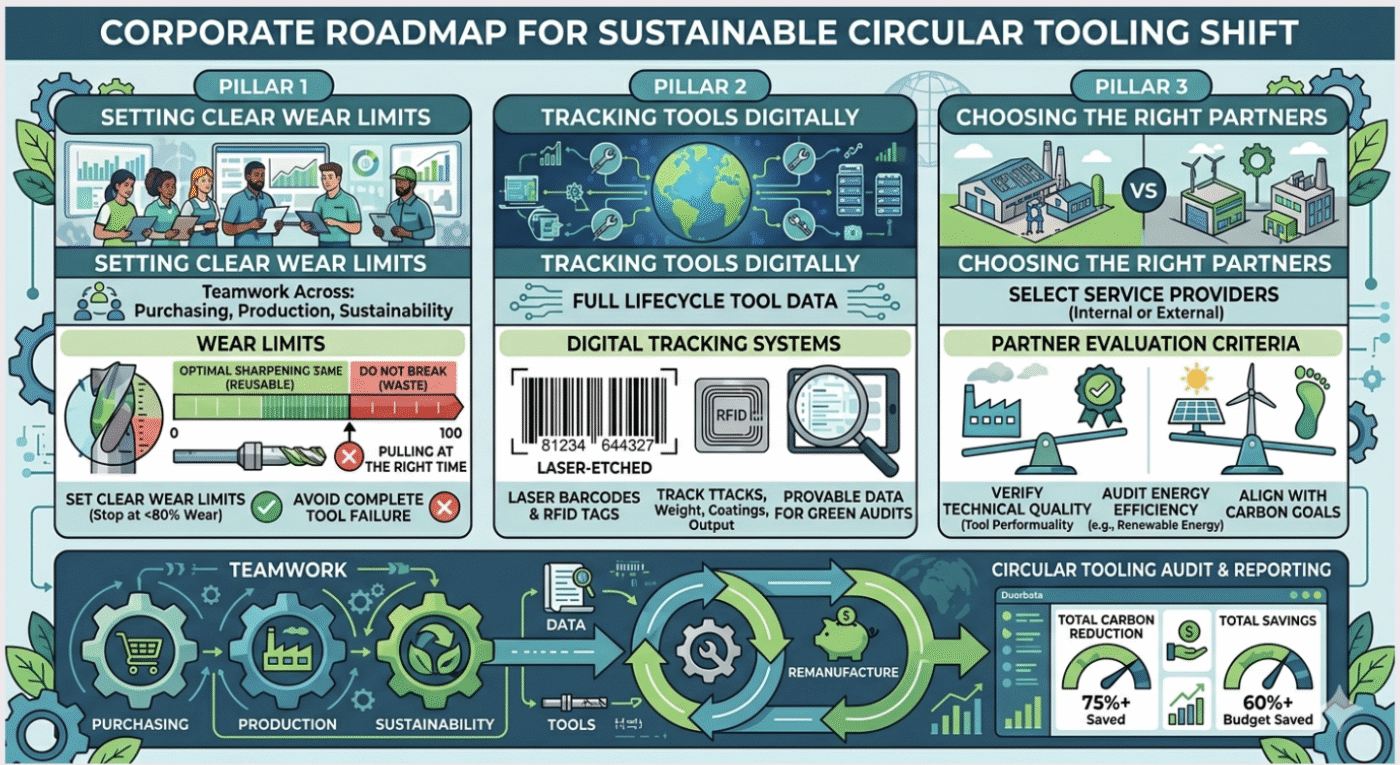
Making this shift work requires teamwork across purchasing, production, and sustainability teams. The corporate roadmap should focus on three main pillars:
- Setting Clear Wear Limits: Production teams must stop the habit of running tools until they completely break. Setting clear limits based on the number of parts produced or machine hours ensures tools are pulled for sharpening while they still have enough metal left to be saved.
- Tracking Tools Digitally: Every high-value die and cutting tool should have a unique tracker, like a laser-etched barcode or an RFID tag. This lets managers track the tool’s entire history—its starting weight, how many times it has been sharpened, its coatings, and its total output. This data provides the exact proof needed for green audits and carbon reporting.
- Choosing the Right Partners: Companies need to decide whether to build their own internal grinding centers or partner with certified external suppliers. External suppliers must be checked not only for their technical quality but also for their energy efficiency, ensuring their work aligns with the company’s carbon goals.
Conclusion
Closed-loop tooling is no longer just a minor shop-floor habit; it is a vital strategy for the modern industrial business. By making regrinding and remanufacturing a core part of daily operations, companies can decouple their production growth from raw material waste. This structural change meets two critical corporate needs at once: it drives down operational costs while delivering a clear, verifiable method for industrial carbon reduction.