Context
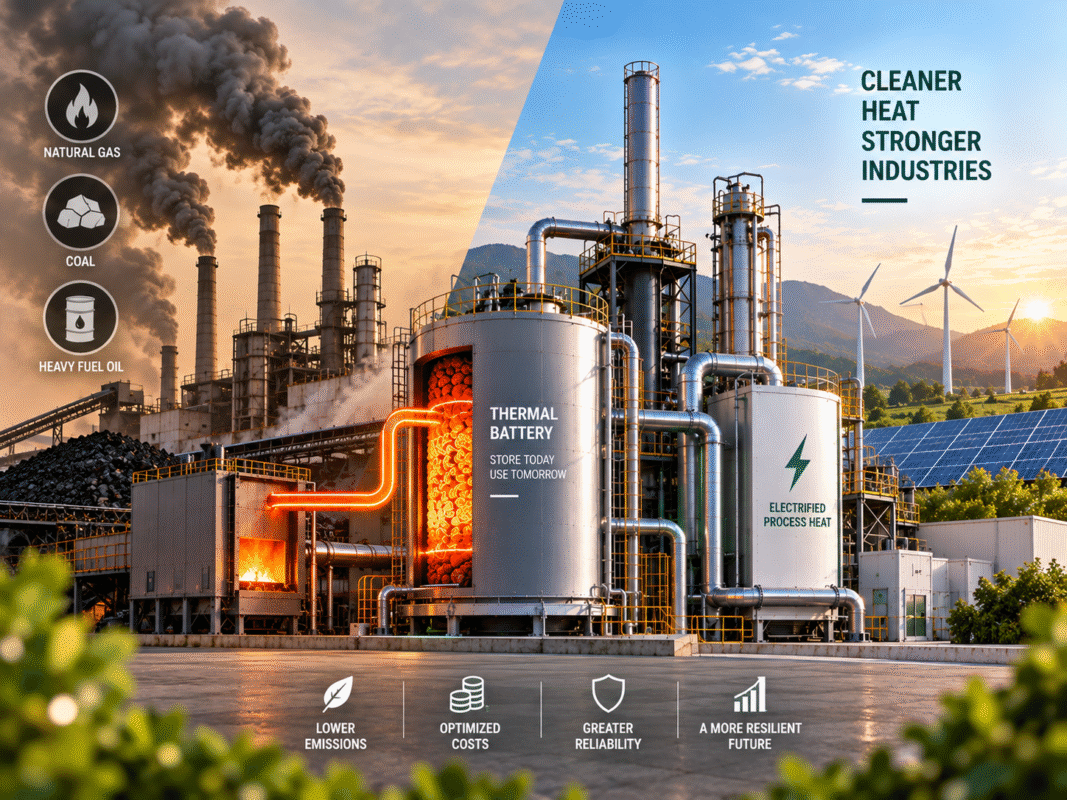
Process heat accounts for over two-thirds of total industrial energy demand globally. From steam generation in food processing to high-temperature calcination in cement production, fossil fuels—primarily natural gas, coal, and heavy fuel oil—have historically been the default choice for generating process heat. However, with tightening carbon regulations, volatile fossil fuel prices, and aggressive corporate sustainability mandates, transitioning process heat to zero-carbon alternatives has shifted from a long-term goal to an immediate operational priority.
Electrification represents the most viable path toward zero-carbon manufacturing. Yet, direct electrification using grid electricity often presents major operational hurdles: high peak demand charges, grid connection bottlenecks, and potential downtime risks. This article examines how high-temperature electrification technologies, paired with modern thermal energy storage (thermal batteries), enable facilities to decarbonize heat, improve plant reliability, and optimize operational costs.
Understanding Industrial Heat Profiles
Industrial heat is not uniform. Thermal demand spans a wide spectrum of temperatures, pressures, and fluid types. Designing an effective decarbonization roadmap requires segmenting facility thermal load into distinct operating ranges:
-
Low Temperature (< 150°C): Washing, pasteurization, space heating, and low-pressure hot water loops.
-
Medium Temperature (150°C – 400°C): Industrial process steam, drying, evaporation, chemical reaction heating, and curing.
-
High Temperature (> 400°C): Calcination, metal melting, glass forming, forging, kilns, and high-temp chemical reactors.
Historically, low- and medium-temperature applications relied on central fossil fuel boilers delivering steam across wide facility networks. High-temperature processes relied on direct firing inside kilns and furnaces. Decarbonizing requires replacing these legacy combustion systems with technologies tailored to specific thermal levels while maintaining tight operating tolerances.
Understanding Industrial Heat Profiles
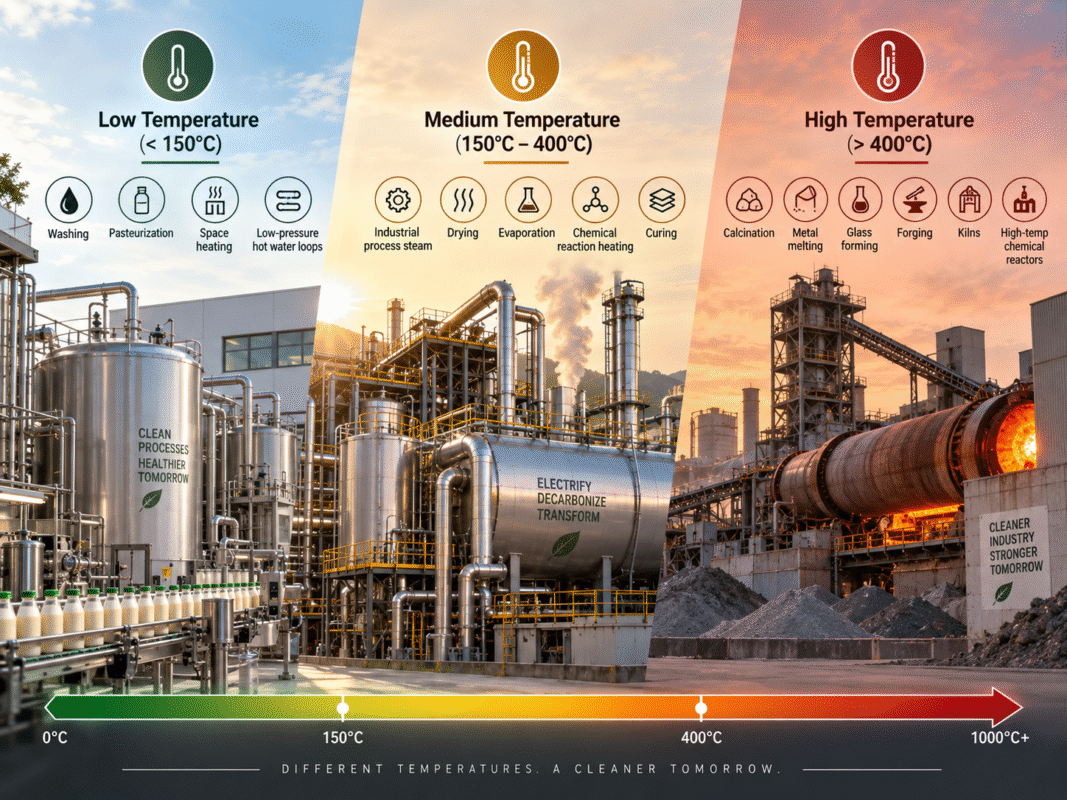
Industrial heat is not uniform. Thermal demand spans a wide spectrum of temperatures, pressures, and fluid types. Designing an effective decarbonization roadmap requires segmenting facility thermal load into distinct operating ranges:
-
Low Temperature (< 150°C): Washing, pasteurization, space heating, and low-pressure hot water loops.
-
Medium Temperature (150°C – 400°C): Industrial process steam, drying, evaporation, chemical reaction heating, and curing.
-
High Temperature (> 400°C): Calcination, metal melting, glass forming, forging, kilns, and high-temp chemical reactors.
Historically, low- and medium-temperature applications relied on central fossil fuel boilers delivering steam across wide facility networks. High-temperature processes relied on direct firing inside kilns and furnaces. Decarbonizing requires replacing these legacy combustion systems with technologies tailored to specific thermal levels while maintaining tight operating tolerances.
Key Technologies for Direct Electrification
Replacing gas burners with electric heating options involves several mature and emerging technologies, depending on process requirements:
1. High-Temperature Industrial Heat Pumps
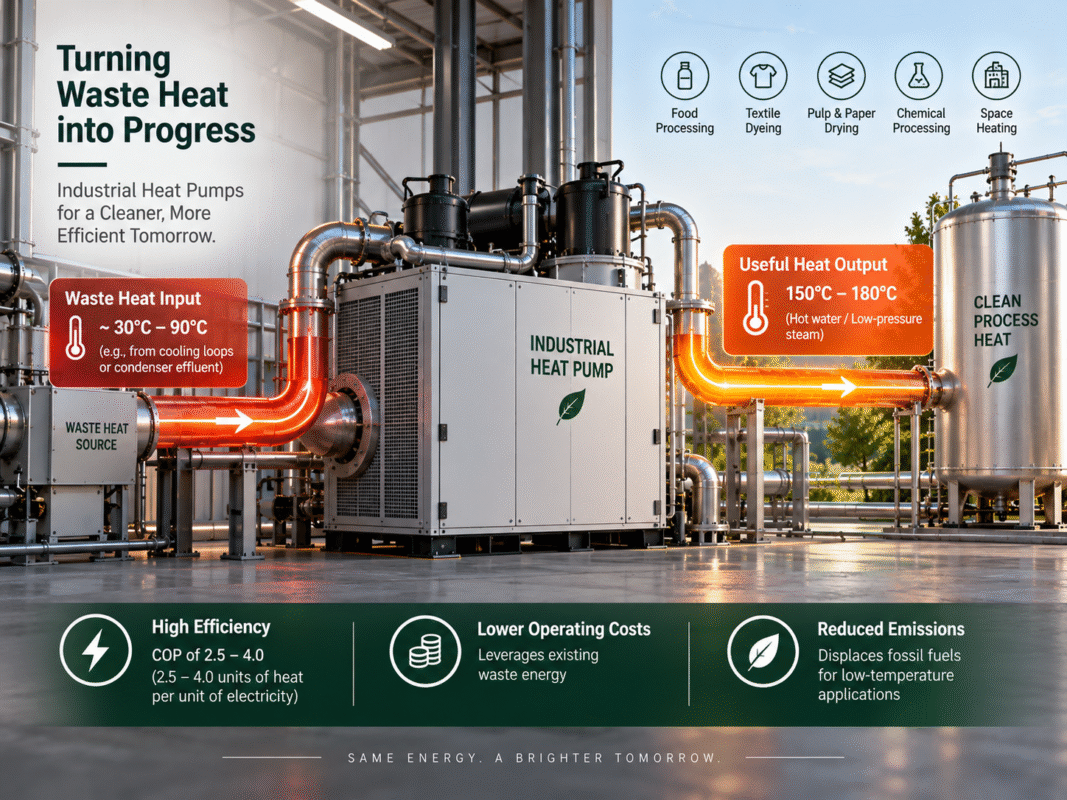
Modern industrial heat pumps utilize advanced refrigerants and synthetic oils to elevate waste heat (e.g., from cooling loops or condenser effluent) up to 150°C–180°C. By leveraging waste energy, heat pumps achieve a Coefficient of Performance (COP) between 2.5 and 4.0. This means for every unit of electrical energy consumed, the system yields 2.5 to 4.0 units of thermal output, making them extremely cost-effective for low-temperature steam and hot water applications.
2. Electric Resistance Heating & Jet Boilers
For medium-temperature steam generation (150°C to 350°C), electric resistance boilers and high-voltage electrode (jet) boilers offer rapid response and precise pressure control. Electrode boilers operate at voltage levels up to 25 kV, converting electrical energy into steam at near 99% thermal efficiency without requiring intermediate step-down transformers. They feature ramping capabilities from 0% to 100% output within minutes, providing excellent flexibility for varying process loads.
3. Electromagnetic & Radiative Heating (Induction, Microwave, Plasma)
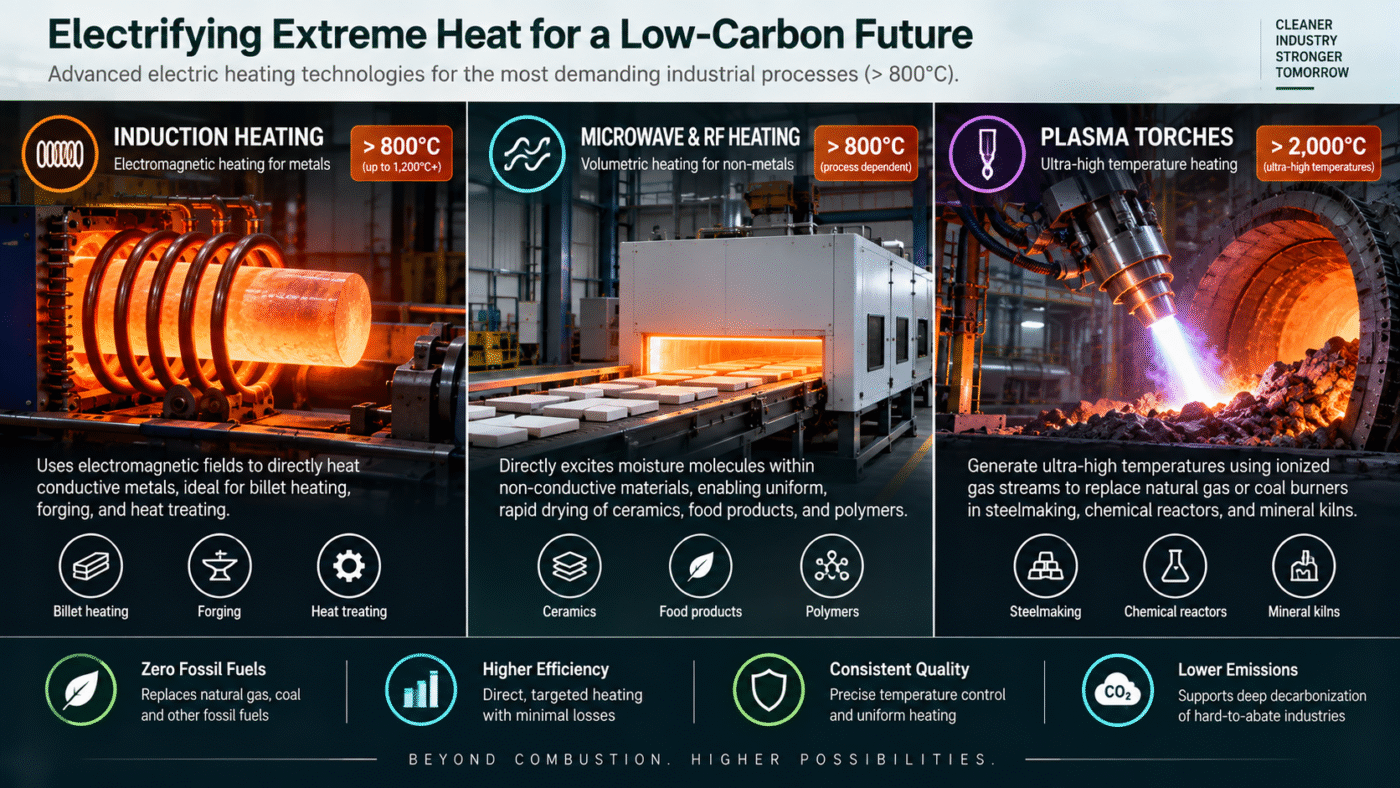
For extreme temperature requirements (> 800°C), direct contact heating methods are required:
-
Induction Heating: Uses electromagnetic fields to directly heat conductive metals, ideal for billet heating, forging, and heat treating.
-
Microwave & Radio Frequency (RF): Directly excites moisture molecules within non-conductive materials, enabling uniform, rapid drying of ceramics, food products, and polymers.
-
Plasma Torches: Generate ultra-high temperatures (> 2,000°C) using ionized gas streams to replace natural gas or coal burners in steelmaking, chemical reactors, and mineral kilns.
The Core Challenge: Grid Limits and Power Costs
While high-temperature electrification is technically feasible, direct conversion of gas-fired infrastructure to direct electric heating exposes plants to severe economic and operational risks:
-
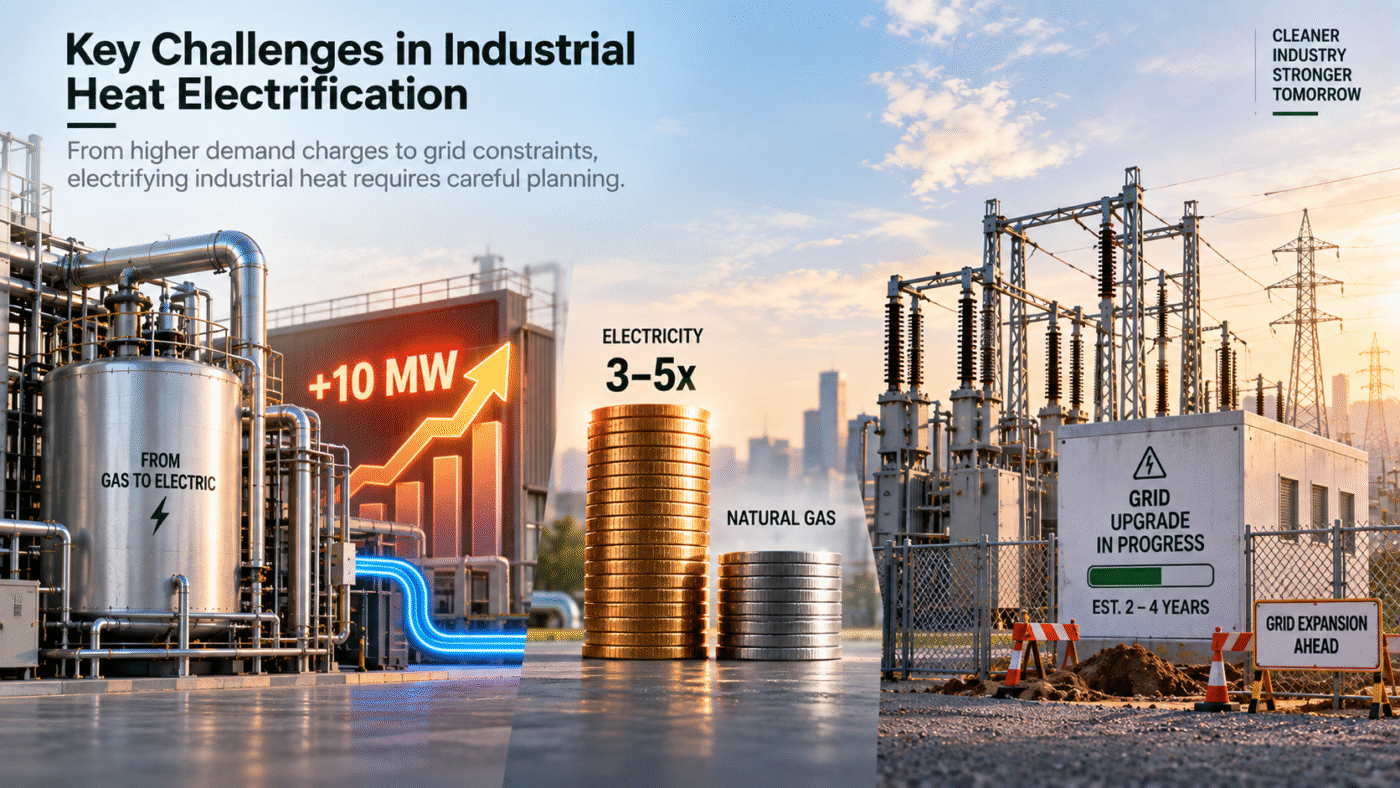
High Peak Demand Charges: Converting a 10 MW gas boiler to direct electric resistive heating adds 10 MW of continuous electrical demand to the facility’s grid connection, significantly increasing monthly capacity and demand charges.
-
Electricity-to-Gas Price Spreads (Spark Spread): In many industrial markets, electricity costs 3 to 5 times more per megawatt-hour (MWh) than natural gas. Running electric heat during peak daytime tariff periods can dramatically raise utility expenses.
-
Grid Interconnection Delays: Upgrading local sub-station infrastructure to support multi-megawatt additions often takes 2 to 4 years, delaying facility sustainability initiatives.
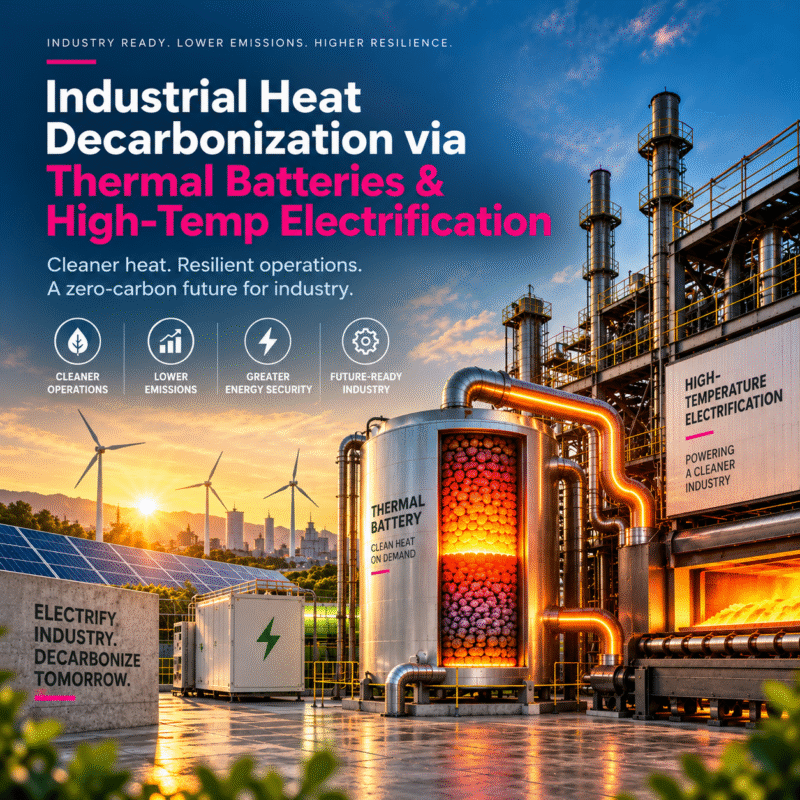
The Operational Solution: Thermal Energy Storage (TES) systems act as a thermal buffer, decoupling electricity consumption from heat output. By charging during off-peak windows or periods of low-cost renewable generation and discharging continuous process heat when needed, thermal batteries eliminate peak power charges and circumvent local grid constraints.
How Thermal Batteries Work
Modern industrial thermal batteries utilize dense solid storage media—such as crushed rock, high-density brick, or phase-change materials—enclosed in highly insulated pressure vessels. Electric heating elements (resistive wires or high-temperature heating coils) charge the core to temperatures ranging from 500°C to over 1,500°C.
|
Parameter |
Solid-State Thermal Storage (Bricks/Rock) |
Phase Change Materials (PCM / Molten Salt) |
|
Operating Temp Range |
400°C – 1,700°C |
200°C – 600°C |
|
Energy Density |
150 – 350 kWh/m³ |
80 – 200 kWh/m³ |
|
Round-Trip Thermal Efficiency |
90% – 96% |
85% – 93% |
|
Primary Output Media |
High-pressure steam, hot air, thermal oil |
Saturated steam, hot water |
|
Typical Operational Life |
25+ years (no chemical degradation) |
15–20 years (salt/PCM lifespan) |
Plant Integration and Operational Benefits
Integrating high-temperature electrification and thermal storage into an operating manufacturing facility provides several concrete operational and financial benefits:
1. Peak Shaving & Load Shifting
Thermal batteries allow plants to run high-power charging cycles during off-peak hours (e.g., overnight) when electricity rates are lowest. During peak daytime rate windows, the electric chargers turn off, and the plant operates entirely on stored thermal energy. This strategy avoids peak demand spikes and lowers effective utility costs.
2. Leveraging On-Site Renewables
Facilities with rooftop solar or nearby wind installations often face curtailment or poor export rates during midday generation peaks. Thermal batteries can absorb variable renewable electricity directly, converting intermittent power into dispatchable zero-carbon process heat.
3. Redundancy & Uninterrupted Operations
A thermal battery serves as a dual-source utility provider. If an unexpected power outage occurs, a fully charged thermal battery can continue supplying process steam to critical plant operations for several hours, preventing costly unplanned outages and material scrap.
4. Footprint & Retrofit Compatibility
Modern modular thermal storage systems are designed with high energy density, allowing them to fit into existing utility yards or adjacent boiler rooms. Storage units connect directly into standard steam manifolds or thermal fluid loops, minimizing modifications to downstream process equipment.
Financial & Implementation Strategy
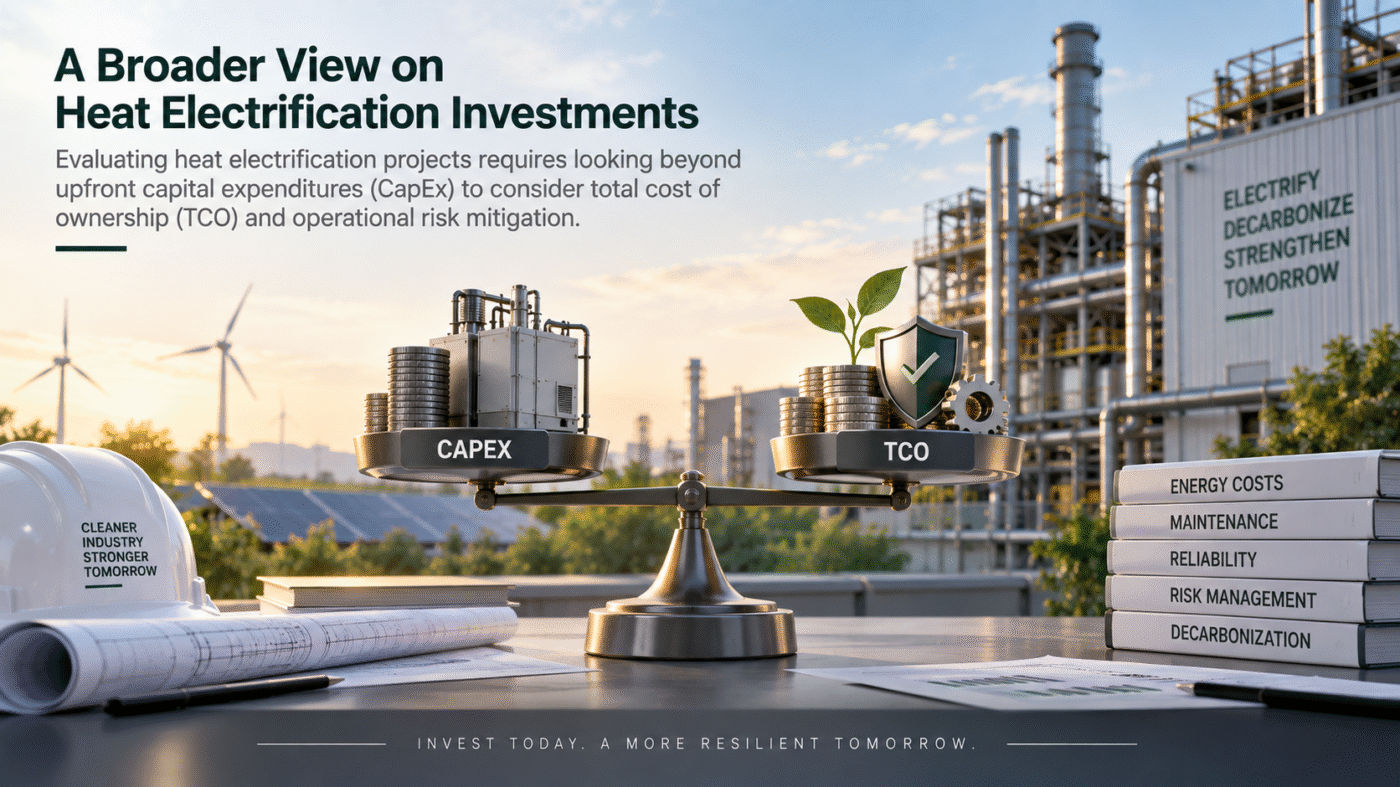
Evaluating heat electrification projects requires looking beyond upfront capital expenditures (CapEx) to consider total cost of ownership (TCO) and operational risk mitigation:
-
Utility Bill Optimization: Calculate savings achieved by shifting energy intake from peak daytime rates to low-cost night rates. Evaluate potential revenue from grid service programs, such as demand response and frequency regulation.
-
Phased Deployment: Avoid all-at-once replacements. Implement hybrid boiler configurations where thermal batteries handle baseline steam demand while existing gas boilers remain as backup or peak-topping units.
-
Carbon Pricing & Compliance: Factor in rising carbon taxes, emission allowance costs, and potential customer-imposed supply chain decarbonization requirements. Zero-carbon heat removes regulatory exposure and strengthens market position.
Actionable Steps for Plant Leadership
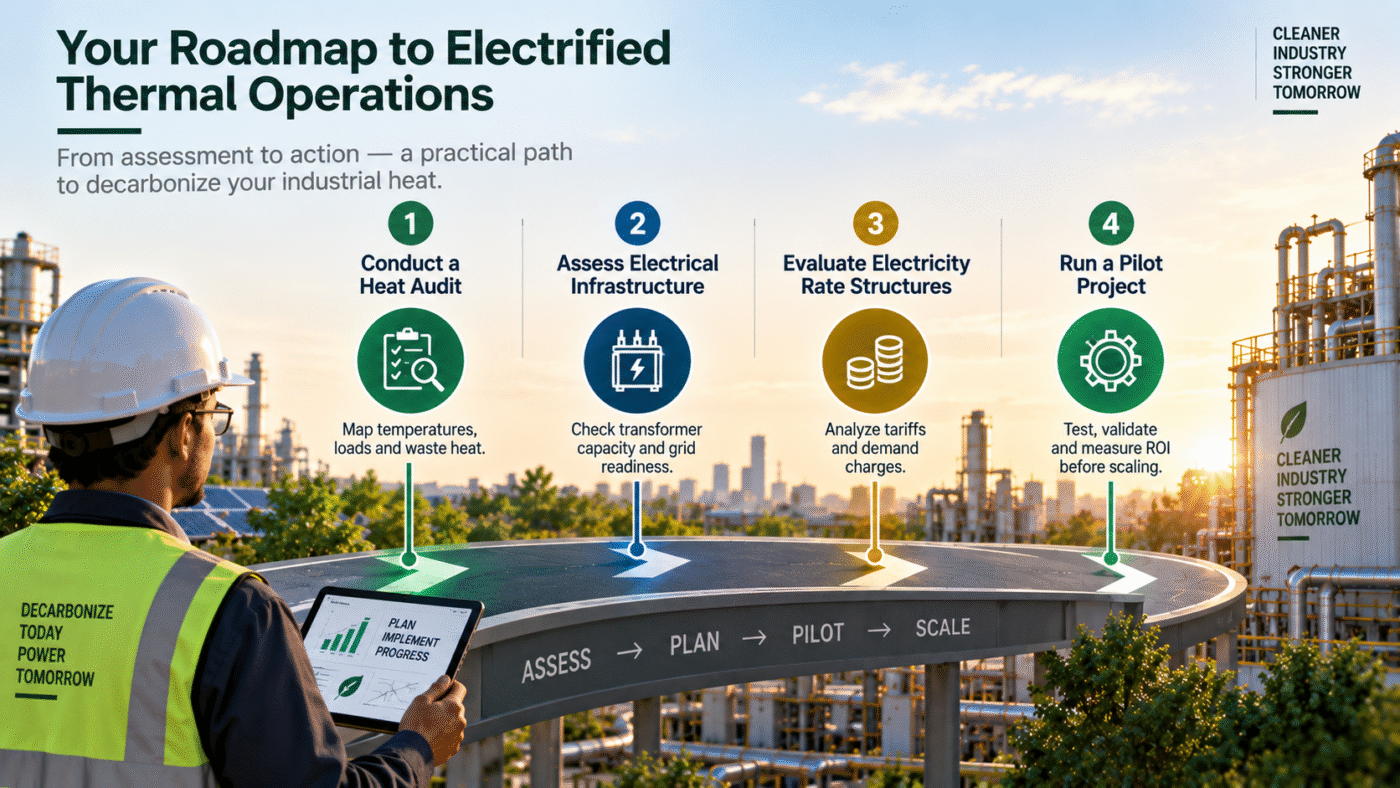
To successfully transition your facility toward electrified thermal operations, consider the following implementation roadmap:
-
Conduct a Heat Audit: Map out temperature profiles, pressure requirements, peak thermal loads, and waste heat availability across all operating lines.
-
Assess Electrical Infrastructure: Evaluate spare transformer capacity, sub-station headroom, and room for dedicated medium-voltage feeders.
-
Evaluate Electricity Rate Structures: Analyze hourly utility tariffs, demand charges, and local power market dynamics to model optimal storage charging schedules.
-
Run a Pilot Project: Install a modular thermal battery or high-temperature heat pump on a single high-margin process line to validate performance, train operators, and measure actual ROI before full-scale deployment.
Conclusion
Industrial heat decarbonization is no longer a choice between operational reliability and corporate sustainability goals. By combining high-temperature electric technologies with modular thermal batteries, manufacturing facilities can eliminate fossil fuel dependency, protect operations from energy price volatility, and build a resilient foundation for zero-carbon manufacturing.