
Introduction
Manufacturers are under increasing pressure to reduce greenhouse gas emissions while maintaining productivity, product quality and profitability. Rising energy costs, evolving customer expectations, supply-chain requirements and growing scrutiny of environmental performance are making decarbonisation an important part of industrial decision-making.
However, identifying the right opportunities can be challenging. A facility may consume significant electricity, rely on energy-intensive thermal processes, generate avoidable material waste or have limited visibility into emissions associated with purchased goods. Each issue requires a different response, and not every intervention will be technically or economically suitable for every plant.
Manufacturing decarbonisation begins with understanding where emissions originate, identifying avoidable resource consumption and prioritising interventions using operational evidence.
Rather than committing to major capital investments immediately, manufacturers can start by assessing existing processes, energy consumption, material efficiency and supply-chain activities. This approach helps identify practical opportunities and determine which ones warrant a more detailed technical and financial assessment.
What Is Manufacturing Decarbonisation?
Manufacturing decarbonisation refers to reducing greenhouse gas emissions associated with industrial production and related activities. Depending on the facility, this can involve improving energy efficiency, optimising process operations, reducing material losses, changing heating technologies, using lower-emission energy sources and engaging suppliers to understand value-chain emissions.
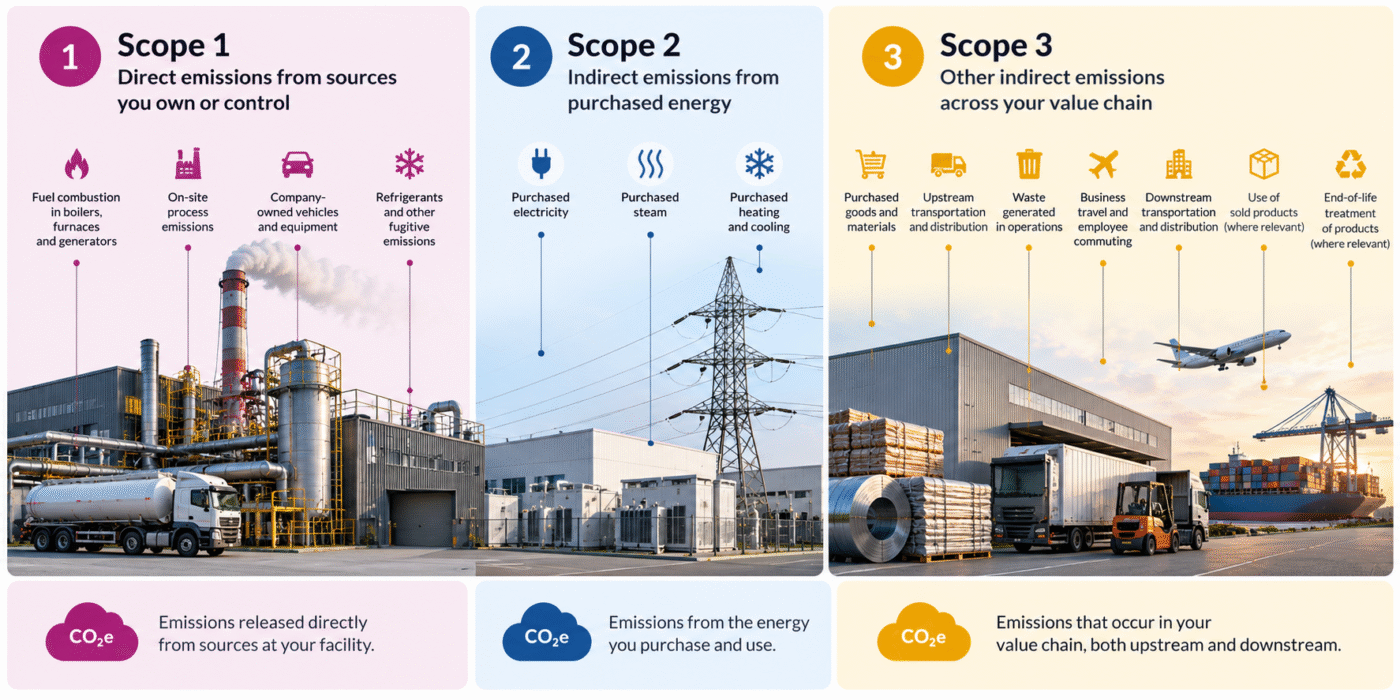
Emissions are commonly grouped into three categories:
-
Scope 1: Direct emissions from sources owned or controlled by the organisation, such as fuel combustion in boilers and furnaces.
-
Scope 2: Indirect emissions associated with purchased electricity, steam, heating and cooling.
-
Scope 3: Other indirect emissions across the value chain, including purchased materials, upstream transportation and waste-related activities.
The relative importance of these categories varies by industry and facility. A manufacturer with energy-intensive furnaces may need to focus on thermal efficiency and process heat, while another may find significant opportunities in material yield, electricity consumption or purchased materials.
The first step is therefore to establish an appropriate emissions baseline and understand the operational activities contributing to the facility’s footprint.
12 Manufacturing Decarbonisation Opportunities to Assess
1. Optimise Electricity Consumption
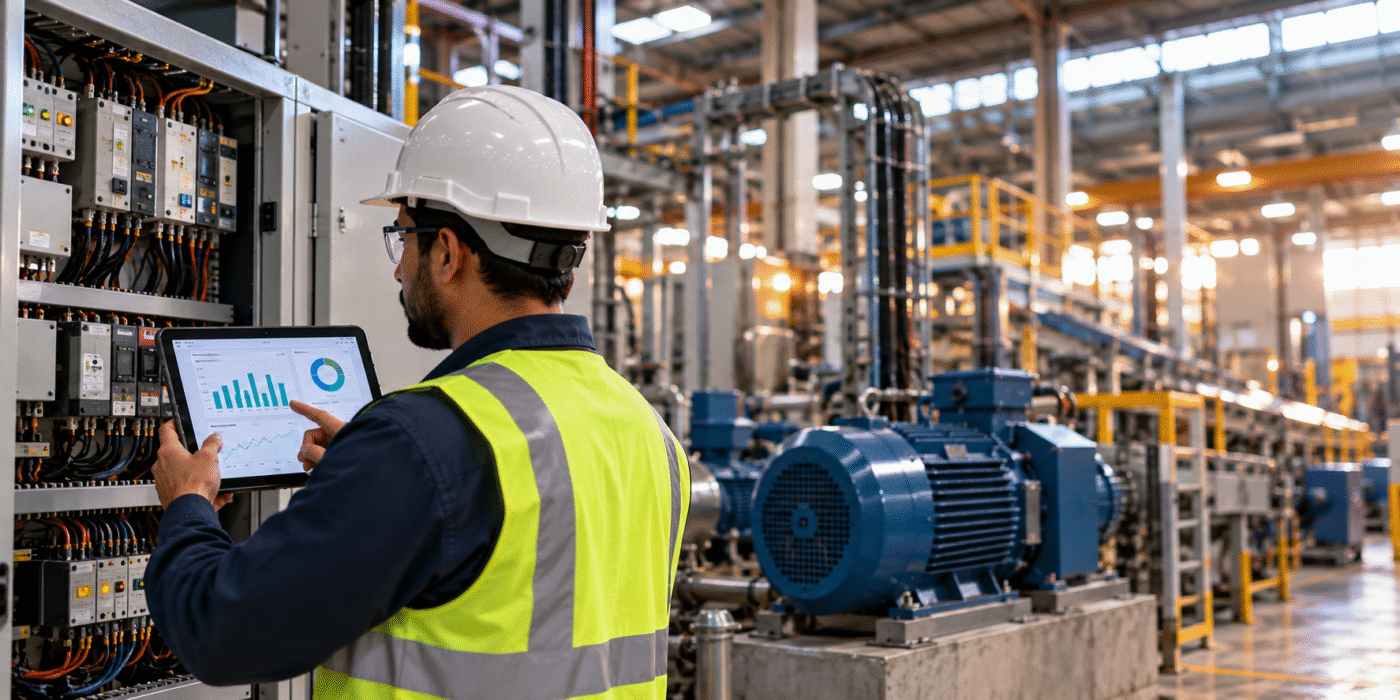
Electricity consumption should be assessed across production lines, shifts and major equipment loads. Plant-wide utility bills provide a starting point, but they may not reveal which processes account for the highest consumption or when avoidable usage occurs.
Manufacturers can investigate peak demand, idle equipment, inefficient operating schedules and opportunities to improve energy monitoring. Comparing electricity consumption against production output can also reveal whether energy intensity is improving or deteriorating.
For example, tracking kilowatt-hours per tonne of saleable output can help identify changes in energy performance, provided production mix and operating conditions are considered.
2. Reduce Compressed-Air Losses
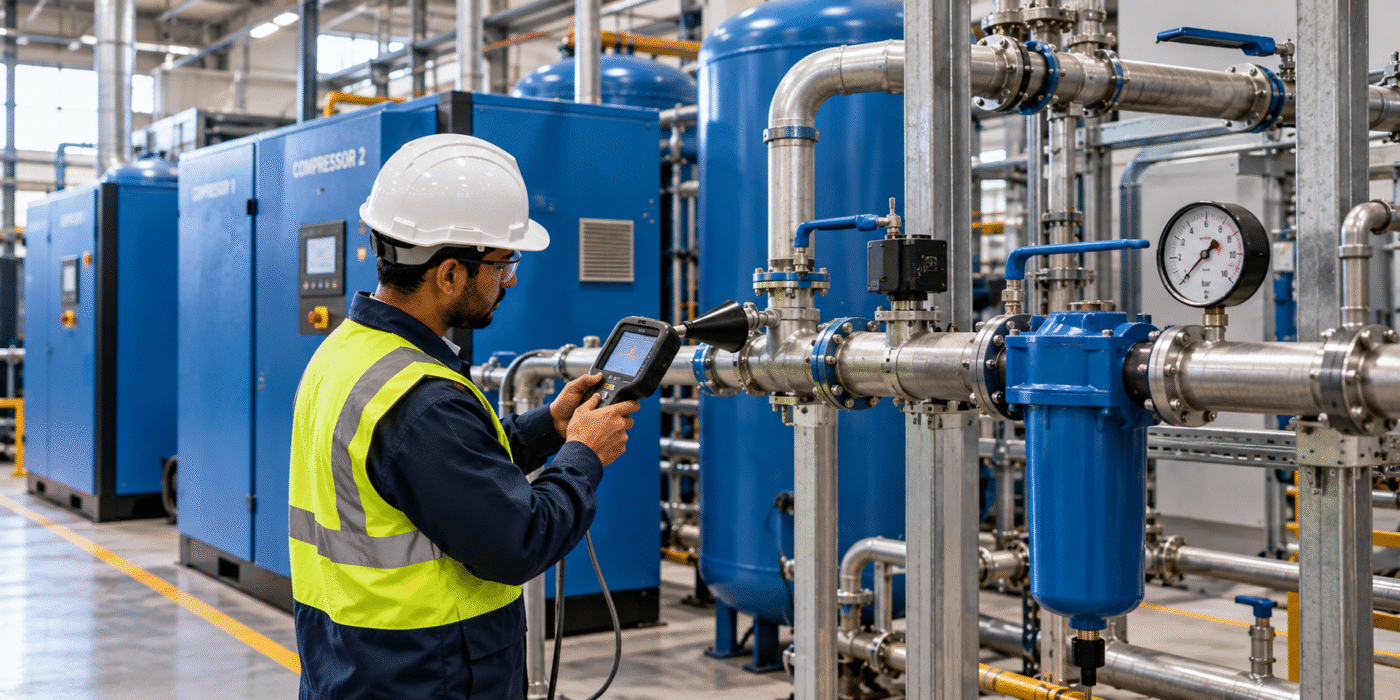
Compressed-air systems can consume substantial electricity, particularly when leaks, excessive pressure or poor controls increase demand.
A compressed-air assessment should examine leaks, compressor sequencing, unloaded running, pressure settings and applications where compressed air may be unnecessary. Maintenance teams can also review recurring faults and distribution-system performance.
Leak repairs and better controls may reduce avoidable consumption. However, the potential savings should be established using site-specific measurements or defensible engineering estimates rather than assumed percentages.
3. Improve Motor, Pump and Fan Efficiency
Motors, pumps and fans are widely used in manufacturing operations. Inefficient equipment, poor maintenance, throttling and mismatches between equipment capacity and actual demand can increase electricity consumption.
Manufacturers should prioritise major or continuously operating loads and examine their operating profiles. Potential measures include correcting system restrictions, improving maintenance, adjusting controls and evaluating variable-speed drives where technically appropriate.
Equipment replacement should be assessed against expected operating hours, load requirements, installation costs and potential savings.
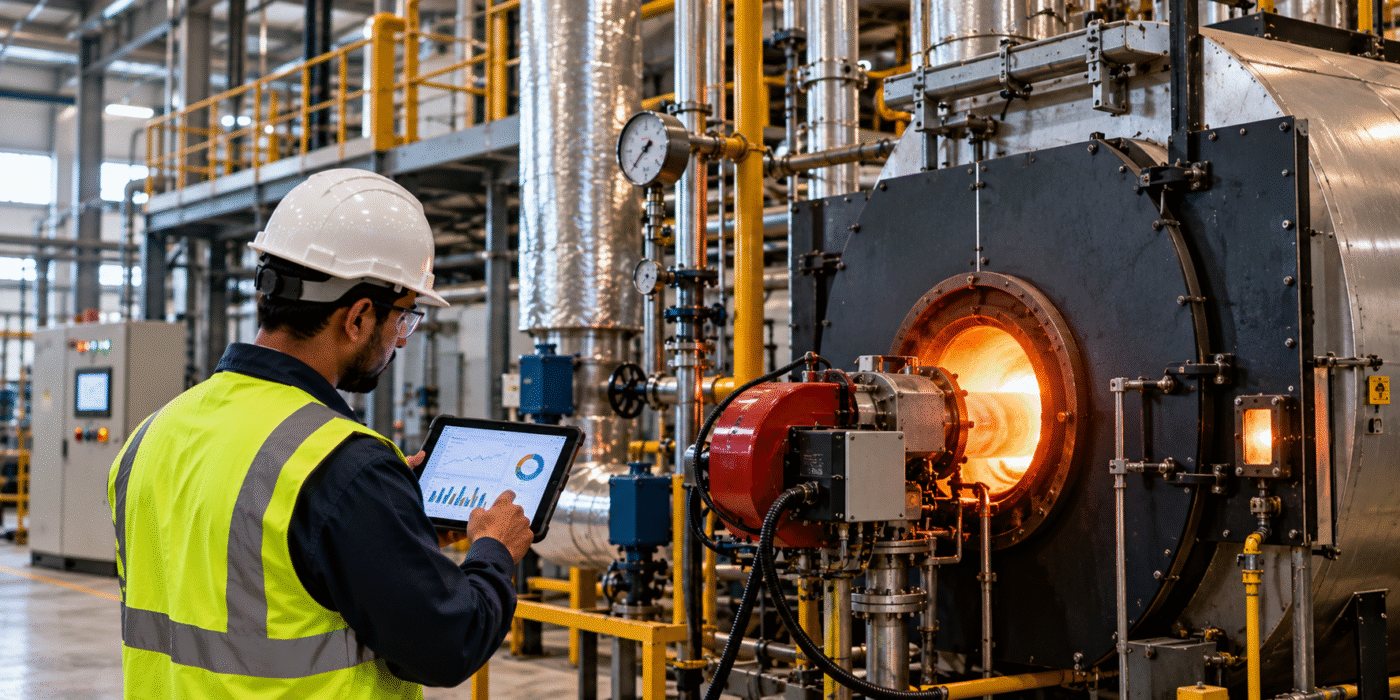
4. Improve Heating and Thermal-System Performance
Boilers, furnaces, ovens, dryers and heat-treatment systems may be significant sources of energy consumption and direct emissions.
Relevant assessment areas include combustion efficiency, insulation, temperature settings, operating schedules, heat losses and the feasibility of recovering waste heat.
Fuel switching or electrification may also warrant investigation, depending on process temperature requirements, equipment compatibility, electricity availability, infrastructure and economics.
These interventions require careful engineering assessment. A heating technology that performs well in one application may not meet the operating requirements of another.
5. Improve Process Efficiency and Cycle Time
Energy consumption can increase when equipment runs unnecessarily, production schedules create excessive waiting time or unstable process conditions lead to repeated heating, cooling or rework.
Manufacturers should examine downtime, changeovers, idle periods, process settings and variations between production lines or shifts.
Better scheduling, preventive maintenance and more consistent operating conditions may reduce resource consumption per saleable unit. Any changes should be evaluated alongside throughput, product quality and safety to ensure that efficiency improvements do not create other operational problems.
6. Increase Material Yield
Material efficiency is an important part of manufacturing decarbonisation because the production of raw materials can itself involve substantial emissions.
Manufacturers can assess material consumed per saleable unit and investigate cutting losses, over-processing, excess material use and opportunities to improve product or process design.
Improving material yield can reduce purchasing requirements and avoid emissions associated with producing and transporting materials that do not become saleable output.
Alternative materials should be evaluated against durability, technical specifications, safety, availability and total cost rather than environmental claims alone.
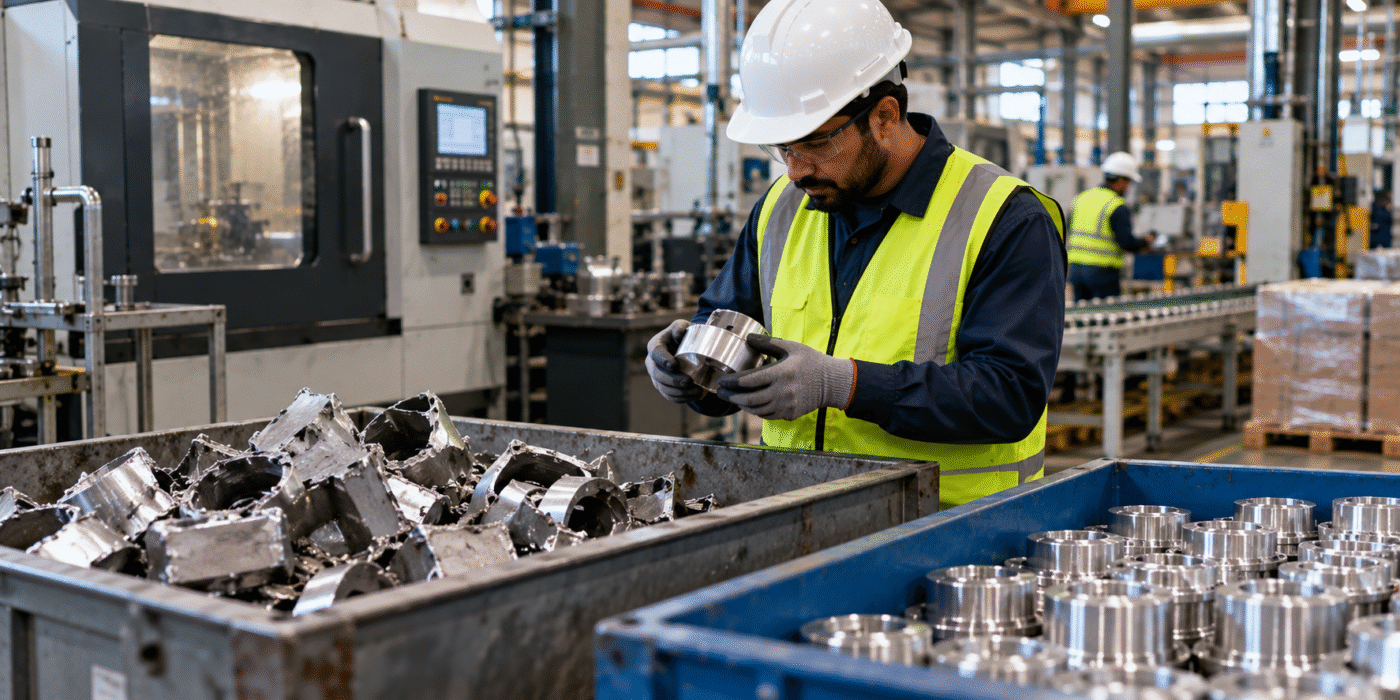
7. Reduce Scrap, Rejects and Rework
Scrap and rejected products represent more than a waste-management issue. They can also represent lost materials, energy, processing time and production capacity.
Tracking scrap and defect rates by product, line and cause can help identify recurring problems. Manufacturers should distinguish between avoidable process losses, material-quality issues and other sources of non-conformance.
Root-cause analysis, maintenance improvements, process controls and better incoming-material checks may reduce avoidable losses.
Measuring the results helps establish whether interventions are improving product quality while reducing resource consumption.
8. Improve Water Use and Treatment
Water-related activities can contribute to both resource consumption and energy demand, particularly where water is pumped, heated, cooled or treated.
Manufacturers should map major water uses, identify leaks and review cooling, cleaning and treatment requirements. Metering can help establish which processes account for the greatest consumption.
Depending on site conditions, opportunities may include recirculation, reuse, leak repair and treatment optimisation.
Water-saving measures must preserve process performance, hygiene, product quality and applicable discharge requirements. Their effects on energy and chemical consumption should also be considered.
9. Prevent Waste at Source
Manufacturing waste may include production residues, rejected materials, packaging, sludge and other process-related streams.
Assessing waste by type, source, quantity and destination can reveal opportunities to improve segregation, reuse suitable materials and prevent avoidable waste generation.
Recycling can be valuable, but preventing waste at source should also be considered. Reuse and recycling options depend on material characteristics, contamination, storage requirements, transport and the availability of appropriate recovery routes.
Documenting waste quantities and destinations helps manufacturers evaluate whether interventions deliver the intended outcome.
10. Review Inbound and Outbound Logistics
Transportation emissions can arise from the movement of raw materials, components, finished products and packaging.
Manufacturers can assess transport modes, shipment frequency, vehicle utilisation, route planning and packaging volume. Better coordination of deliveries and shipment consolidation may improve vehicle utilisation where operationally feasible.
Useful data include shipment weights, distances, transport modes and freight activity. When detailed information is unavailable, estimates should be transparent about their assumptions and limitations.
Logistics changes must also account for delivery commitments, product protection, lead times and supply-chain resilience.

11. Integrate Emissions into Procurement Decisions
Purchased materials and goods can contribute to a manufacturer’s value-chain emissions.
Procurement teams can begin by identifying high-impact material categories and evaluating available information on their environmental performance. Relevant considerations may include material composition, recycled content, durability, product specifications and alternative sourcing options.
Supplier claims should be assessed carefully. Where available, comparable product-level emissions information can support better decisions, provided its methodology, boundaries and reporting period are understood.
Procurement, engineering, quality and sustainability teams should collaborate before changing specifications to avoid compromising performance or supply reliability.
12. Improve Supplier Data and Engagement
Understanding emissions associated with purchased goods and transportation often depends on information supplied by external partners.
Manufacturers can begin by identifying priority suppliers and assessing the availability and quality of relevant activity data or product emissions information.
Requests should specify the products, quantities and reporting periods involved. The source, methodology and limitations of the data should be recorded so that estimates can be evaluated consistently.
Supplier engagement may also uncover opportunities to improve packaging, material efficiency, logistics and resource use across the value chain.
How to Prioritise Manufacturing Decarbonisation Opportunities
Identifying opportunities is only the beginning. Manufacturers must determine which interventions merit further investigation, measurement or investment.
A practical screening framework can assess each opportunity against four criteria:
1. Potential emissions impact: Is there a credible pathway to a meaningful reduction in greenhouse gas emissions?
2. Financial case: Could the intervention reduce operating costs, avoid resource losses or deliver other strategic value?
3. Implementation ease: Can it be implemented without unacceptable disruption, technical complexity or operational risk?
4. Data readiness: Are reliable baseline and operating data available to support an initial assessment?
Each criterion can be scored from 1 to 5, producing a total score out of 20. Higher scores can indicate opportunities worth advancing to a focused feasibility assessment, while intermediate scores may highlight areas requiring additional measurements or investigation.
The score should not be treated as an investment decision on its own. Safety, compliance, technical feasibility and production requirements remain important regardless of the total.
Estimate emissions reductions and financial value
Shortlisted opportunities should be assessed using site-specific information wherever possible. Relevant measures include:
-
Current annual energy or material consumption.
-
Expected change in consumption following the proposed intervention.
-
The applicable emissions factor and its source.
-
Estimated annual emissions reduction in tonnes of carbon dioxide equivalent (tCO₂e).
-
Implementation costs, annual savings and any additional operating costs.
-
Confidence in the estimate and the assumptions used.
Early calculations should be labelled as measured, calculated or indicative. Detailed engineering and financial analysis may be necessary before major investments are approved.
Manufacturers should also check for interactions between projects to avoid counting the same emissions reduction more than once.
Turning the Assessment into a 90-Day Action Plan
A structured action plan can help convert the initial assessment into measurable progress. The following is a suggested planning framework; actual timelines will depend on plant complexity and the availability of data and resources.
Days 1–30: Establish the baseline
Review available energy, production, material and emissions data. Identify gaps, select priority opportunity areas and assign accountable owners.
Days 31–60: Investigate shortlisted opportunities
Conduct targeted diagnostics, gather technical information, estimate potential emissions reductions and assess financial and operational feasibility.
Days 61–90: Define the next stage
Select suitable opportunities for pilots, detailed feasibility studies or implementation planning. Establish responsibilities, milestones and a method for measuring results.
At the end of this period, manufacturers should have a clearer understanding of which opportunities to advance, which require more evidence and which should be reconsidered.
Progress should be measured against an appropriate baseline, accounting for relevant changes in production volume, product mix and operating conditions.
Conclusion
Manufacturing decarbonisation does not need to begin with a major capital investment. A structured assessment of electricity, process heat, material efficiency, waste, logistics and supplier activities can help manufacturers identify practical opportunities and direct resources towards areas with credible potential.
The most effective starting point is to establish a reliable baseline, investigate avoidable resource consumption and prioritise opportunities using operational evidence, technical feasibility and business value.
By connecting emissions assessment with measurable actions and clear accountability, manufacturers can build a more informed, phased approach to reducing their environmental impact.
Use the Manufacturing Decarbonisation Opportunity Checklist to assess 12 areas of your facility, identify information gaps and shortlist opportunities for further investigation.
Download the checklist now and use it as a starting point for your plant’s decarbonisation planning: https://wudbox.in/manufacturing-decarbonisation-opportunity-checklist/
About Wudbox Sustainability Services
Wudbox Sustainability Services supports organisations in assessing sustainability performance, identifying decarbonisation opportunities and developing practical implementation roadmaps. Its approach connects emissions reduction with operational feasibility and business priorities.