

Introduction: From Measuring Energy to Managing It Intelligently
For energy-intensive industries, decarbonisation is no longer limited to switching to renewable electricity, improving equipment efficiency or setting long-term net-zero targets. Increasingly, the focus is shifting towards how efficiently energy is consumed within the production process itself.
Steel plants, cement manufacturers, chemical facilities, pharmaceutical companies and automotive factories operate complex systems in which boilers, furnaces, compressors, chillers, pumps and production lines consume substantial amounts of energy. Even small inefficiencies, when repeated across multiple production lines and operating continuously, can translate into significant energy costs and carbon emissions.
Traditional energy management approaches rely heavily on periodic energy audits, equipment-level monitoring and operator experience. These methods remain important, but they may not identify every inefficiency or respond quickly enough to changing production conditions. A furnace may continue operating at an unnecessarily high temperature, a compressor may consume excess electricity because of an inefficient control setting, or a chiller may run harder than necessary because cooling demand has changed.
Artificial intelligence (AI) offers a way to address these challenges. By combining real-time sensor data, machine learning, digital twins and advanced process control, industrial facilities can move beyond simply tracking energy consumption towards predicting demand, recommending corrective actions and, in suitable applications, automatically adjusting operating conditions.
The significance for decarbonisation is straightforward: the less energy required to produce each unit of output, the lower the associated emissions, provided production requirements and product quality remain unchanged.
AI-driven energy optimisation is therefore emerging as a practical complement to renewable energy procurement, electrification, waste heat recovery and other industrial decarbonisation measures.
1. Why Traditional Energy Management Is No Longer Enough
Most large manufacturing facilities already collect substantial amounts of operational data through energy meters, supervisory control systems and equipment sensors. The challenge is turning this information into timely, coordinated action.
Conventional monitoring systems can show how much electricity a compressor consumes or how much fuel a boiler uses. However, identifying why consumption has increased, determining the most efficient operating conditions and implementing corrective changes may require considerable manual analysis.
Several challenges limit the effectiveness of conventional approaches:
-
Fragmented data: Energy, production, maintenance and quality information often sit in separate systems, making it difficult to understand their combined impact.
-
Changing operating conditions: Energy demand varies with production volumes, product specifications, ambient temperatures, raw material characteristics and equipment loading.
-
Delayed intervention: Periodic reviews may identify inefficiencies only after additional energy has already been consumed.
-
Dependence on operator experience: Experienced operators are valuable, but the best operating settings may not be consistently applied across shifts, production lines or facilities.
-
Equipment interactions: Optimising one machine in isolation does not necessarily optimise the overall plant. For example, reducing a compressor’s output without considering downstream pressure requirements may disrupt production.
AI can help address these gaps by continuously analysing multiple variables, identifying patterns that are difficult to detect manually and evaluating the consequences of alternative operating decisions.
The objective is not to replace plant engineers or experienced operators. It is to give them better information, more consistent recommendations and, where appropriate, automated control within clearly defined operating limits.
2. How AI-Driven Energy Optimisation Works
AI-enabled optimisation typically combines four complementary technologies.
2.1 Industrial Sensors and Connected Equipment
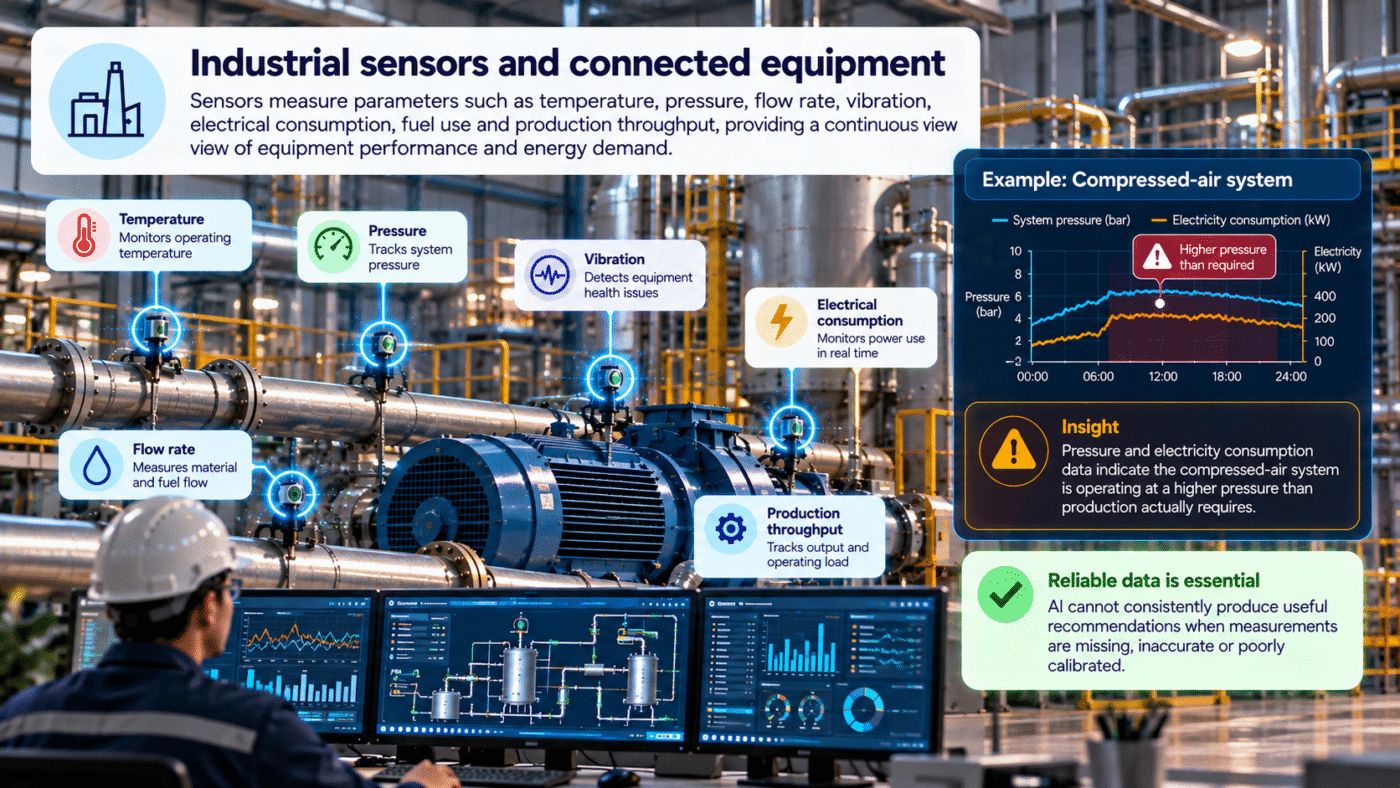
Sensors measure parameters such as temperature, pressure, flow rate, vibration, electrical consumption, fuel use and production throughput. This provides a continuous view of equipment performance and energy demand.
For example, monitoring pressure and electricity consumption together can help identify a compressed-air system operating at a higher pressure than production actually requires.
Reliable sensor data is the foundation of effective optimisation. AI cannot consistently produce useful recommendations when measurements are missing, inaccurate or poorly calibrated.
2.2 Artificial Intelligence and Machine Learning
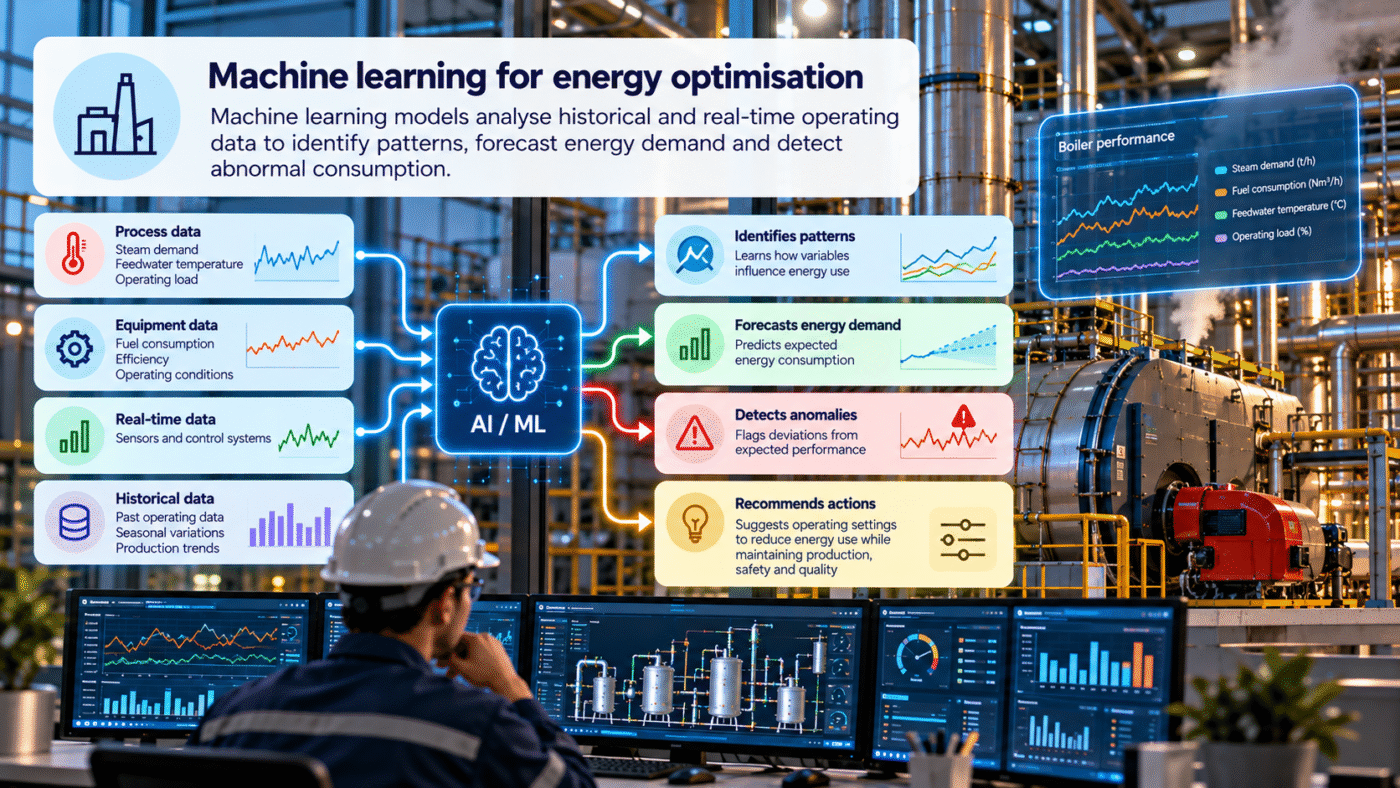
Machine learning models analyse historical and real-time operating data to identify patterns, forecast energy demand and detect abnormal consumption.
A model might learn how a boiler’s fuel consumption changes with steam demand, feedwater temperature and operating load. It can then estimate the expected fuel requirement under current conditions and flag deviations.
More advanced systems can recommend operating settings that reduce energy consumption while maintaining production targets, safety requirements and product quality.
2.3 Digital Twins
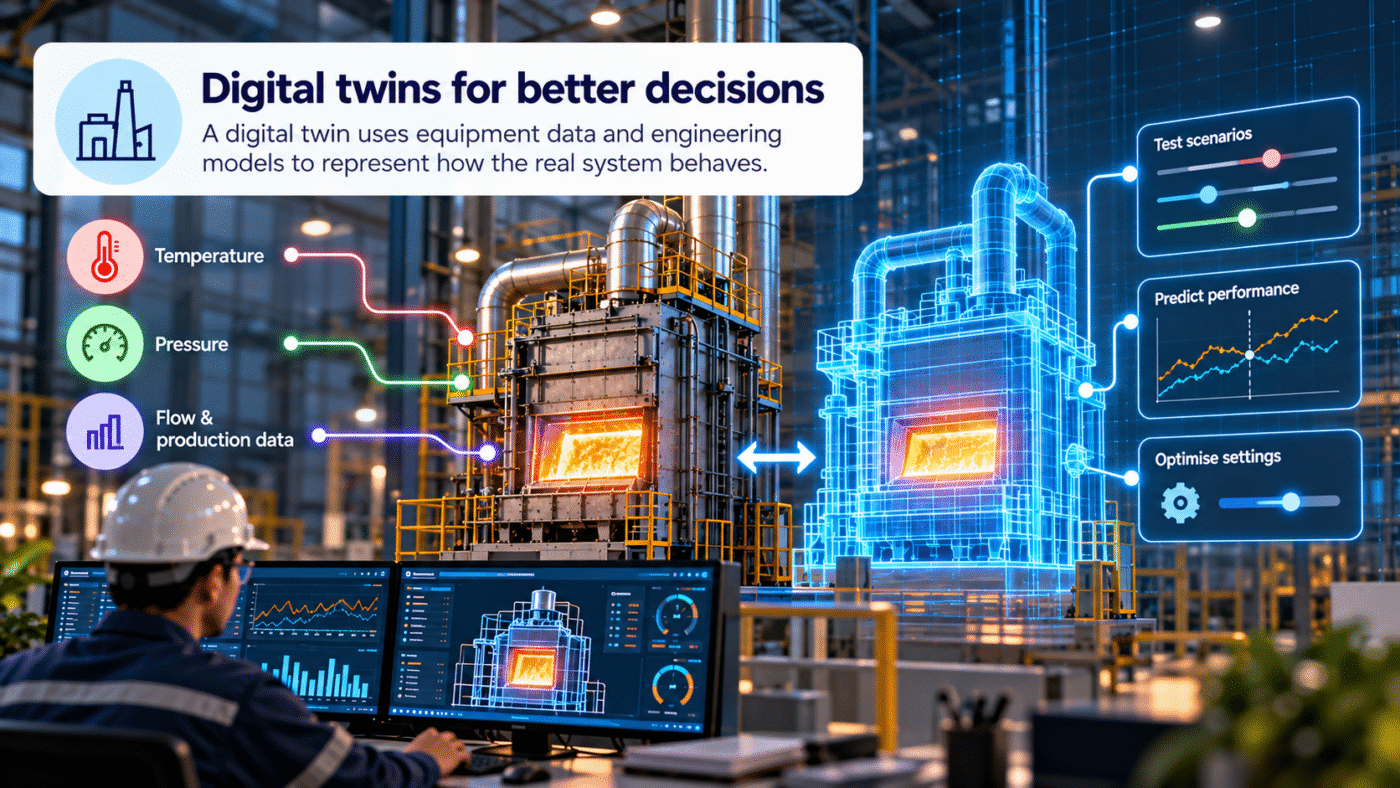
A digital twin is a digital representation of a physical asset, process or facility. It uses equipment data and engineering models to represent how the real system behaves.
A digital twin of a furnace, for instance, can help engineers evaluate the effect of changing temperature settings, production schedules or fuel inputs before applying those changes on the shop floor.
Digital twins are particularly useful where physical experimentation is expensive, disruptive or potentially unsafe.
2.4 Advanced Process Control and Autonomous Optimisation
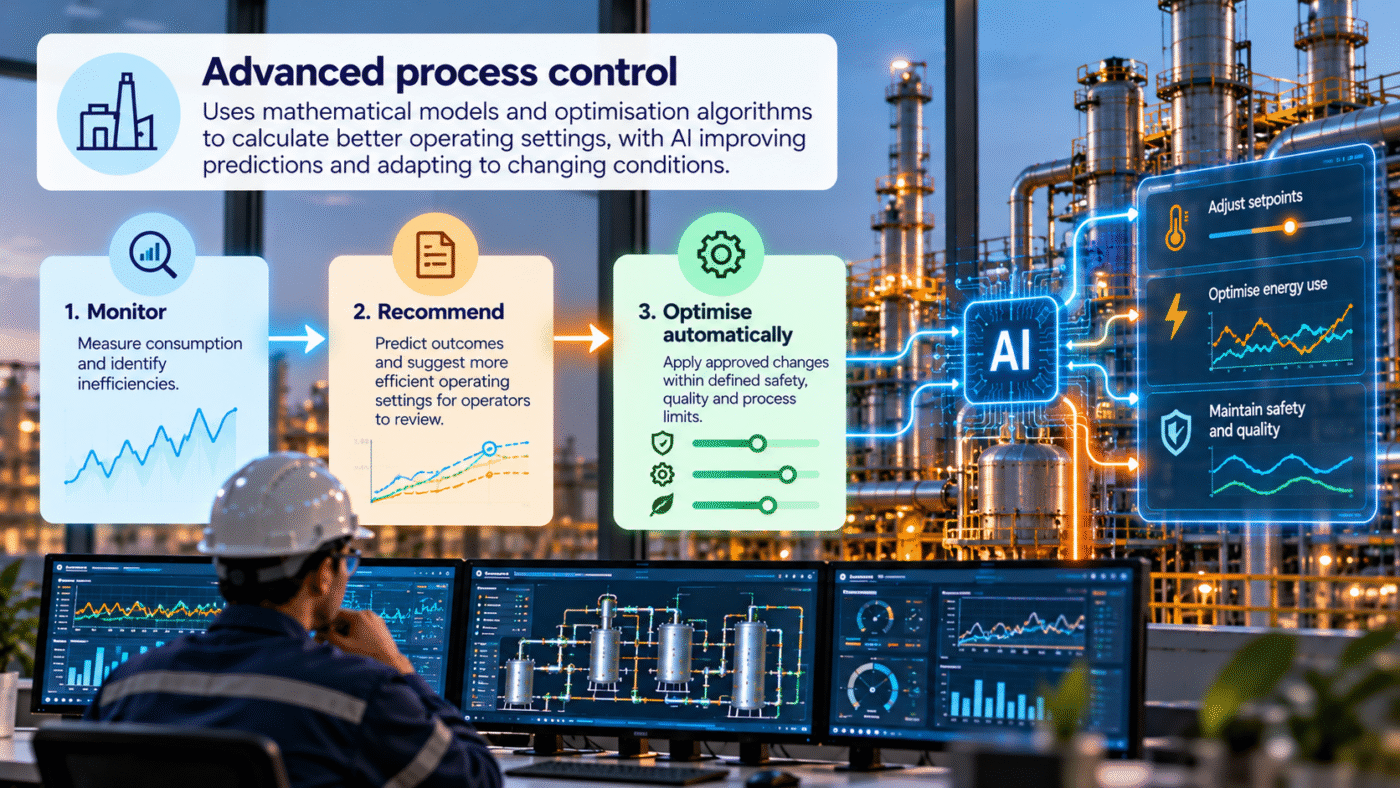
Advanced process control uses mathematical models and optimisation algorithms to calculate better operating settings for industrial equipment. AI can strengthen these systems by improving predictions and adapting recommendations to changing conditions.
The progression generally follows three stages:
-
Monitor: Measure consumption and identify inefficiencies.
-
Recommend: Predict outcomes and suggest more efficient operating settings for operators to review.
-
Optimise automatically: Apply approved changes within defined safety, quality and process limits.
Not every application needs to reach the third stage. In many facilities, reliable recommendations and operator-approved adjustments can deliver meaningful improvements before autonomous control is introduced.
3. Where AI Can Deliver Energy and Emissions Reductions
AI-driven optimisation is most useful when applied to equipment with high energy consumption, variable operating conditions or substantial opportunities for better coordination.
3.1 Boilers and Steam Systems
Boilers supply steam for heating, sterilisation, chemical processing, drying and other industrial applications. Their efficiency depends on factors such as combustion conditions, excess air, steam demand, feedwater temperature and operating load.
AI models can forecast steam requirements and help optimise boiler settings, reducing unnecessary fuel consumption and avoiding inefficient operation at low loads.
Potential applications include:
-
Adjusting combustion settings to maintain efficient fuel-air ratios.
-
Matching steam generation to changing process demand.
-
Coordinating multiple boilers to operate the most efficient combination of units.
-
Detecting abnormal fuel consumption and steam distribution losses.
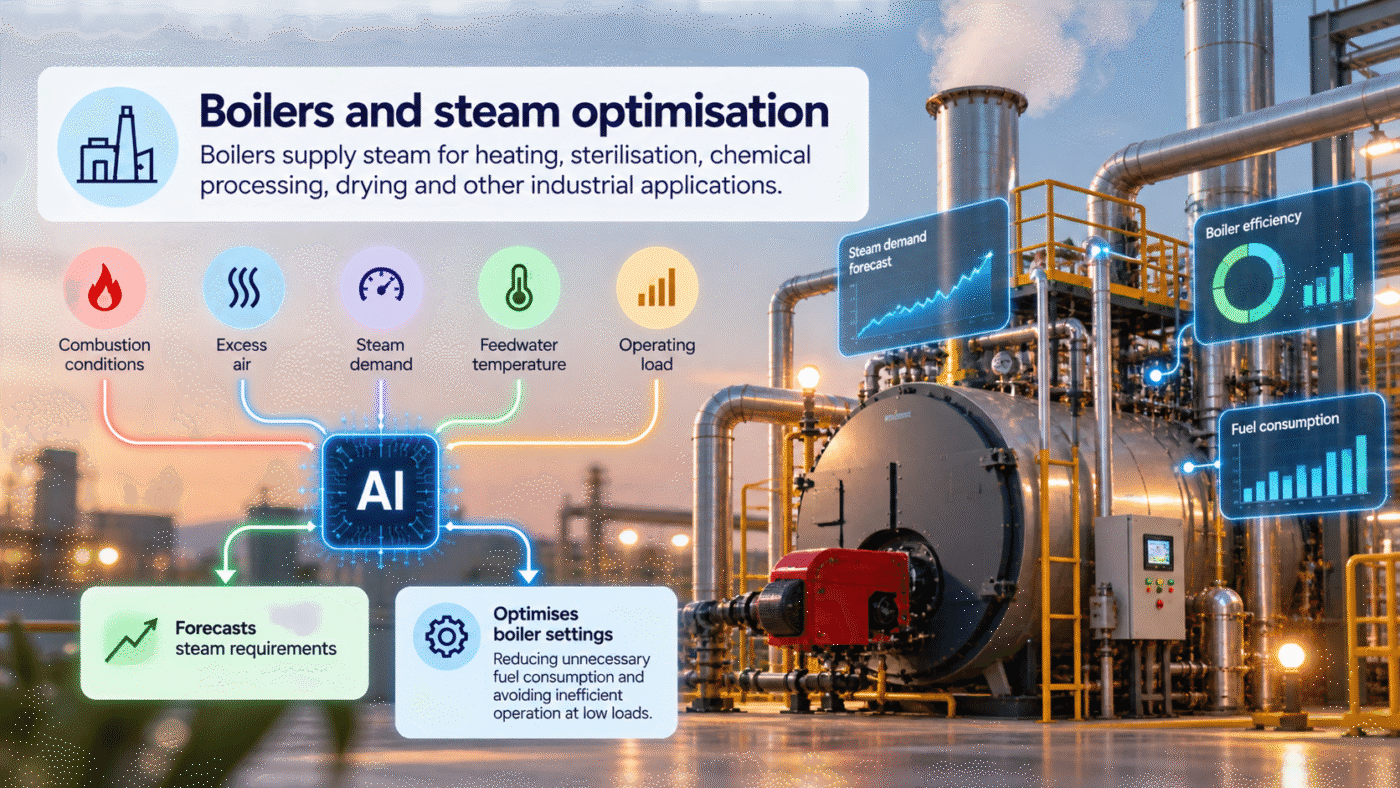
Decarbonisation relevance: Lower fuel consumption reduces direct Scope 1 emissions when the boiler burns natural gas, coal, fuel oil or other fossil fuels. Where boilers use electricity, efficiency improvements can reduce Scope 2 emissions depending on the electricity source.
3.2 Compressed-Air Systems
Compressed air is widely used in automotive manufacturing, engineering, metals processing, packaging and pharmaceutical production. It is also an area where inefficiencies can remain hidden because compressed air is often treated as a common utility rather than a resource requiring active management.
AI can analyse compressor loading, pressure, flow, temperature and electricity consumption to identify opportunities to improve performance.
Typical interventions include:
-
Reducing discharge pressure to the lowest level consistent with process requirements.
-
Coordinating multiple compressors instead of allowing inefficient combinations to operate.
-
Detecting abnormal demand patterns that may indicate leaks or equipment problems.
-
Matching compressor operation to production schedules and demand fluctuations.
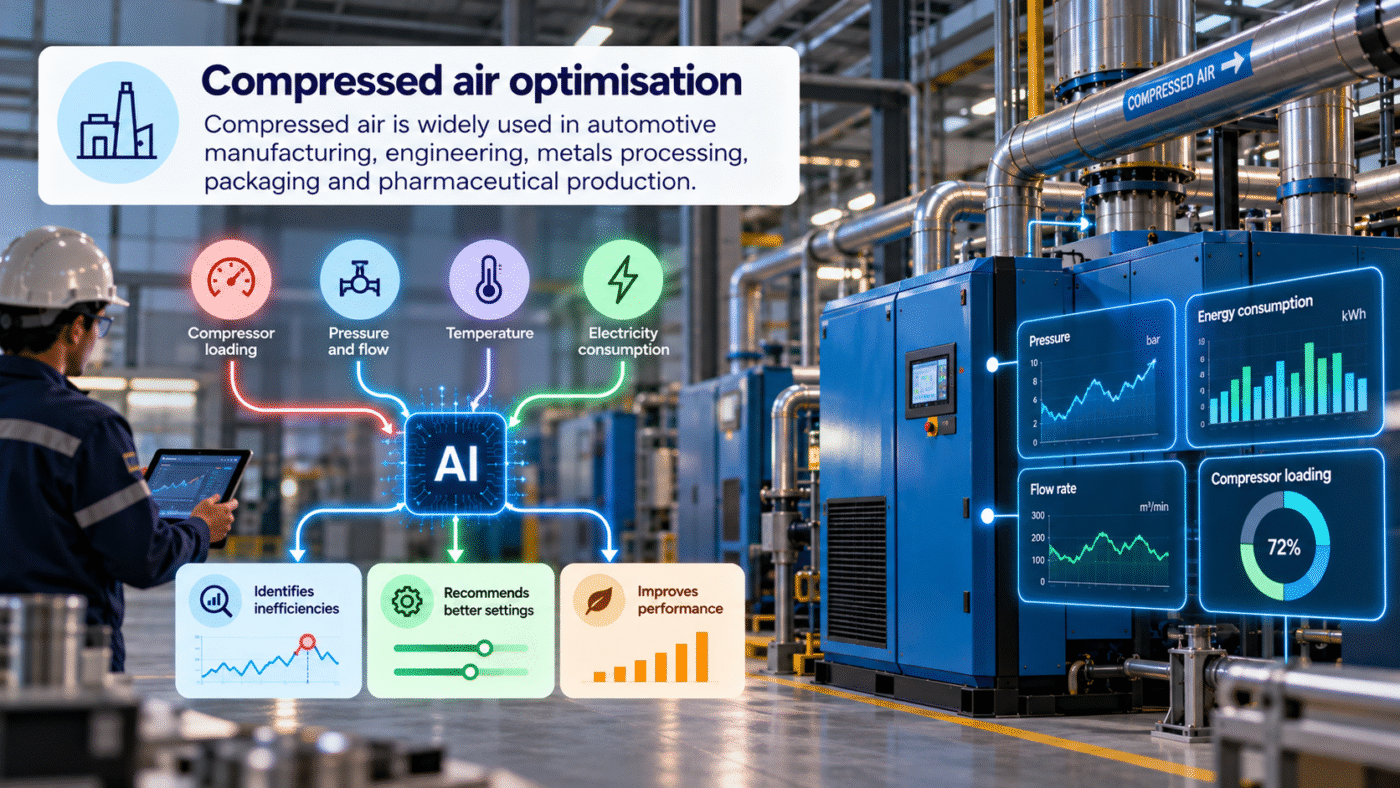
Decarbonisation relevance: Lower electricity consumption reduces indirect emissions associated with purchased power. The benefit is particularly relevant in facilities with large compressed-air networks and long operating hours.
3.3 Chillers, Cooling Towers and HVAC Systems
Cooling systems are essential in chemicals, pharmaceuticals, food processing, electronics and other temperature-sensitive manufacturing operations.
Their energy consumption depends on cooling demand, ambient conditions, chilled-water temperatures, condenser performance and equipment loading. Operating every chiller at a fixed setting can result in unnecessary electricity use when production demand changes.
AI-based optimisation can forecast cooling loads, coordinate chillers and cooling towers, and adjust operating conditions while maintaining required process temperatures.
For example, a system may determine that a different combination of chillers can meet the same cooling demand with lower electricity consumption.
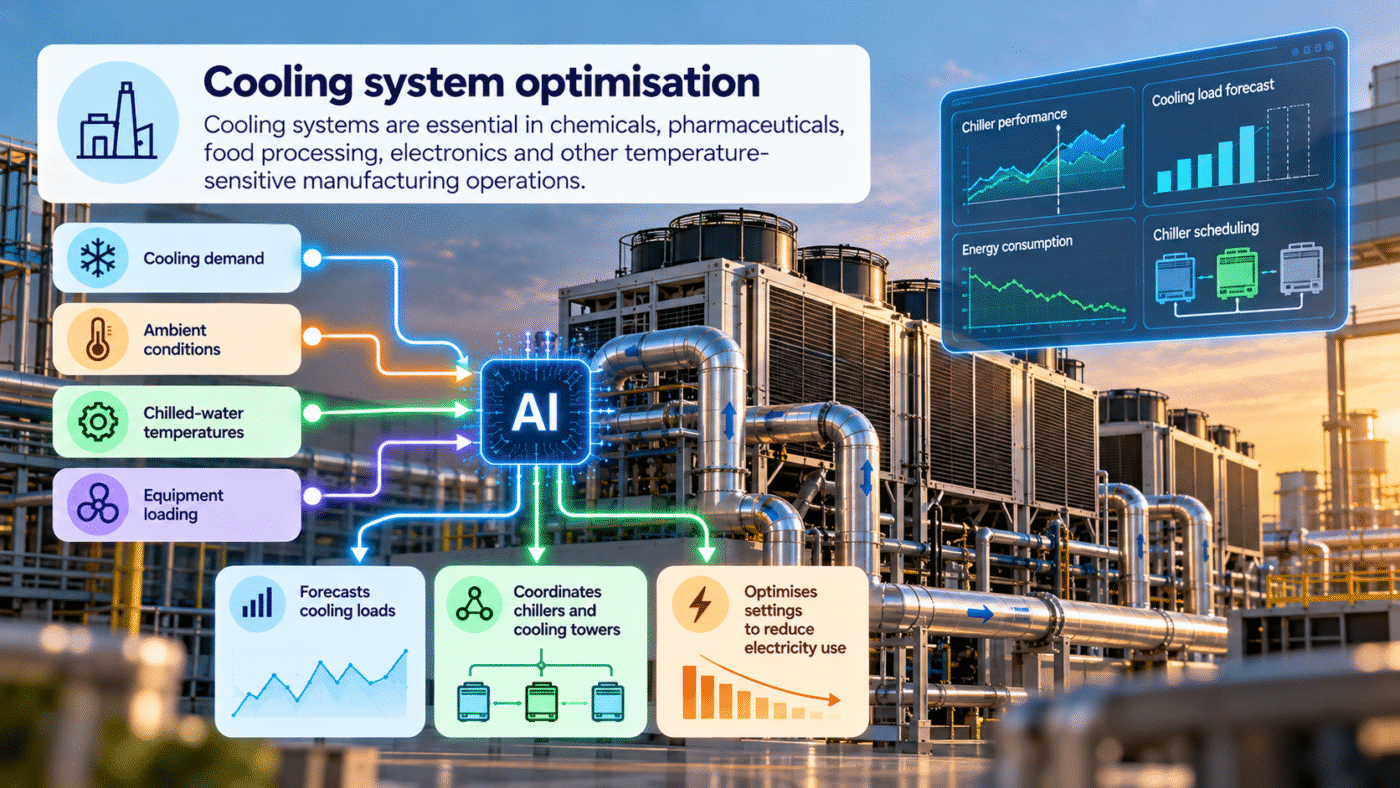
Decarbonisation relevance: Optimising cooling systems reduces electricity-related emissions without necessarily requiring major equipment replacement. It can also complement the transition to high-efficiency electric cooling technologies.
3.4 Industrial Furnaces, Kilns and Heat Treatment
Furnaces and kilns are particularly important in steel, cement, ceramics, glass, forging and metals processing because they require substantial thermal energy.
Their efficiency depends on temperature profiles, combustion conditions, material characteristics, furnace loading, residence time and production sequencing.
AI and advanced process control can help operators maintain stable temperatures, minimise unnecessary heating, optimise fuel-air ratios and reduce the time equipment spends operating without productive output.
Digital twins can also help assess how alternative loading patterns or production schedules affect energy use.
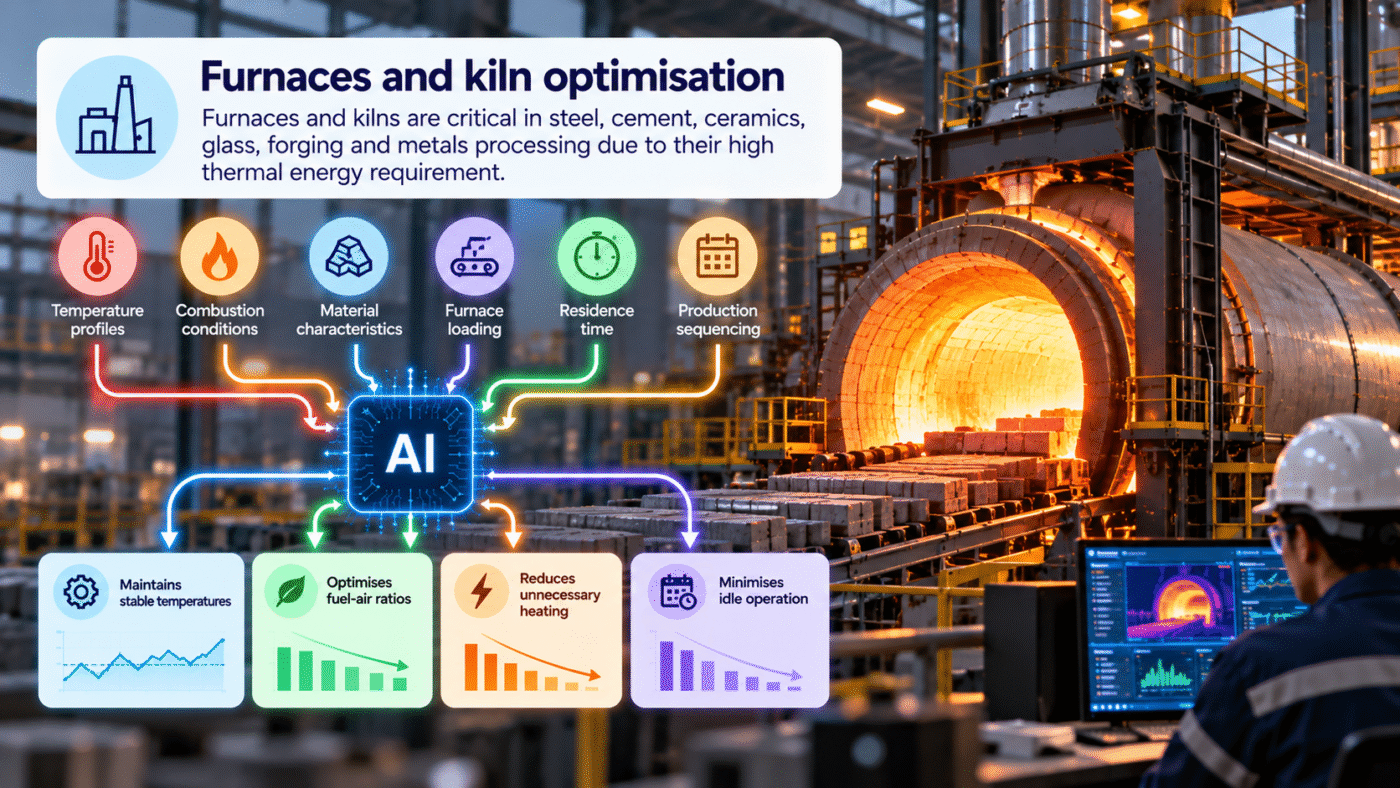
Decarbonisation relevance: Better thermal efficiency can reduce direct fuel-related emissions. These measures can also reduce the energy demand that must eventually be replaced through electrification, green hydrogen or other lower-carbon heat technologies.
However, AI alone does not eliminate process emissions or replace the need for low-carbon fuels and technologies where deep decarbonisation requires them.
3.5 Production Scheduling and Plant-Wide Coordination
Energy optimisation should not be restricted to individual machines. Production schedules influence how much energy is consumed during start-ups, shutdowns, changeovers and idle periods.
AI can combine production requirements, equipment availability, energy demand and operating constraints to identify more efficient production sequences.
For example, a facility may reduce repeated furnace heating cycles by coordinating compatible production batches or improve the utilisation of energy-intensive equipment by reducing unnecessary idle time.
Where electricity tariffs vary by time of day, scheduling can also help shift flexible operations towards lower-cost periods, provided this does not simply transfer emissions elsewhere or compromise production requirements.
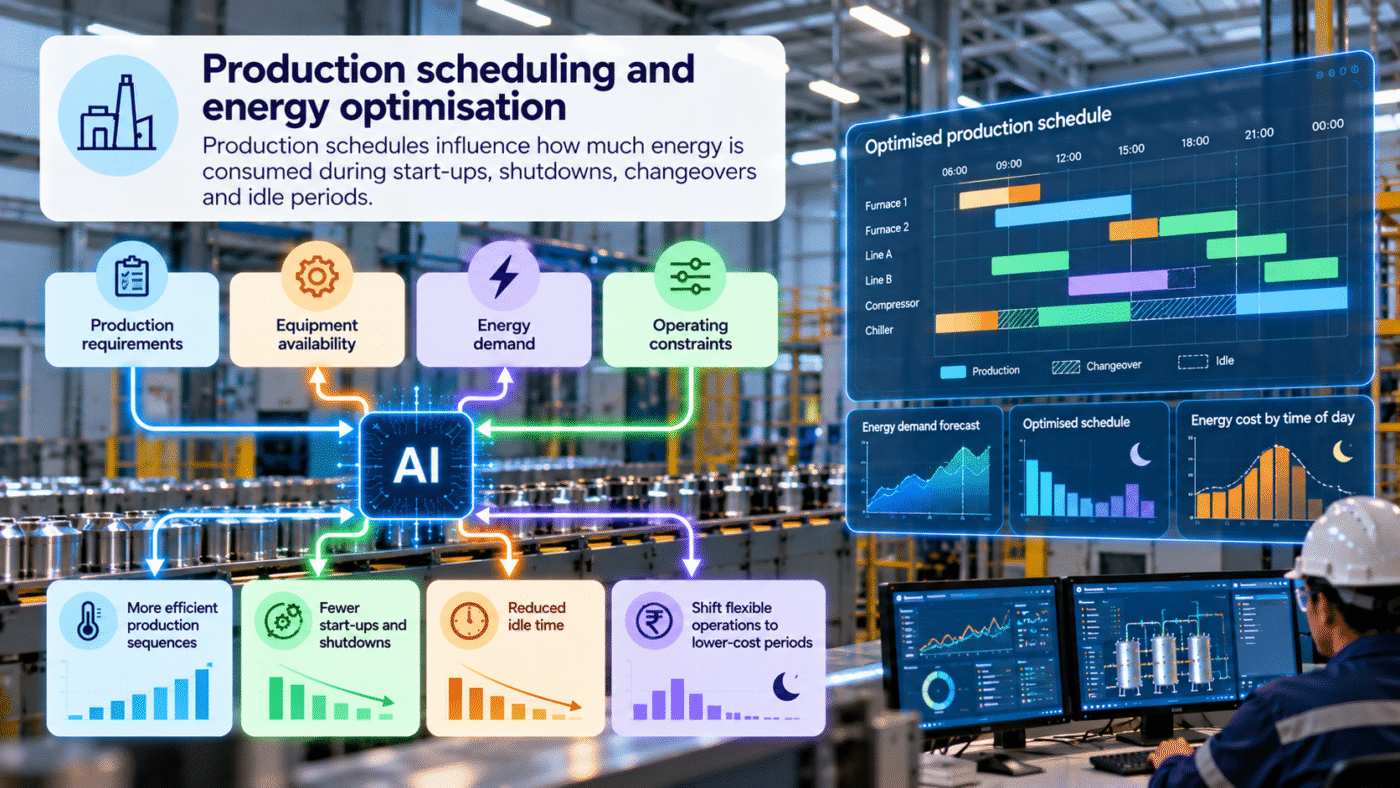
Decarbonisation relevance: Coordinated scheduling can reduce energy consumed per unit of output, avoid unnecessary equipment operation and improve the integration of variable renewable electricity.
The following table summarises the principal applications.
|
Industrial system |
AI-enabled intervention |
Decarbonisation benefit |
|
Boilers and steam |
Demand forecasting and combustion optimisation |
Lower direct fuel emissions |
|
Compressors |
Pressure optimisation and load coordination |
Lower electricity-related emissions |
|
Chillers and cooling |
Cooling-load forecasting and equipment sequencing |
Reduced electricity consumption |
|
Furnaces and kilns |
Temperature, combustion and loading optimisation |
Lower thermal energy consumption |
|
Production lines |
Scheduling and idle-time reduction |
Lower energy use per unit of output |
|
Plant-wide utilities |
Coordinated optimisation across connected systems |
Reduced overall energy demand and emissions |
4. Global Industrial Deployments: Technology in Practice
AI-enabled energy optimisation is already being applied in industrial environments. The following examples illustrate different approaches, from advanced process control in energy-intensive production to predictive energy management. The reported benefits relate to specific applications and should not be interpreted as guaranteed savings for other facilities.
a. Technology in Practice: Mercedes-Benz, Germany
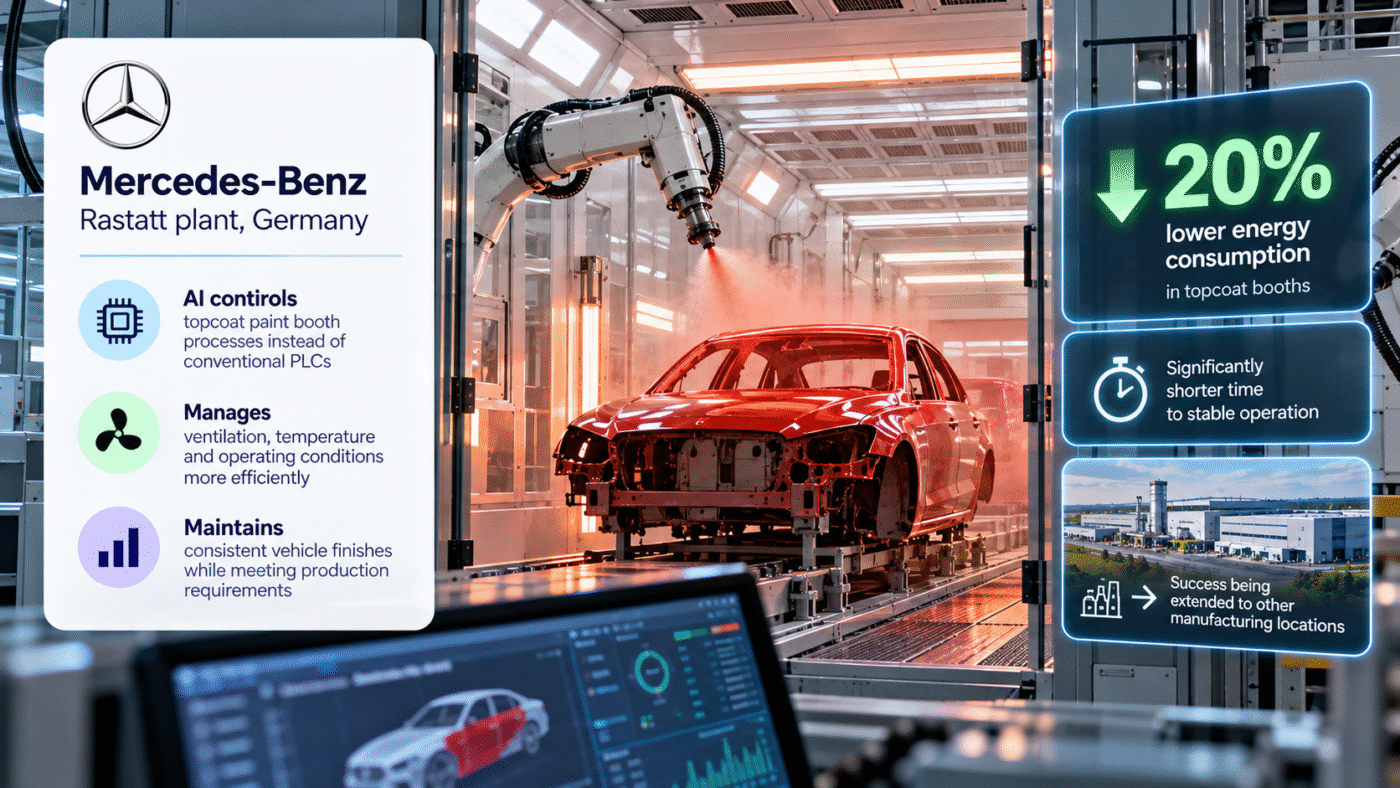
Mercedes-Benz introduced AI-controlled process technology in the topcoat paint booths at its Rastatt manufacturing plant in Germany. The initiative focused on improving the efficiency of the paint application process, where precise environmental and operating conditions are essential for achieving consistent vehicle finishes.
Instead of relying on conventional programmable logic controllers to monitor relevant subprocesses, the system uses AI to oversee these processes and improve operating decisions. The technology helps the plant manage process conditions more efficiently while maintaining production requirements.
According to Mercedes-Benz, the implementation reduced energy consumption in the topcoat booths by approximately 20% and significantly shortened the time required to bring the process to stable operation. The company has also indicated that the successful application is being extended to other manufacturing locations.
Why it matters for decarbonisation: Automotive paint shops require substantial energy for ventilation, temperature control and other process-related operations. AI-based process optimisation can reduce this demand without requiring a fundamental change to the manufacturing process. Lower energy consumption can, in turn, reduce associated emissions, depending on the energy sources used by the facility.
b. Technology in Practice: CATL, Liyang, China
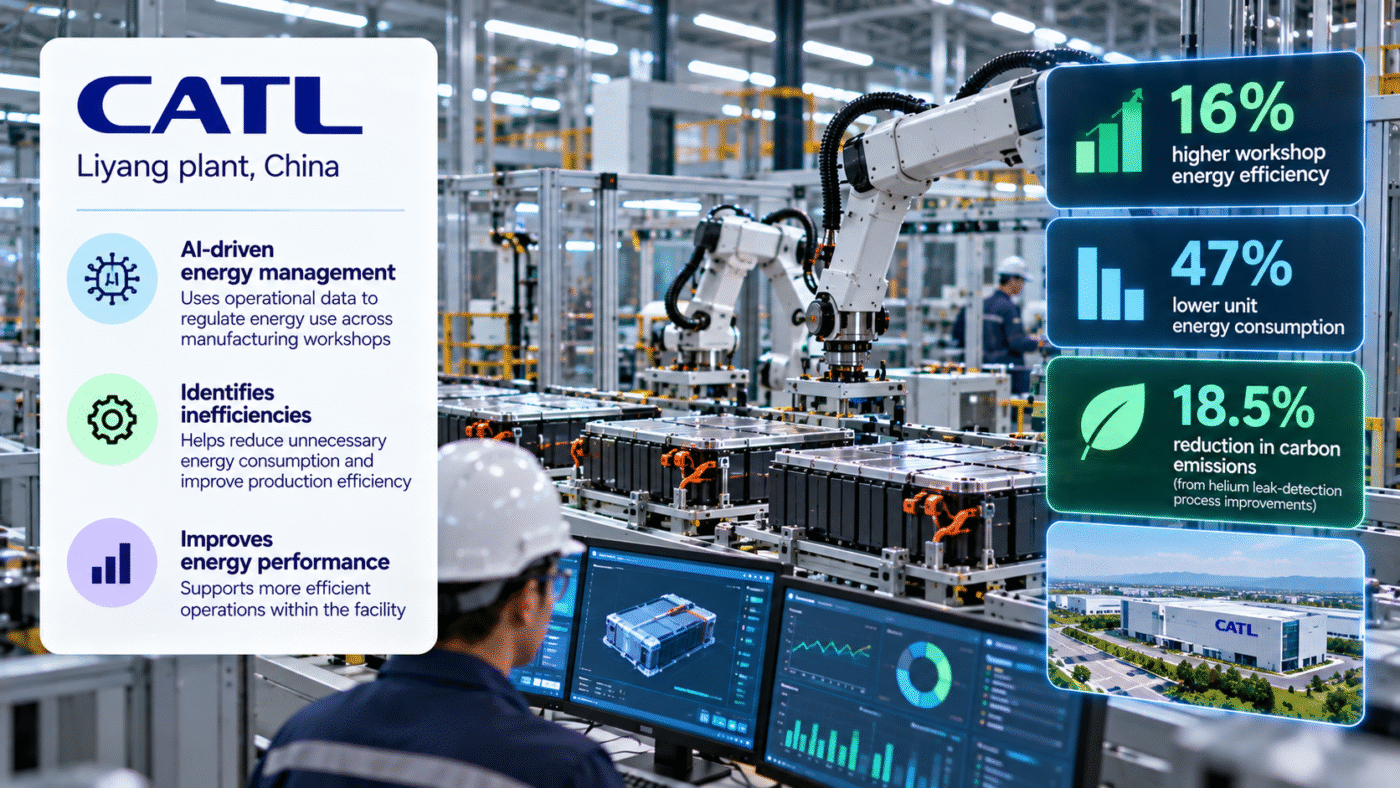
Contemporary Amperex Technology Co. Limited (CATL), a leading manufacturer of lithium-ion batteries, has implemented an internally developed AI-driven energy management platform at its Liyang manufacturing plant in Jiangsu province, China.
The platform supports intelligent energy regulation across the facility, using operational data and digital technologies to improve energy management within manufacturing workshops. The system helps the plant identify opportunities to reduce unnecessary energy consumption and improve the efficiency of its production operations.
According to CATL, the implementation resulted in a 16% improvement in workshop energy efficiency and a 47% reduction in unit energy consumption. The company also reported an 18.5% reduction in carbon emissions associated with improvements to its helium leak-detection process, which eliminated the need for duplicate checks. This emissions reduction relates to a separate process improvement and should not be attributed solely to the energy management platform.
Why it matters for decarbonisation: Battery manufacturing involves energy-intensive production processes, making energy efficiency an important factor in reducing the carbon footprint of battery production. AI-driven energy management can help manufacturers identify inefficiencies and improve energy use per unit of output. The resulting emissions benefits depend on the electricity mix and other energy sources used at the facility.
c. Technology in Practice: LS ELECTRIC, South Korea
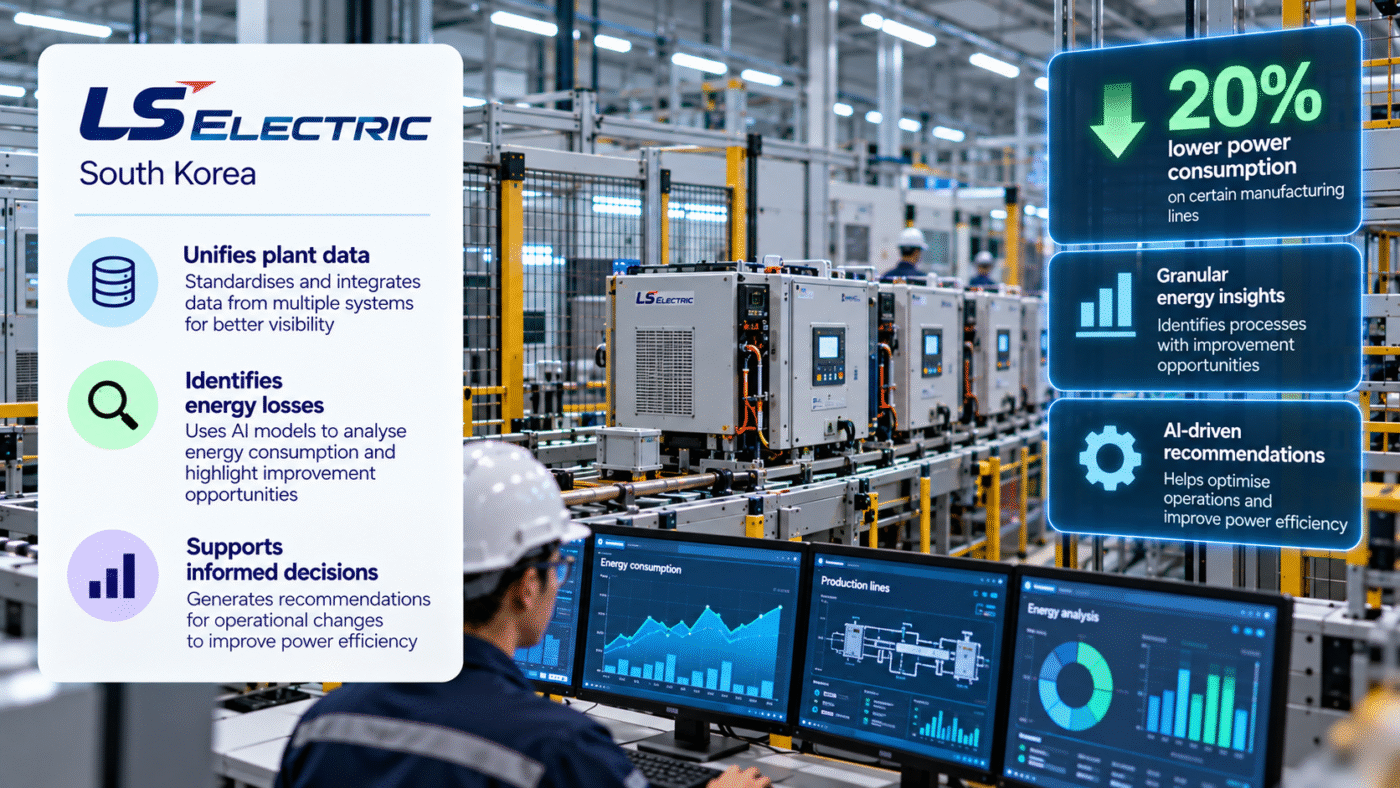
LS ELECTRIC, a South Korean electrical equipment and energy solutions manufacturer, partnered with Sight Machine and Microsoft to improve manufacturing efficiency through data analytics and AI-assisted decision-making.
The project focused on making previously fragmented plant data more useful for understanding electricity consumption across manufacturing lines. By standardising operational data and integrating information from different systems, the platform enabled the company to analyse energy use at a more granular level and identify processes with opportunities for improvement.
The system also uses energy-consumption models to identify potential energy losses and generate recommendations for operational changes. Factory personnel can use these insights to make more informed decisions about improving power efficiency.
According to Microsoft’s published customer case study, LS ELECTRIC achieved approximately 20% lower power consumption on certain manufacturing lines. The company has also outlined plans to extend the approach to additional facilities.
Why it matters for decarbonisation: Manufacturing plants can consume significant amounts of electricity across production equipment and supporting systems. AI-assisted energy analysis helps companies identify where electricity is being wasted and take targeted corrective action. Reducing electricity consumption can lower Scope 2 emissions, depending on the source of the electricity and the emissions factor applied.
d. Technology in Practice: SKF, France
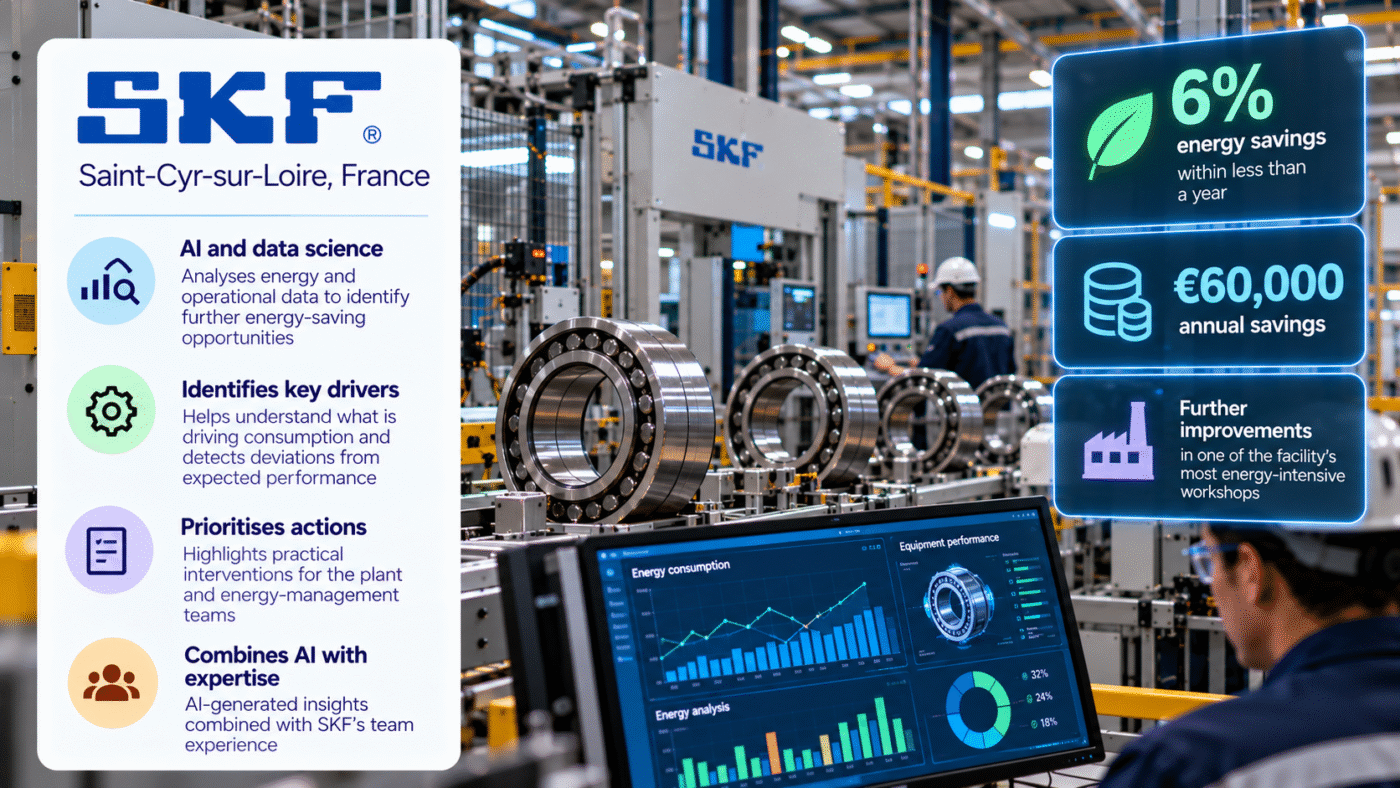
SKF, a global manufacturer of bearings and industrial components, partnered with Energiency to identify additional energy-saving opportunities at its Saint-Cyr-sur-Loire facility in France.
Before the project, SKF had already been working to improve the energy performance of one of its most energy-intensive workshops for several years. However, further improvements had become difficult to identify using its existing approach.
Energiency applied artificial intelligence and data-science techniques to analyse the facility’s energy and operational data. The platform helped the team understand the factors driving consumption, identify deviations from expected performance and prioritise practical interventions. The approach combined AI-generated insights with the experience of SKF’s plant and energy-management teams.
Within less than a year, the project delivered approximately 6% energy savings, equivalent to around €60,000 in annual savings, according to Energiency’s published case study.
Why it matters for decarbonisation: The SKF example demonstrates how AI can help manufacturing companies identify further efficiency improvements even after years of conventional energy-management efforts. By analysing operational data and translating the findings into targeted actions, manufacturers can reduce unnecessary electricity and energy consumption without relying exclusively on major equipment replacement. The resulting emissions reductions depend on the energy sources involved and should be measured separately.
Taken together, these examples show that industrial optimisation is not a single technology. It involves combining process knowledge, reliable data, predictive models and appropriate control systems around a clearly defined operational objective.
5. From Energy Savings to Measurable Carbon Reduction
One of the most important considerations when deploying AI for industrial energy optimisation is establishing a clear link between operational improvements and emissions reductions.
A reduction in energy consumption does not automatically translate into the same percentage reduction in carbon emissions. The outcome depends on the energy source, the production process and the emissions associated with that source.
For example, reducing electricity consumption in a plant supplied by a carbon-intensive grid can have a different emissions impact from achieving the same savings at a facility powered largely by renewable electricity. Similarly, reducing natural gas consumption in a furnace directly reduces combustion-related emissions, subject to the fuel’s emissions factor.
Companies should therefore track both energy performance and carbon performance.
Key metrics to track
-
Specific energy consumption: Energy consumed per unit of production, such as kWh per tonne of steel or GJ per tonne of cement.
-
Fuel consumption per unit of output: Useful for boilers, furnaces, kilns and other thermal processes.
-
Electricity consumption per unit of output: Relevant for compressors, chillers, motors and electrically intensive production lines.
-
Scope 1 emissions: Direct emissions from fuel combustion and other sources within the company’s operational boundary.
-
Scope 2 emissions: Indirect emissions associated with purchased electricity, steam, heating and cooling.
-
Production and quality indicators: Output volumes, rejection rates and product specifications to ensure that energy savings do not compromise manufacturing performance.
The most meaningful measure is often the reduction in energy consumption and emissions per unit of output, rather than the absolute reduction alone. This helps distinguish genuine efficiency improvements from changes caused simply by lower production volumes.
Where production volumes or product mixes vary, companies should establish an appropriate baseline and account for relevant operating conditions before attributing improvements to AI.
6. Implementing AI-Driven Energy Optimisation: A Practical Roadmap
For industrial organisations, the most effective approach is to begin with a defined operational problem rather than investing immediately in a plant-wide autonomous system.
A phased implementation allows companies to validate the technology, demonstrate measurable benefits and build confidence among plant teams before expanding to more complex applications.
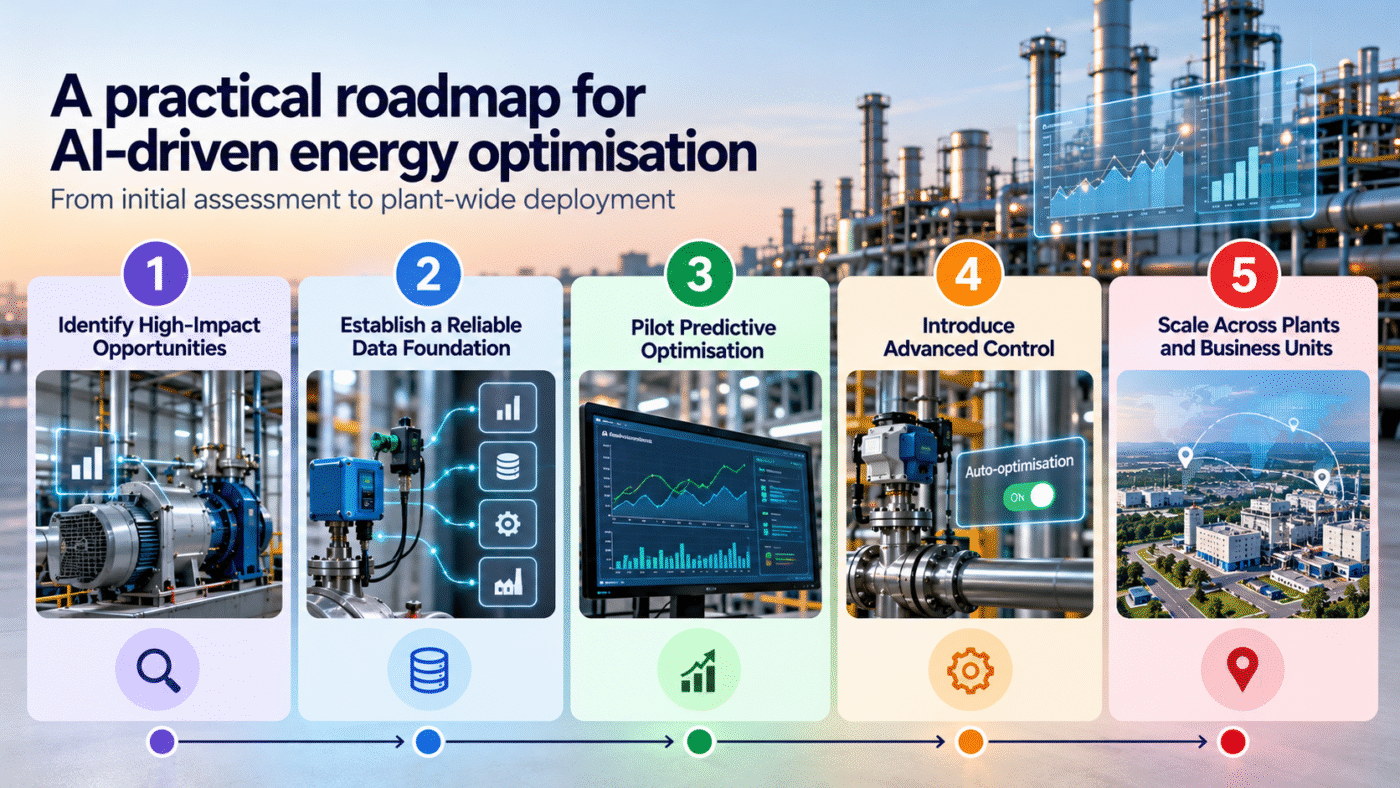
Phase 1: Identify High-Impact Opportunities
Start by identifying equipment and processes with high energy consumption, persistent inefficiencies or significant variation in performance.
Prioritisation should consider:
-
Annual energy consumption and associated emissions.
-
Variability in equipment performance.
-
Availability and quality of operational data.
-
Ease of integration with existing control systems.
-
Potential financial savings and implementation complexity.
Phase 2: Establish a Reliable Data Foundation
Integrate relevant information from energy meters, equipment sensors, production systems and existing automation platforms.
The objective is to create a consistent view of energy consumption alongside production output and operating conditions. Data gaps, inaccurate sensors and inconsistent measurement practices should be addressed before relying on AI-generated recommendations.
Phase 3: Pilot Predictive Optimisation
Select one application, such as boiler efficiency, compressed-air management or chiller optimisation.
Establish a baseline, define operating constraints and test whether AI recommendations can consistently improve performance. Initially, recommendations can be reviewed by operators before any changes are implemented.
Phase 4: Introduce Advanced Control
Once the results have been validated, selected applications can progress towards automated optimisation.
Automation should remain within approved limits for safety, product quality, equipment reliability and process stability. Operators must retain clear visibility of system decisions and the ability to intervene when necessary.
Phase 5: Scale Across Plants and Business Units
After demonstrating measurable benefits at one facility, the company can standardise successful practices and extend them to other plants.
However, models should not simply be copied across facilities without validation. Different equipment configurations, operating conditions, raw materials and production requirements may require local adaptation.
Suggested implementation roadmap
|
Stage |
Indicative timeline |
Primary objective |
|
Opportunity assessment and baseline |
0–2 months |
Identify priority systems and establish performance benchmarks |
|
Data integration and pilot design |
2–4 months |
Prepare reliable data and define the use case |
|
Pilot deployment and validation |
4–7 months |
Demonstrate measurable energy and operational benefits |
|
Controlled automation |
7–10 months |
Introduce automated adjustments where appropriate |
|
Replication and scaling |
10–18 months |
Extend validated solutions across additional assets or plants |
These timelines are illustrative planning ranges, not guaranteed project durations. Actual implementation depends on data readiness, system integration, safety approvals and the complexity of the production process.
7. Key Challenges and Considerations
Despite its potential, AI-driven energy optimisation is not a plug-and-play solution. Its success depends on the quality of implementation and the ability to translate analytical insights into operational improvements.
a. Data quality and integration: Inconsistent measurements and disconnected systems can limit the accuracy of predictions. Companies should first understand what data is available and whether it is suitable for the intended application.
b. Integration with existing equipment: Older industrial assets may require additional instrumentation or control-system upgrades. A successful project should account for these requirements instead of assuming that every machine is ready for advanced optimisation.
c. Workforce adoption: Operators need to understand how recommendations are generated, when they can be trusted and when intervention is necessary. Involving plant teams from the beginning can improve both adoption and model performance.
d. Cybersecurity and operational safety: Connected systems introduce additional considerations around network security, access controls and system reliability. Autonomous changes should be restricted to validated operating ranges, with appropriate safeguards and fallback procedures.
e. Measuring actual impact: Companies must verify that savings are sustained and not caused by changes in production volume, product mix or operating conditions. The energy used by the AI infrastructure should also be considered when assessing net benefits, particularly for computationally intensive applications.
These considerations reinforce an important principle: AI should strengthen industrial engineering and energy management, not replace them.
Conclusion: Making Industrial Decarbonisation More Intelligent
The next phase of industrial decarbonisation will depend not only on the energy sources companies use, but also on how effectively they manage the energy consumed in production.
AI-driven optimisation offers a practical way to address this challenge. By combining sensors, machine learning, digital twins and advanced process control, manufacturers can identify inefficiencies, anticipate changing energy requirements and improve the coordination of energy-intensive equipment.
For sectors such as steel, cement, chemicals, automotive and pharmaceuticals, the opportunity extends across both thermal processes and electricity-intensive utilities. Better boiler performance, more efficient compressors, optimised cooling systems and intelligent production scheduling can contribute to lower operating costs and reduced emissions.
However, the greatest value will come from treating AI as part of a broader decarbonisation programme. Energy optimisation should be integrated with renewable electricity, electrification, waste heat recovery, low-carbon fuels and improvements in production processes wherever these measures are relevant.
The starting point does not have to be a fully autonomous factory. It can be a single boiler, a compressed-air network or a furnace whose performance varies significantly across shifts.
The priority is to identify where energy is being wasted, use data to understand why it happens, implement the right intervention and verify the results.
The real opportunity is to move from knowing how much energy a factory consumes to continuously improving how intelligently it uses that energy. For manufacturers pursuing measurable decarbonisation, this shift can turn digitalisation into a practical operational advantage.