
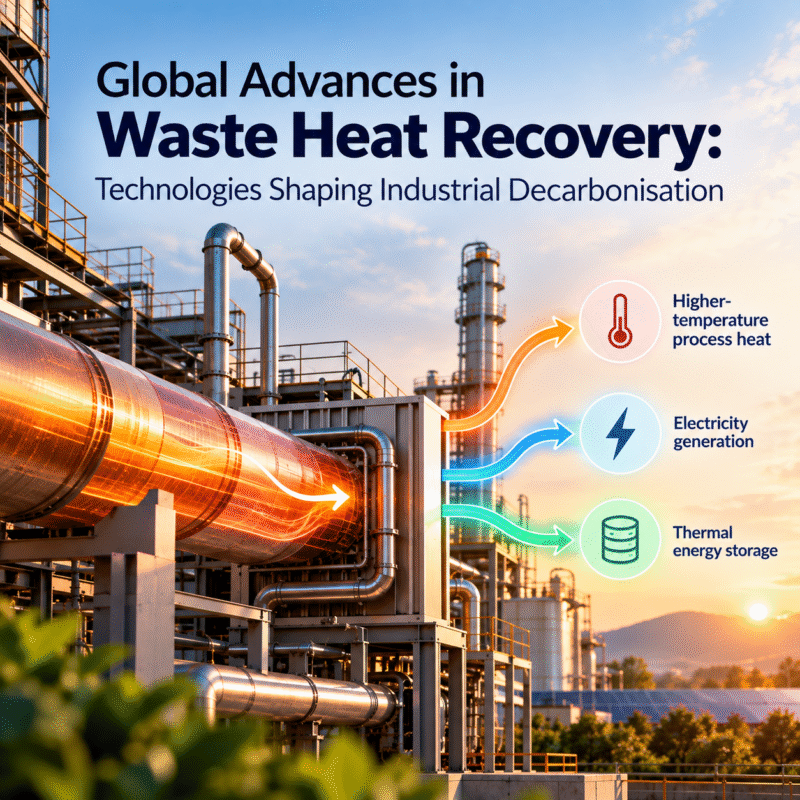
Waste heat recovery has traditionally been viewed as an energy-efficiency measure: capture heat that would otherwise be lost, reuse it elsewhere in the process, and reduce fuel consumption. That approach remains important, but the global technology landscape is evolving rapidly.
Across industrial markets, companies and technology developers are now addressing a more difficult challenge: how to make waste heat useful when it is available at the wrong temperature, at the wrong time, or in a form that conventional recovery systems cannot effectively utilise.
This development is particularly relevant to industrial decarbonisation. The opportunity is no longer limited to recovering heat that can be directly reused. New technologies are increasingly enabling manufacturers to upgrade lower-temperature heat, store it for later use, and convert high-temperature heat into electricity where direct utilisation is not practical.
The International Energy Agency identifies industrial heat pumps as an important pathway for industrial electrification and energy efficiency, while global demonstration programmes are increasingly exploring technologies that can upgrade waste heat to higher temperature levels.
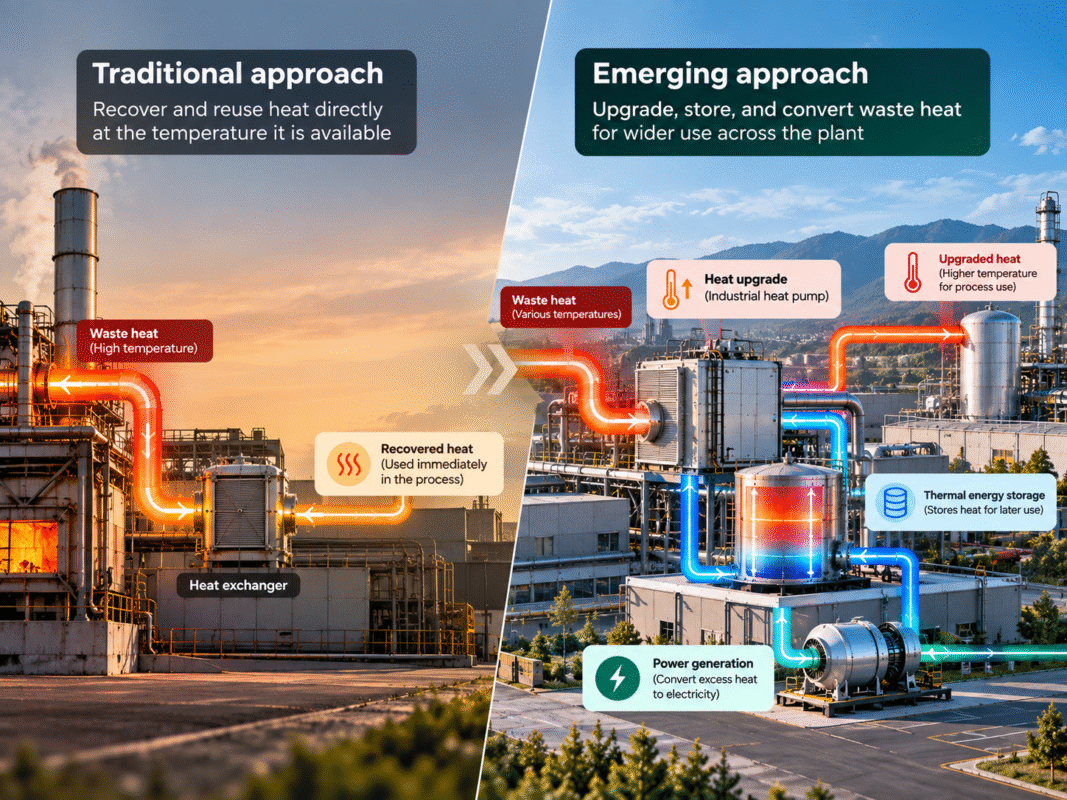
Recent developments point towards a broader evolution in waste heat recovery:
|
Traditional approach |
Emerging approach |
|
Recover heat at the temperature at which it is available |
Upgrade heat to a temperature at which it can be used |
|
Use recovered heat immediately |
Recover and store heat for use when required |
|
Focus on individual equipment |
Optimise thermal energy flows across the plant |
|
Generate electricity from excess heat wherever possible |
Prioritise direct displacement of fossil-fuel-based heat |
|
Treat WHR primarily as an efficiency project |
Integrate WHR into the wider industrial decarbonisation roadmap |
The maturity of these technologies varies considerably. Some are already operating in industrial environments, while others are still being demonstrated at pilot or early-commercial scale. What they have in common is that they are expanding the range of waste heat that can potentially contribute to industrial decarbonisation.
1. High-Temperature Heat Pumps: Making Low-Grade Waste Heat Usable
One of the most significant developments in industrial heat recovery is the evolution of high-temperature heat pumps (HTHPs).
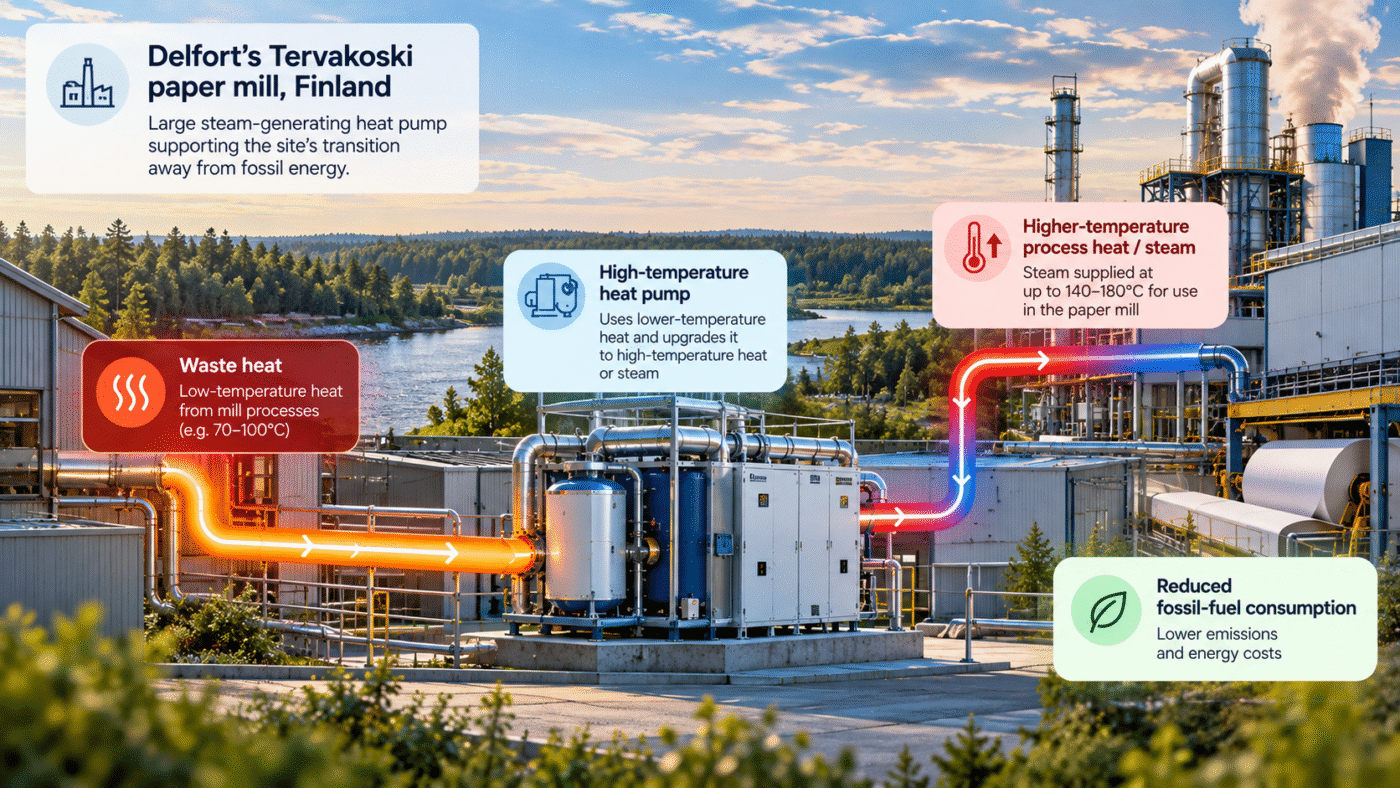
The fundamental challenge is straightforward. A manufacturing facility may reject substantial quantities of heat at 70–100°C, while its process may require heat at 140–180°C. A conventional heat exchanger cannot bridge that temperature difference. A heat pump can use the lower-temperature heat as its source and raise it to a level at which it becomes useful to the process.
The decarbonisation pathway is therefore:
Waste heat → Heat pump → Higher-temperature process heat → Reduced fossil-fuel consumption
This is particularly relevant to industries such as paper, food processing, chemicals, pharmaceuticals, textiles and building materials, where significant heat demand exists below the highest temperature ranges used in industry.
Technology in Practice: Wienerberger, Austria
Wienerberger’s Uttendorf brick plant in Austria provides an important example of high-temperature heat-pump technology being used in an industrial environment.
A high-temperature heat pump was first demonstrated at the site in 2019 for brick-drying applications, operating with heat-supply temperatures of up to 160°C. The technology subsequently formed part of the wider GreenBricks transformation of the plant.
The latest GreenBricks configuration combines heat pumps, heat recovery, electrification and thermal-network optimisation. The plant returned to production in 2024 and is now being used as a full-scale demonstration of lower-carbon brick manufacturing.
A second example is Delfort’s Tervakoski paper mill in Finland, where a large steam-generating heat pump has been commissioned as part of the site’s transition away from fossil energy. The heat pump forms part of the final stage of the site’s energy-supply decarbonisation programme.
These examples demonstrate the strategic value of high-temperature heat pumps: waste heat does not have to remain a low-value energy source simply because it is generated below the temperature required by the process.
2. Absorption Heat Transformers: Raising the Value of Medium-Temperature Waste Heat
Absorption Heat Transformers (AHTs) provide another way of addressing the temperature mismatch between waste heat and process requirements.
Rather than relying primarily on mechanical compression, an AHT uses a thermally driven absorption cycle to upgrade heat. This makes the technology particularly interesting for facilities where significant quantities of medium-temperature waste heat are available but higher-temperature heat or steam is required.
The concept can be particularly relevant to industries such as paper, chemicals, food processing and other steam-intensive manufacturing operations.
Technology in Practice: Cartiere di Guarcino, Italy
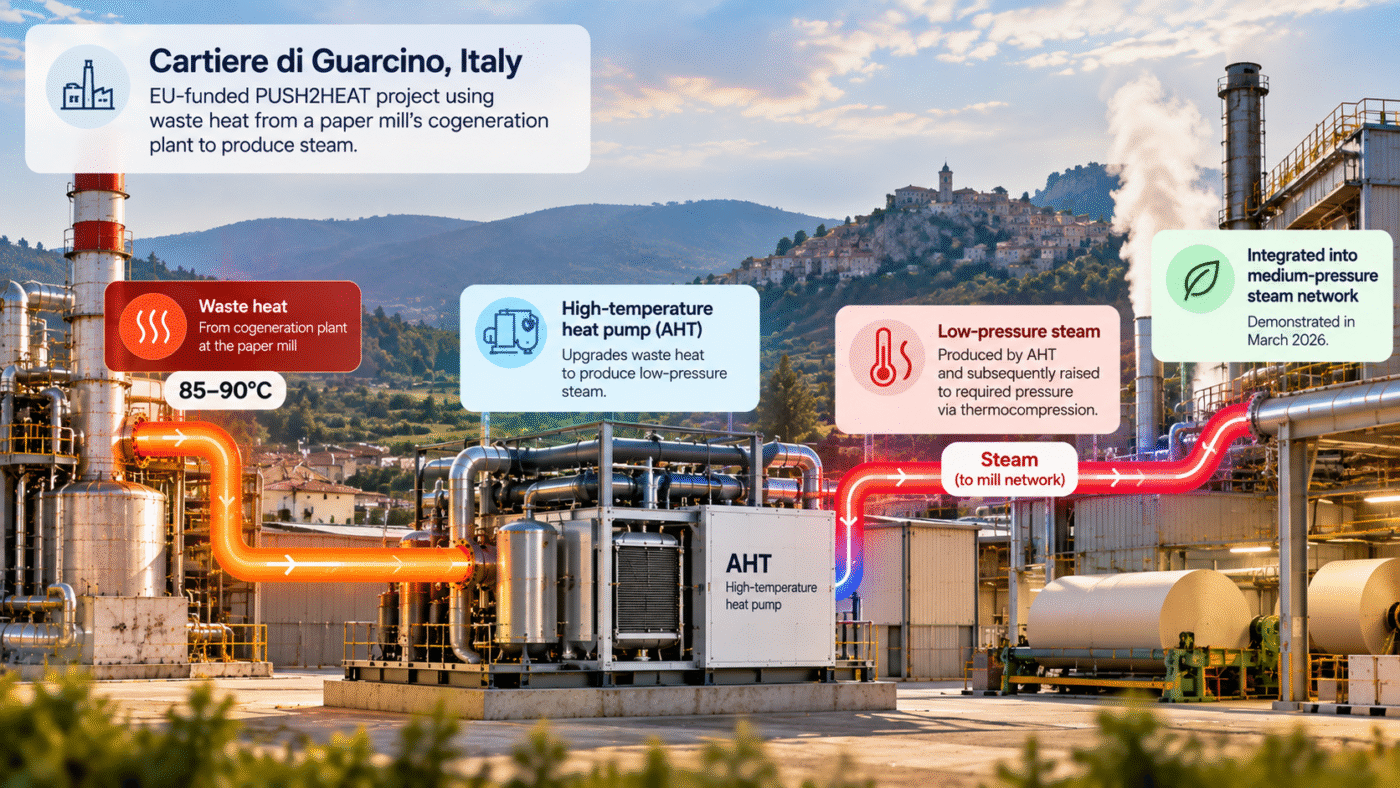
A notable industrial demonstration is taking place at Cartiere di Guarcino, a paper mill in Lazio, Italy, as part of the EU-funded PUSH2HEAT programme.
The system uses waste heat from the mill’s cogeneration plant at approximately 85–90°C and upgrades it to produce steam. The AHT is designed to deliver low-pressure steam, which is subsequently raised to the required pressure through a thermocompression stage.
The installation was completed in 2025, with commissioning beginning in September 2025. By March 2026, the project had demonstrated integration of the generated steam into the mill’s existing medium-pressure steam network.
This example is particularly relevant from a decarbonisation perspective because the technology is not simply recovering heat for another low-temperature application. It is upgrading waste heat into a form that can contribute directly to industrial steam demand.
3. Thermochemical Heat Transformers: Using Chemistry to Close the Temperature Gap
Thermochemical heat transformers represent a different approach to heat upgrading. Instead of relying on conventional mechanical compression, they use reversible chemical reactions to raise the temperature of waste heat.
The underlying objective is similar to that of a heat pump: take heat that is available at a lower temperature and make it useful at a higher temperature. However, the thermochemical route can potentially reduce the electricity requirement associated with mechanical heat upgrading.
This is particularly interesting for continuous industrial processes where large quantities of low- or medium-temperature waste heat are rejected.
Technology in Practice: Borealis, Antwerp, Belgium
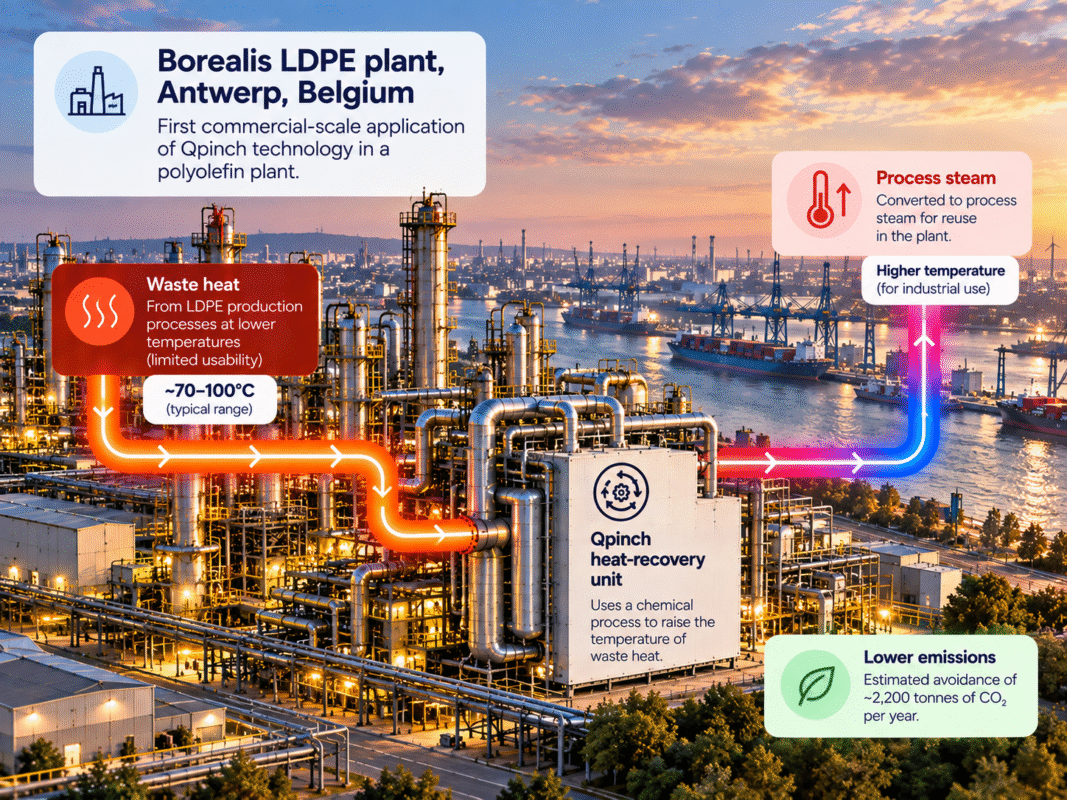
One of the most important real-world examples is the Borealis LDPE production site in Antwerp, where Qpinch technology has been installed at commercial scale.
Borealis announced the start-up of the Qpinch heat-recovery unit in 2021, describing it as the first commercial-scale application of the technology in a polyolefin plant. The unit uses a chemical process to raise the temperature of waste heat that would otherwise have limited usability. Borealis estimated that the Antwerp installation could avoid approximately 2,200 tonnes of CO₂ emissions per year.
Qpinch has subsequently applied its technology to other industrial heat-recovery applications, including distillation. In one Antwerp-based chemical application, waste heat from distillation-column overhead condensers is recovered and converted into process steam that can be used again within the process.
The importance of these applications lies in the temperature lift they provide. Instead of installing additional fossil-fuel-based heating capacity to meet a higher-temperature requirement, a plant can potentially use its own waste heat as part of the solution.
4. Hydration Heat Transformers: An Emerging Technology to Watch
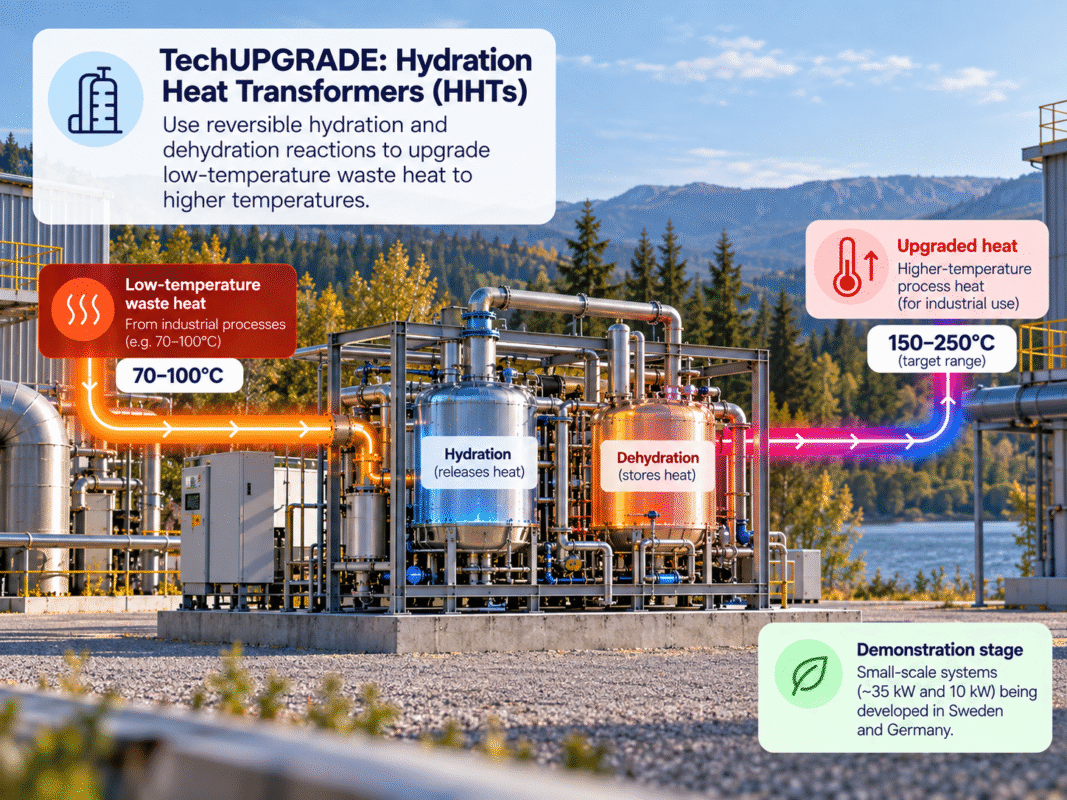
The next generation of thermochemical heat-upgrading technologies is exploring even more specialised approaches. Hydration Heat Transformers (HHTs) use reversible hydration and dehydration reactions to upgrade relatively low-temperature waste heat to higher temperatures.
Unlike some of the technologies discussed above, HHTs are not yet commercially established across industry. They remain primarily at the demonstration and development stage.
The European TechUPGRADE project is developing systems intended to upgrade waste heat into approximately the 150–250°C range, with demonstration activities in Sweden and Germany.
Demonstration in Practice: TechUPGRADE demonstrations in Sweden and Germany
The technology is currently being demonstrated through small-scale systems rather than large commercial installations. Demonstration units of approximately 35 kW and 10 kW are being developed to assess performance under relevant operating conditions.
This distinction is important. The technology should not yet be presented as a mainstream industrial WHR solution. Instead, it represents a potential next-generation route for addressing low-grade waste heat that conventional systems struggle to utilise.
For manufacturers, its significance is therefore strategic: if these systems can successfully scale while maintaining attractive economics, they could expand the range of industrial waste heat that can be upgraded into useful process heat.
5. Supercritical CO₂: A New Route for High-Temperature Waste Heat to Power
Not all waste heat can be economically reused as process heat. Some industrial processes generate high-temperature heat for which there is no suitable thermal demand nearby. In such cases, converting the heat into electricity can provide an alternative utilisation pathway.
One technology receiving increasing attention is the supercritical carbon dioxide (sCO₂) power cycle.
Instead of using steam as the working fluid, sCO₂ systems operate with carbon dioxide above its critical point. This can enable compact turbomachinery, high power density and favourable heat-transfer characteristics, making the technology particularly attractive for high-temperature applications.
Technology in Practice: Chaotan One, China
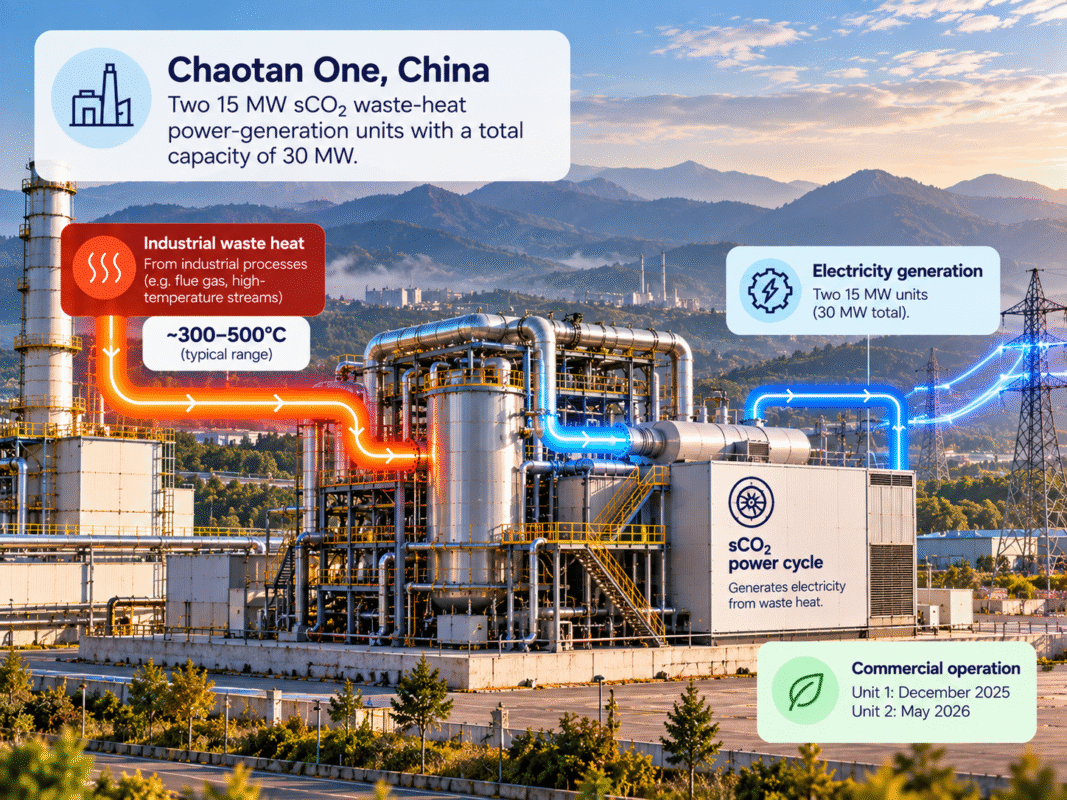
A significant milestone was reached in China with the Chaotan One project in Liupanshui, Guizhou.
The project consists of two 15 MW sCO₂ waste-heat power-generation units, giving the installation a total capacity of 30 MW. The first unit entered commercial operation in December 2025, while the second was connected to the grid in May 2026.
The project is significant because it demonstrates the movement of sCO₂ waste-heat technology from experimental development towards commercial-scale industrial deployment.
From a decarbonisation standpoint, however, the technology should be evaluated within the broader hierarchy of heat utilisation. Directly replacing fossil-fuel-based process heat can often provide a more direct emissions-reduction pathway than converting the same heat into electricity. Waste-heat-to-power becomes particularly relevant when direct thermal utilisation is technically difficult or there is no suitable heat sink.
6. Thermal Energy Storage: Solving the Timing Problem
Temperature is not the only barrier to effective waste heat recovery. The timing of heat generation and heat demand can be equally important.
A manufacturing process may produce substantial waste heat during one part of its operating cycle, while another process requires heat several hours later. Without storage, the plant may have little choice but to reject the heat.
Thermal energy storage changes this equation by allowing heat to be captured and released when it is needed.
Waste heat → Thermal storage → Heat available when required
Technology in Practice: Leonhard Kurz, Germany
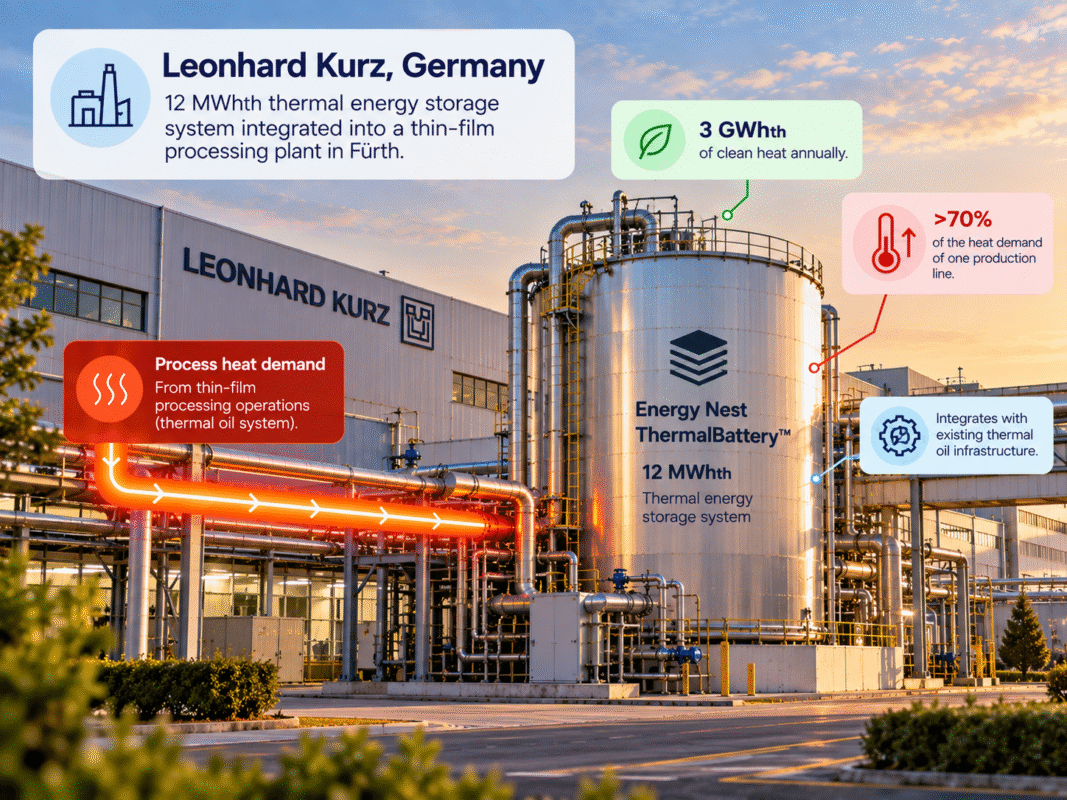
An interesting industrial example comes from Leonhard Kurz’s thin-film processing plant in Fürth, Germany.
Energy Nest commissioned a thermal energy storage system at the site in 2025. The system includes a 12 MWhth ThermalBattery™ integrated into the plant’s existing thermal-oil infrastructure. The installation delivers more than 3 GWhth of clean heat annually and is reported to cover more than 70% of the heat demand of one production line.
Another large industrial thermal-storage project is being developed for a food-processing facility in Europe, where Kraftblock is deploying two 35 MWh thermal-storage units.
These examples illustrate why storage is becoming increasingly relevant to industrial decarbonisation. It can help address the mismatch between when clean or recovered heat is available and when the manufacturing process actually needs it.
7. Advanced Heat Exchangers: Increasing the Potential for Heat Recovery
Innovation in waste heat recovery is not limited to new heat-pump or thermochemical cycles. The heat exchanger itself is also evolving.
Additive manufacturing is enabling the production of highly complex internal geometries that would be difficult to manufacture using conventional methods. These include microchannels, lattice structures and other high-surface-area configurations designed to increase heat transfer while managing pressure drop and equipment size.
This can be particularly valuable for industrial applications where conventional heat exchangers are constrained by:
-
Limited installation space
-
High temperature
-
Corrosive gases
-
High pressure
-
Poor heat-transfer characteristics
-
The need for compact equipment
Related Industrial Application: Conflux and AMCM, Germany
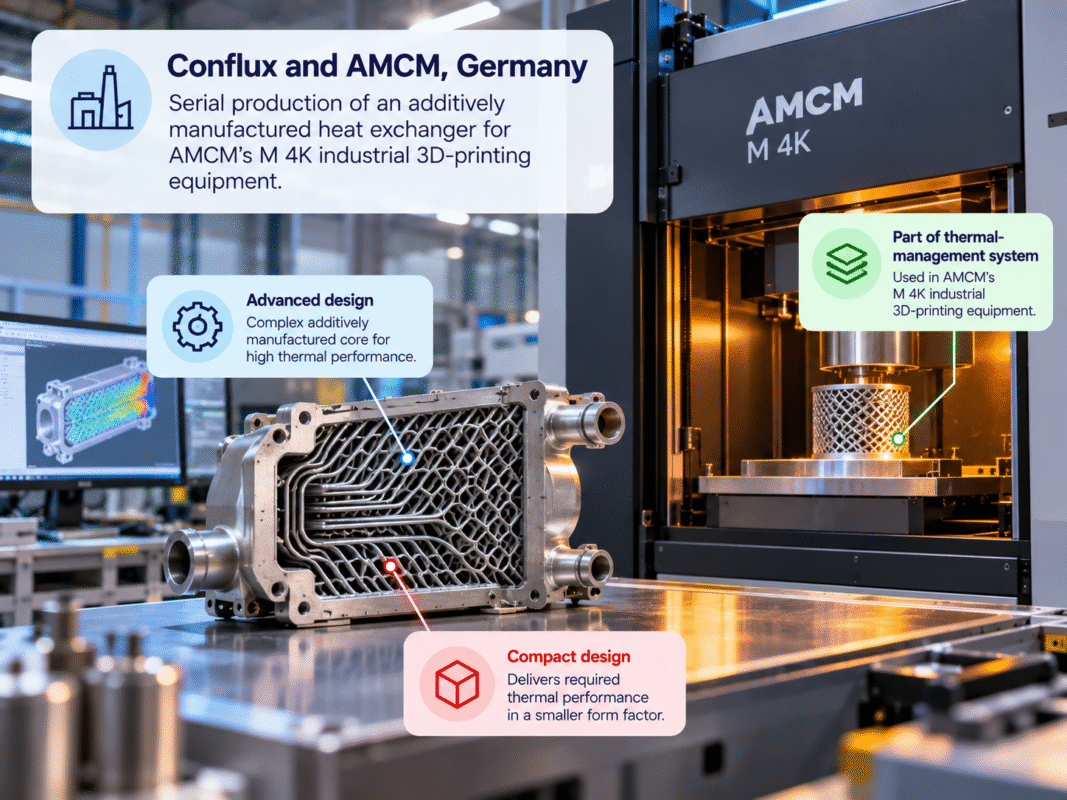
A commercial example comes from Conflux Technology and AMCM.
Conflux has entered serial production of a metal additively manufactured heat exchanger for AMCM’s M 4K industrial 3D-printing equipment. The heat exchanger forms part of the machine’s thermal-management system and uses a complex additively manufactured core to achieve the required thermal performance in a compact form.
This is not itself an industrial waste-heat-recovery installation, so it should not be presented as one. Its relevance to WHR lies in demonstrating that advanced heat-exchanger geometries are already commercially manufacturable, while high-temperature WHR applications are increasingly exploring similar approaches.
The technology therefore represents an enabling development that could make difficult waste-heat streams easier to recover in future industrial applications.
What These Global Developments Tell Us About Industrial Decarbonisation
The examples above point to a broader shift in how waste heat should be considered within industrial decarbonisation.
The first generation of waste heat recovery focused primarily on recovering heat that was already at a useful temperature. The emerging generation is increasingly concerned with making heat useful when it is not immediately suitable for the process.
|
Industrial challenge |
Technology response |
Potential decarbonisation benefit |
|
Waste heat is too cold |
High-temperature heat pumps |
Substitute fossil-fuel-based process heat |
|
Heat is available at the wrong temperature |
Absorption/thermochemical heat transformers |
Upgrade heat into steam or higher-temperature process heat |
|
Heat is generated at the wrong time |
Thermal energy storage |
Match heat supply with process demand |
|
High-temperature heat has no thermal application |
sCO₂ power cycles |
Generate electricity from otherwise unused heat |
|
Heat recovery is limited by equipment constraints |
Advanced heat exchangers |
Increase technically recoverable heat |
This changes the question that industries should be asking.
Historically, the question was:
- “How much waste heat can we recover?”
Increasingly, the more useful question is:
- “How much fossil-fuel-based heat demand can we eliminate by making the waste heat we already generate more usable?”
That distinction matters because the ultimate value of a WHR project should be measured not simply by the amount of heat recovered, but by the fossil fuel and associated emissions that the recovered heat can realistically displace.
What Should Industries Assess?
A decarbonisation-led WHR assessment should therefore look beyond the installation of individual recovery equipment.
1. Map the waste-heat sources
Identify the major sources of rejected heat across the facility, including furnaces, kilns, dryers, exhaust gases, cooling systems, compressors and other process equipment.
2. Characterise temperature and availability
The quantity of heat alone is not enough. The temperature, flow rate, operating hours and variability of the heat source determine its actual utilisation potential.
3. Map the plant’s heat demand
Identify where steam, hot water and process heat are being consumed, and determine whether any of these requirements can be supplied directly through recovered heat.
4. Identify temperature mismatches
Where direct reuse is not possible, evaluate whether heat pumps, absorption heat transformers or thermochemical systems could provide the necessary temperature lift.
5. Identify timing mismatches
Where heat supply and demand do not coincide, assess whether thermal energy storage could make the recovery opportunity viable.
6. Quantify actual emissions reduction
The final assessment should establish how much fossil fuel consumption can be avoided and what the corresponding Scope 1 emissions reduction would be.
7. Evaluate the technology against the wider decarbonisation roadmap
WHR should not be evaluated in isolation. It should be considered alongside electrification, renewable electricity, process optimisation, fuel switching and other measures that form part of the plant’s long-term decarbonisation pathway.
The Direction of Travel
The global examples emerging across the world show that waste heat recovery is moving beyond conventional heat exchangers and economisers.
High-temperature heat pumps are expanding the temperature range in which waste heat can be reused. Absorption and thermochemical heat transformers are providing new routes for upgrading medium- and low-temperature heat. Thermal energy storage is addressing the mismatch between heat generation and demand, while sCO₂ systems are opening new possibilities for high-temperature waste-heat-to-power applications. At the same time, advanced heat exchangers are expanding the physical possibilities for recovering difficult heat streams.
The technologies are at different stages of maturity, and not every solution will be appropriate for every manufacturing facility. However, their development points towards a common direction: industrial waste heat is increasingly being treated as a resource that can be upgraded, stored and integrated into the production system rather than simply rejected.
For companies developing decarbonisation strategies, this creates an important opportunity.
The objective should not simply be to recover more heat.
It should be to make more of the heat already generated within the plant useful, and in doing so, reduce the fossil fuel required to manufacture the product.
That is where the next generation of waste heat recovery can move beyond conventional energy efficiency and become a meaningful component of industrial decarbonisation.
This article reflects a review of publicly available global technology developments and industrial applications through 2025–2026. The technologies discussed vary significantly in maturity, and their technical feasibility, economics and emissions-reduction potential should be assessed against the specific process, operating profile, energy mix and site conditions of each manufacturing facility.