
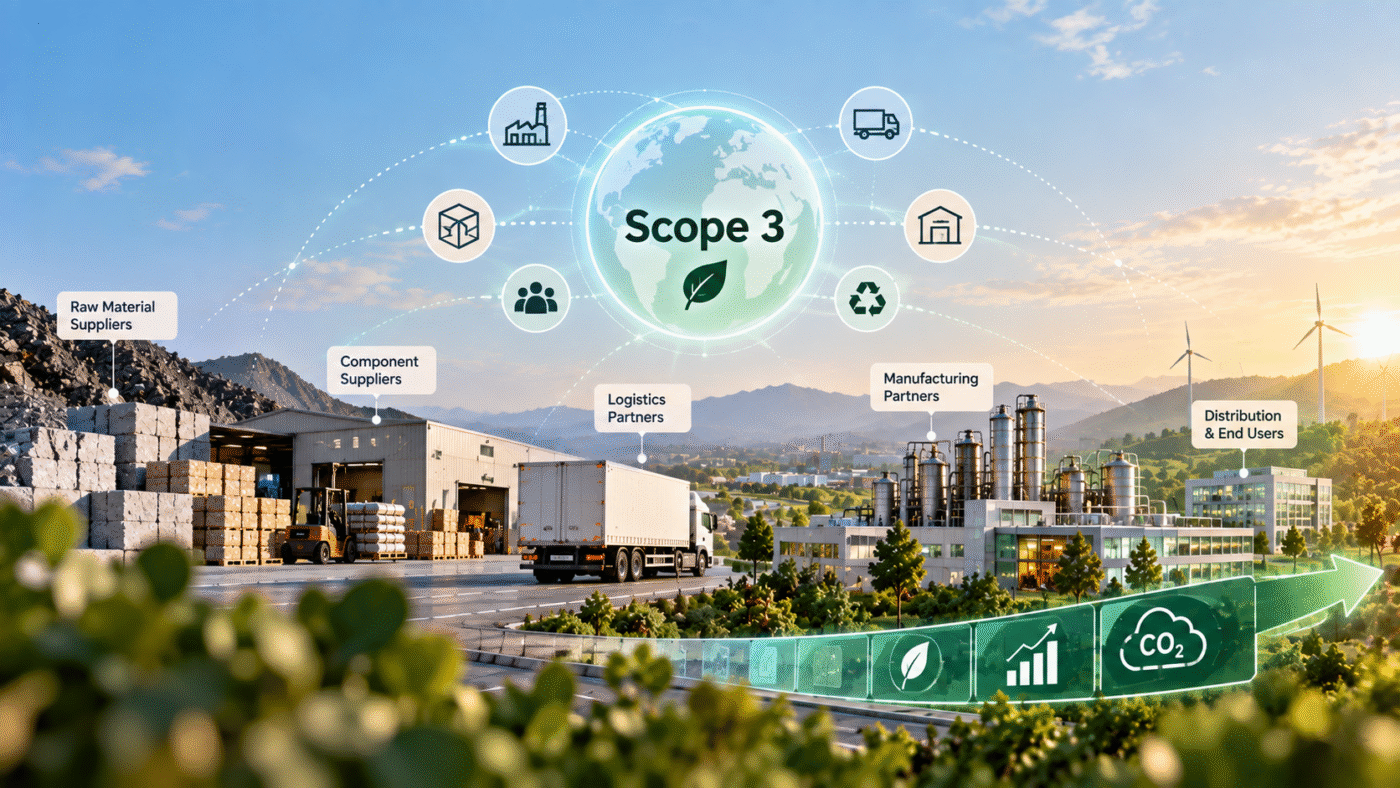
Scope 3 greenhouse gas (GHG) emissions—specifically Category 1 (Purchased Goods and Services) and Category 2 (Capital Goods)—frequently constitute between 70% and 90% of a manufacturing or enterprise organisation’s total carbon footprint.
While baseline accounting initially relies on spending-based secondary emission factors, achieving auditable, SBTi-aligned (Science Based Targets initiative) reduction targets demands primary, site-specific data from supply chain partners.
Attempting to collect granular, activity-based primary emissions data across an entire vendor base simultaneously creates severe operational bottlenecks. Resource constraints, varying levels of supplier climate maturity, and survey fatigue frequently lead to poor response rates and unreliable data.
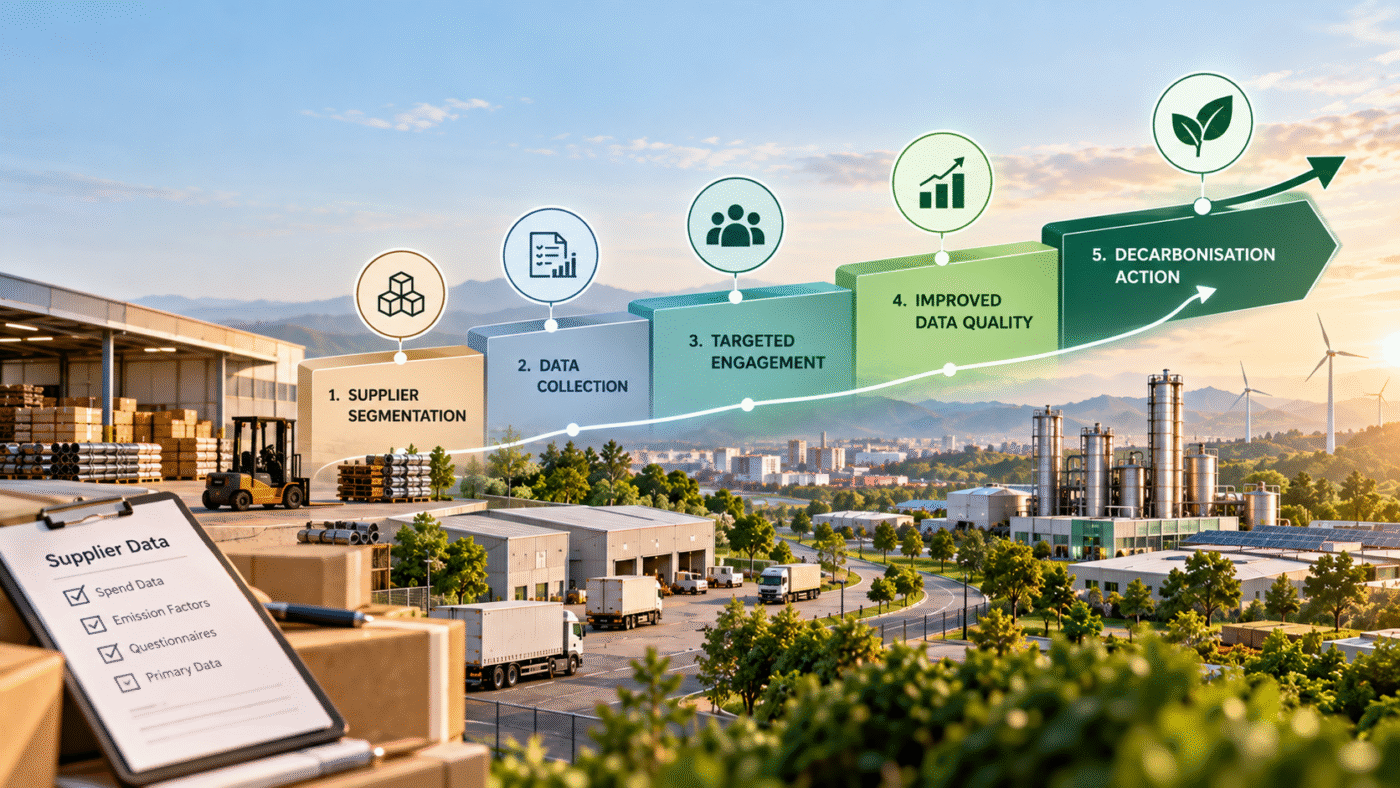
The Tiered Supplier Engagement Model provides a structured, strategic framework to segment, engage, and decarbonize supply chains. By categorizing suppliers based on spend volume, carbon intensity, and strategic importance, organizations can deploy targeted interventions—moving efficiently from basic data collection to co-developing decarbonization roadmaps.
Core Framework Architecture
The Tiered Supplier Engagement Model classifies a supply base into four distinct operational tiers. Each tier defines a specific engagement intent, primary data accounting methodology, primary KPI, and targeted intervention strategy.
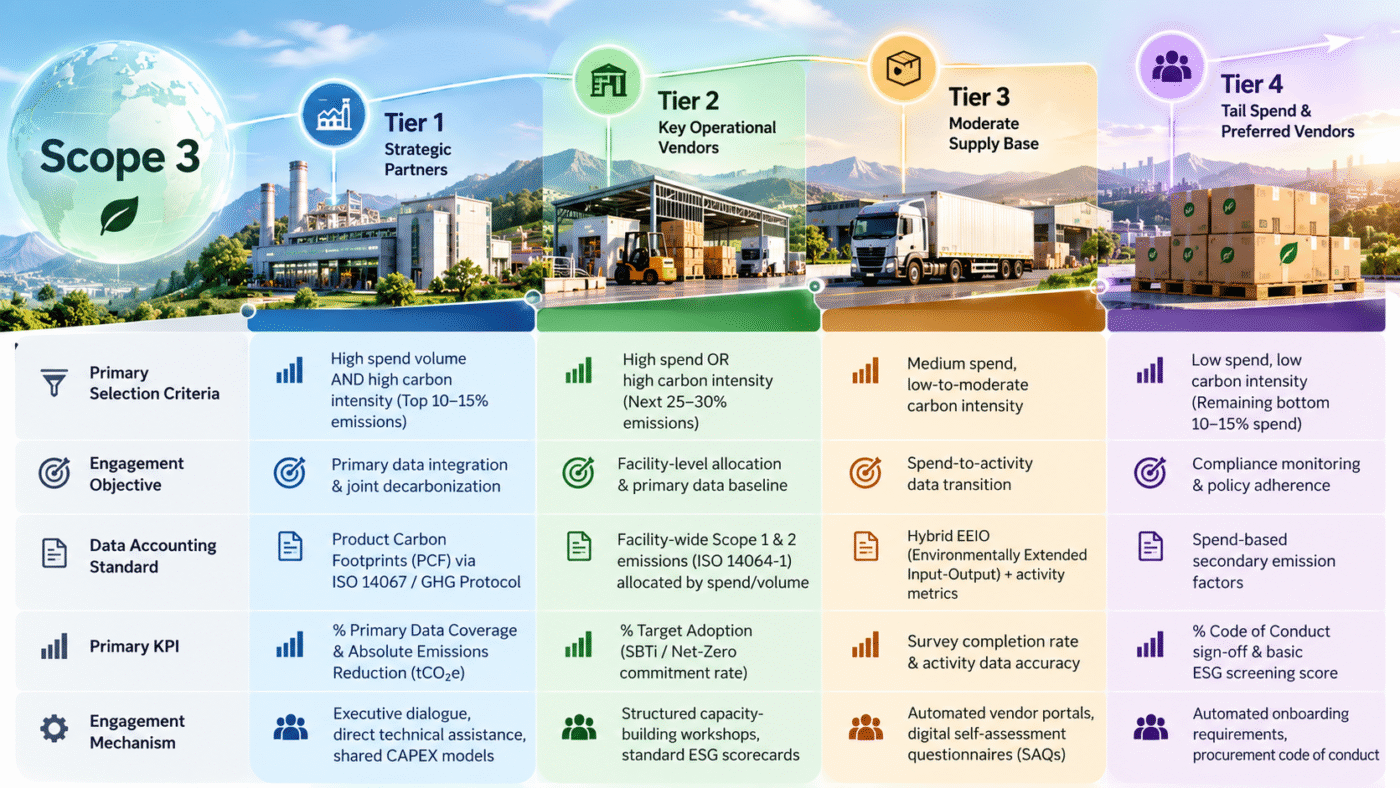
TIER-BY-TIER OPERATIONAL GUIDELINES
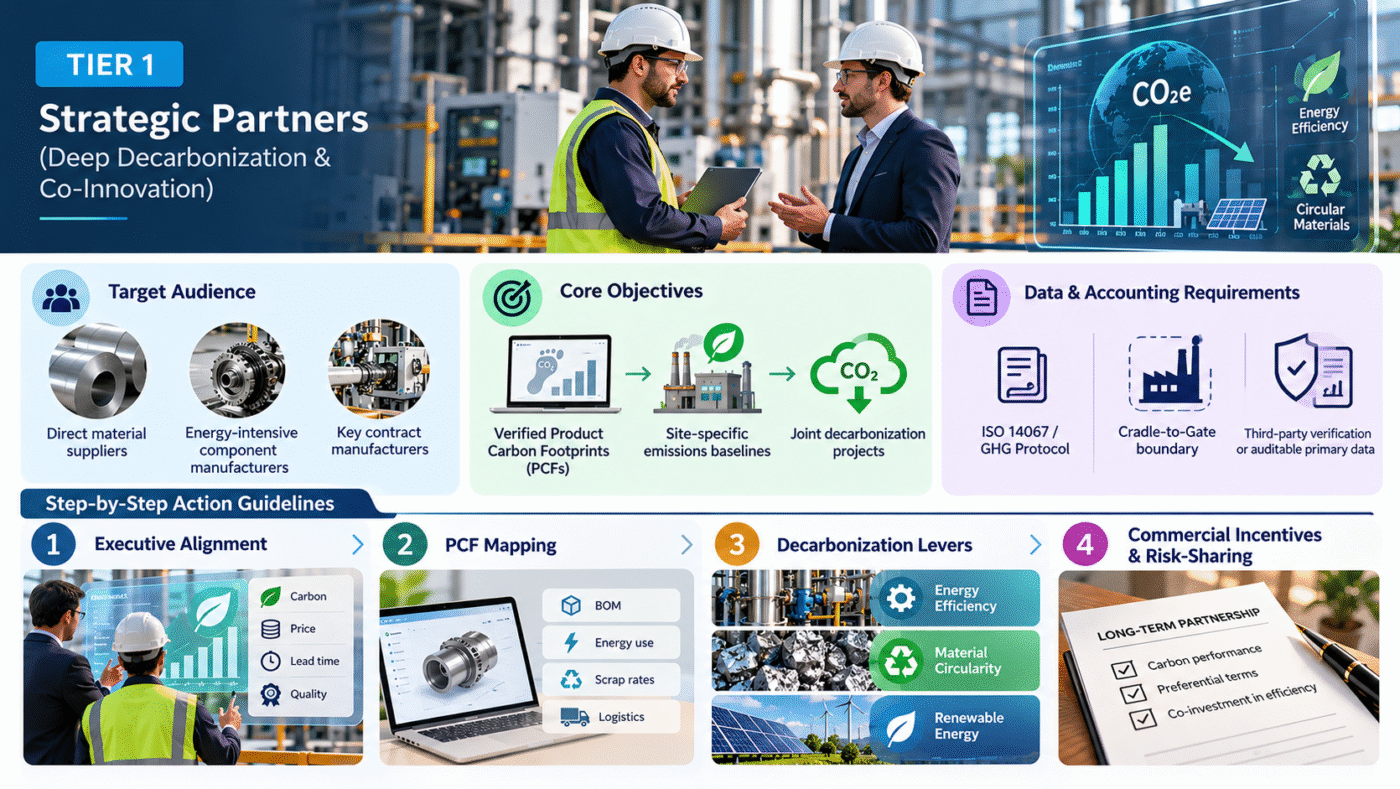
Tier 1: Strategic partners (Deep Decarbonization & Co-Innovation)
- Target Audience
Direct material suppliers, energy-intensive component manufacturers, and key contract manufacturers representing the core of supply chain carbon exposure.
- Core Objectives
-
-
Transition from secondary estimations to verified Product Carbon Footprints (PCFs).
-
Establish site-specific, activity-based carbon accounting baselines.
-
Define and execute joint decarbonization projects to reduce absolute Scope 3 emissions.
-
- Data & Accounting Requirements
-
-
Standard: ISO 14067 / GHG Protocol Product Life Cycle Accounting Standard.
-
Boundary: Cradle-to-Gate (raw material extraction through processing to final delivery).
-
Data Verification: Third-party verification or auditable primary energy/process data inputs (utility bills, fuel logs, mass balances).
-
- Step-by-Step Action Guidelines
-
-
Initiate Executive-Level Alignment:
-
Engage executive management and plant operations leads, positioning decarbonization as a core quality and commercial metric alongside price and lead time.
-
-
Conduct Product Carbon Footprint (PCF) Mapping:
-
Request process flow charts detailing bill of materials (BOM), energy consumption per unit, scrap rates, and logistics modes.
-
Provide standardized calculation templates or digital intake forms to isolate Scope 1 and Scope 2 process emissions at the manufacturing line level.
-
-
Identify Joint Decarbonization Levers:
-
Energy Efficiency: Perform energy audits to pinpoint thermal waste heat recovery opportunities, boiler efficiency improvements, and compressed air leakage.
-
Material Circularity: Evaluate opportunities for scrap remanufacturing, closed-loop tool recycling, or material substitution with low-carbon alternatives.
-
Renewable Energy Procurement: Support suppliers in securing On-site Solar Power Purchase Agreements (PPAs) or group off-site open-access renewable power.
-
-
Establish Commercial Incentives & Risk-Sharing:
-
Integrate carbon performance into long-term contract renewal terms.
-
Explore preferential payment terms or co-investing in CAPEX intensive efficiency upgrades for critical single-source suppliers.
-
-
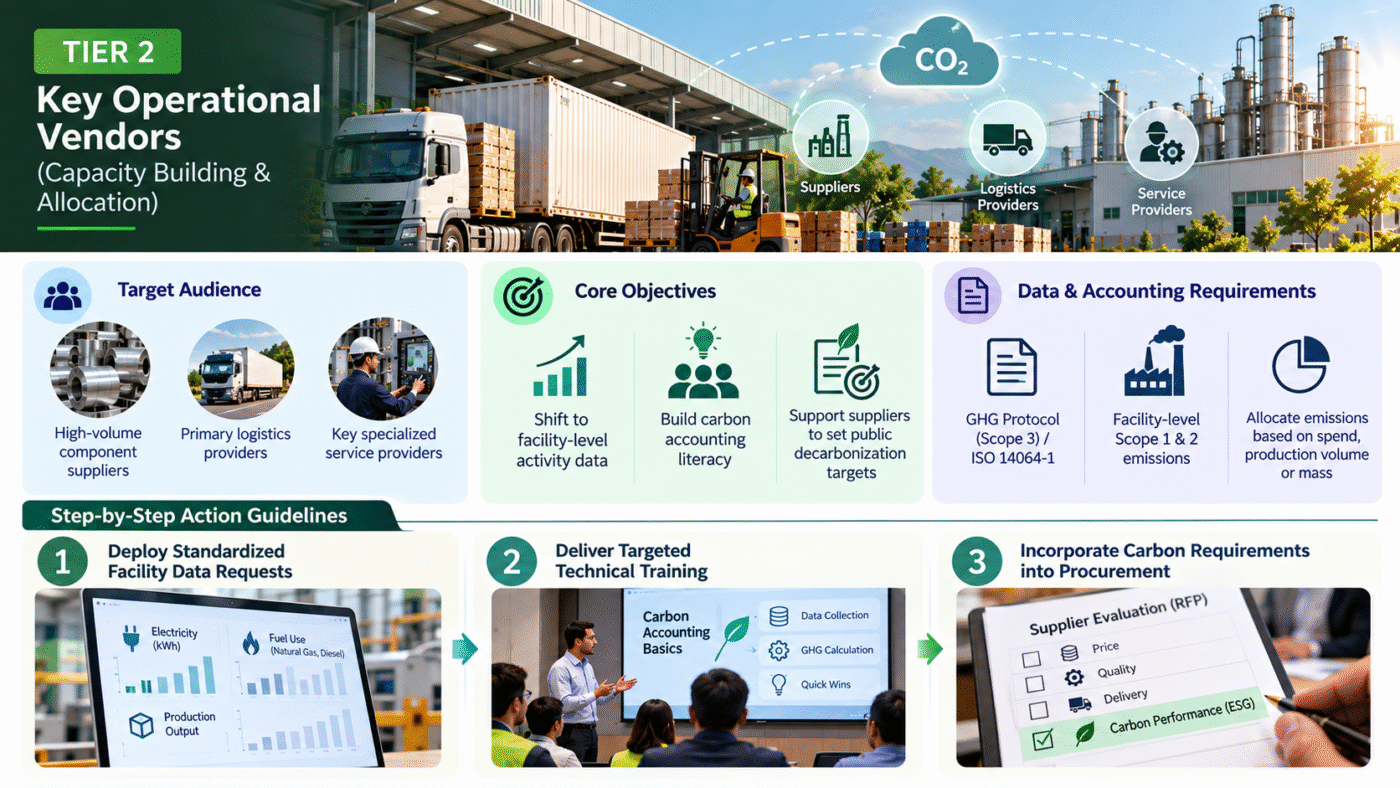
Tier 2: Key Operational Vendors (Capacity building & allocation)
- Target Audience
High-volume standard component suppliers, primary logistics providers, and key specialized service providers.
- Core Objectives
-
-
Shift from regional spend-based averages to allocated facility-level activity data.
-
Build internal carbon accounting literacy within vendor management teams.
-
Encourage suppliers to establish their own public decarbonization targets (e.g., SBTi commitments or national climate framework targets).
-
- Data & Accounting Requirements
-
-
Standard: GHG Protocol Corporate Value Chain (Scope 3) Standard / ISO 14064-1.
-
Boundary: Facility-level Scope 1 and Scope 2 emissions.
-
Allocation Method: Allocation of overall plant emissions based on spend, production volume, or mass assigned to your orders.
-
- Step-by-Step Action Guidelines
-
-
Deploy Standardized Facility Data Requests:
-
Collect annual site-level electricity consumption (kWh), stationary fuel use (natural gas, diesel, furnace oil), and process emissions.
-
Request total facility production output to compute an accurate allocation fraction.
-
-
Deliver Targeted Technical Training:
-
Host practical masterclasses focusing on basic carbon accounting principles, data collection methods, and GHG inventory calculation frameworks.
-
Share reference guides covering low-cost decarbonization quick wins, such as LED retrofits, motor efficiency upgrades, and power factor correction.
-
-
Incorporate Carbon Requirements into Procurement:
-
Introduce weighted ESG evaluation metrics into standard Request for Proposal (RFP) scorecards.
-
Require suppliers to complete annual carbon reporting as a core commercial compliance requirement.
-
-
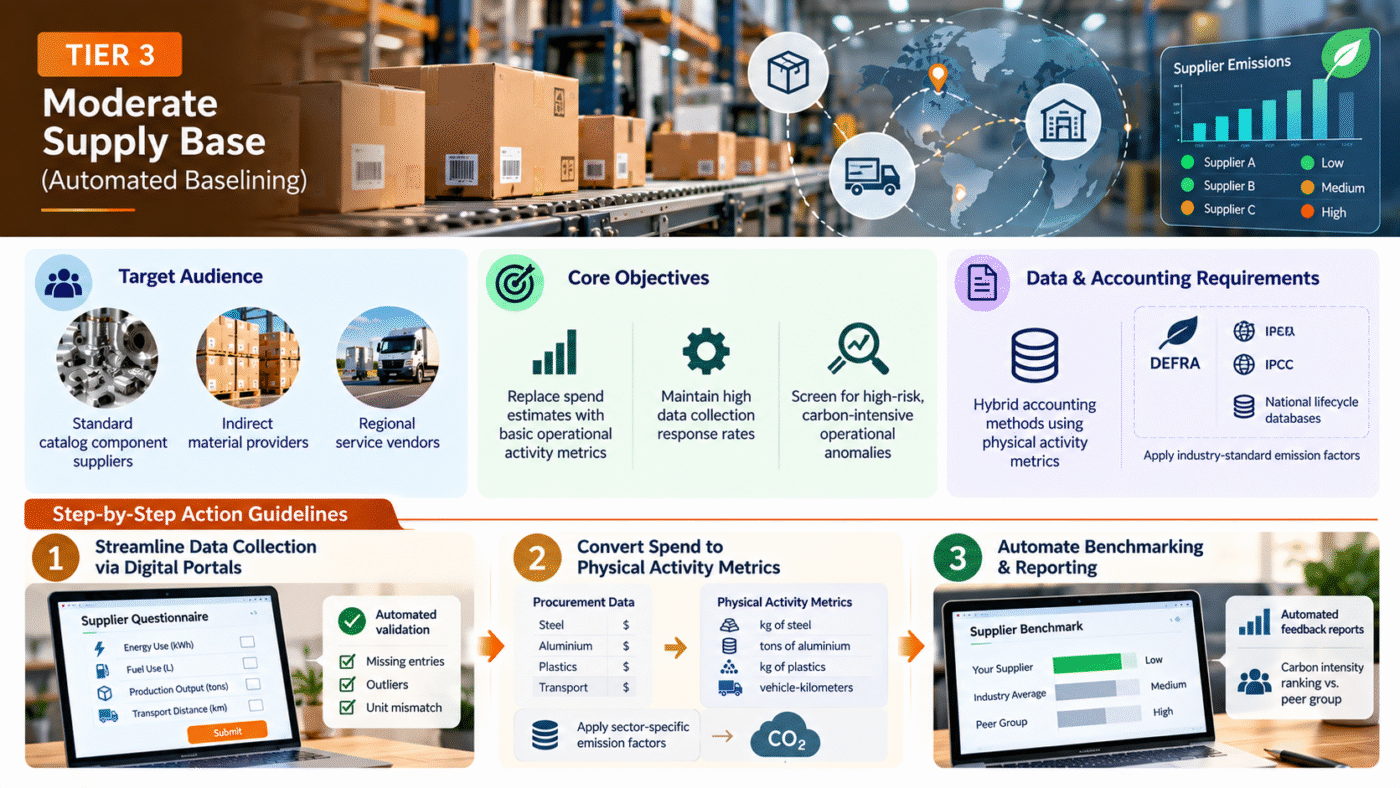
Tier 3: Moderate Supply Base (Automated Baselining)
-
Target Audience
Standard catalog component suppliers, indirect material providers, and regional service vendors.
-
Core Objectives
-
-
Replace rough spend estimates with basic operational activity metrics (e.g., weight, fuel volume, or distance traveled).
-
Maintain high data collection response rates while minimizing administrative friction.
-
Screen for high-risk, carbon-intensive operational anomalies.
-
-
Data & Accounting Requirements
-
-
Standard: Hybrid accounting methods utilizing physical activity metrics paired with industry-standard emission factors (e.g., DEFRA, IPCC, or national lifecycle databases).
-
-
Step-by-Step Action Guidelines
-
-
Streamline Data Collection via Digital Portals:
-
Utilize digital Self-Assessment Questionnaires (SAQs) that limit survey length to key operational metrics.
-
Automate data validation steps to flag missing entries, outliers, or unit mismatch errors immediately upon submission.
-
-
Convert Spend to Physical Activity Metrics:
-
Transition procurement data from monetary transaction values ($) to physical metrics (kilograms of steel, metric tons of aluminum, or vehicle-kilometers).
-
Apply sector-specific emission factors to improve baseline accuracy without burdening the vendor.
-
-
Automate Benchmarking & Reporting:
-
Benchmark supplier metrics against industry averages to identify outlier performance.
-
Issue automated feedback reports showing vendors their carbon intensity ranking relative to anonymized peer groups.
-
-
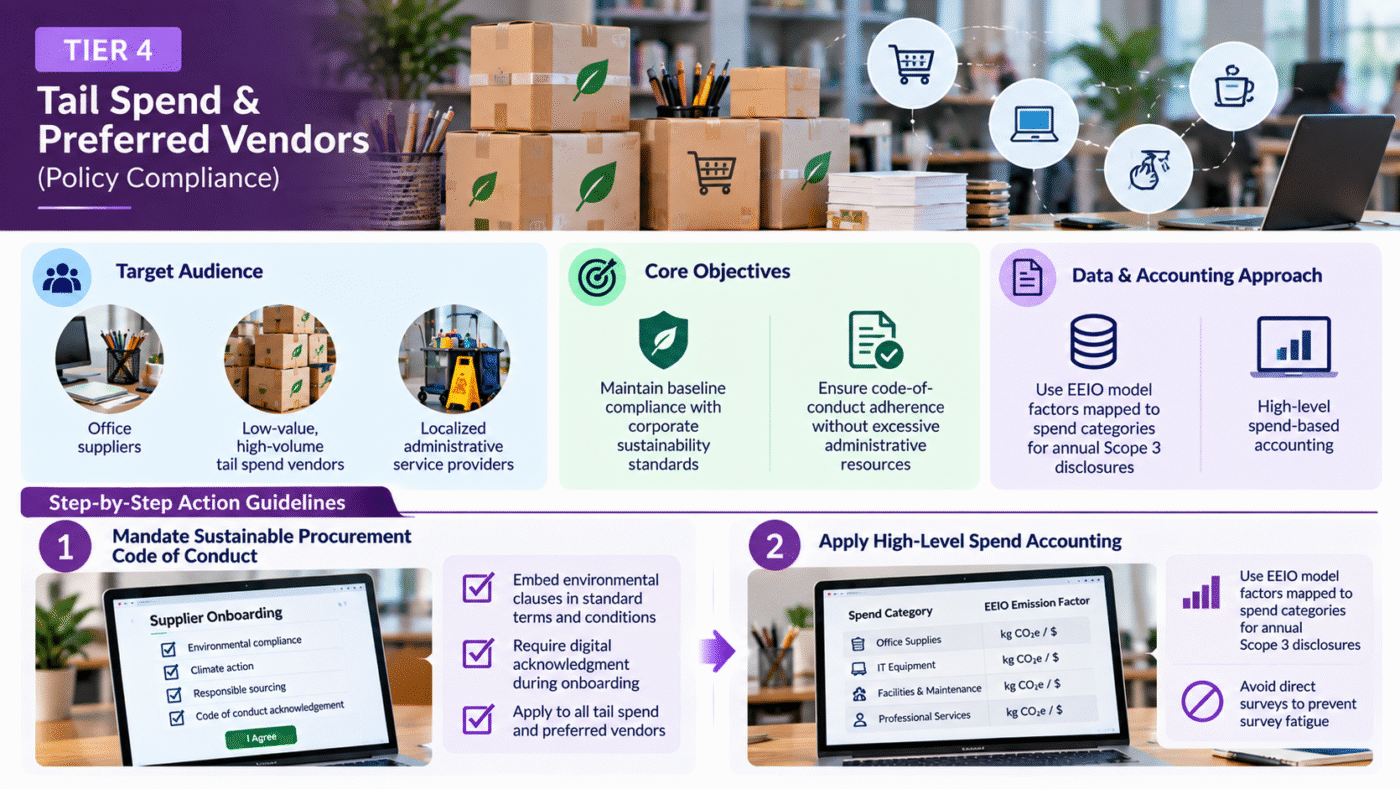
Tier 4: Tail Spend & Preferred Vendors (Policy Compliance)
-
Target Audience
Low-value, high-volume tail spend vendors, office suppliers, and localized administrative service providers.
-
Core Objectives
-
-
Maintain baseline compliance with corporate sustainability standards.
-
Ensure code-of-conduct adherence without allocating excessive administrative resources.
-
-
Step-by-Step Action Guidelines
-
-
Mandate Sustainable Procurement Code of Conduct:
-
Embed environmental and climate compliance clauses directly into standard terms and conditions.
-
Require explicit digital acknowledgment during vendor onboarding.
-
-
Apply High-Level Spend Accounting:
-
Use Environmentally Extended Input-Output (EEIO) model factors mapped to spend categories for annual Scope 3 disclosures.
-
Avoid direct survey requests to prevent survey fatigue across small-scale suppliers.
-
-
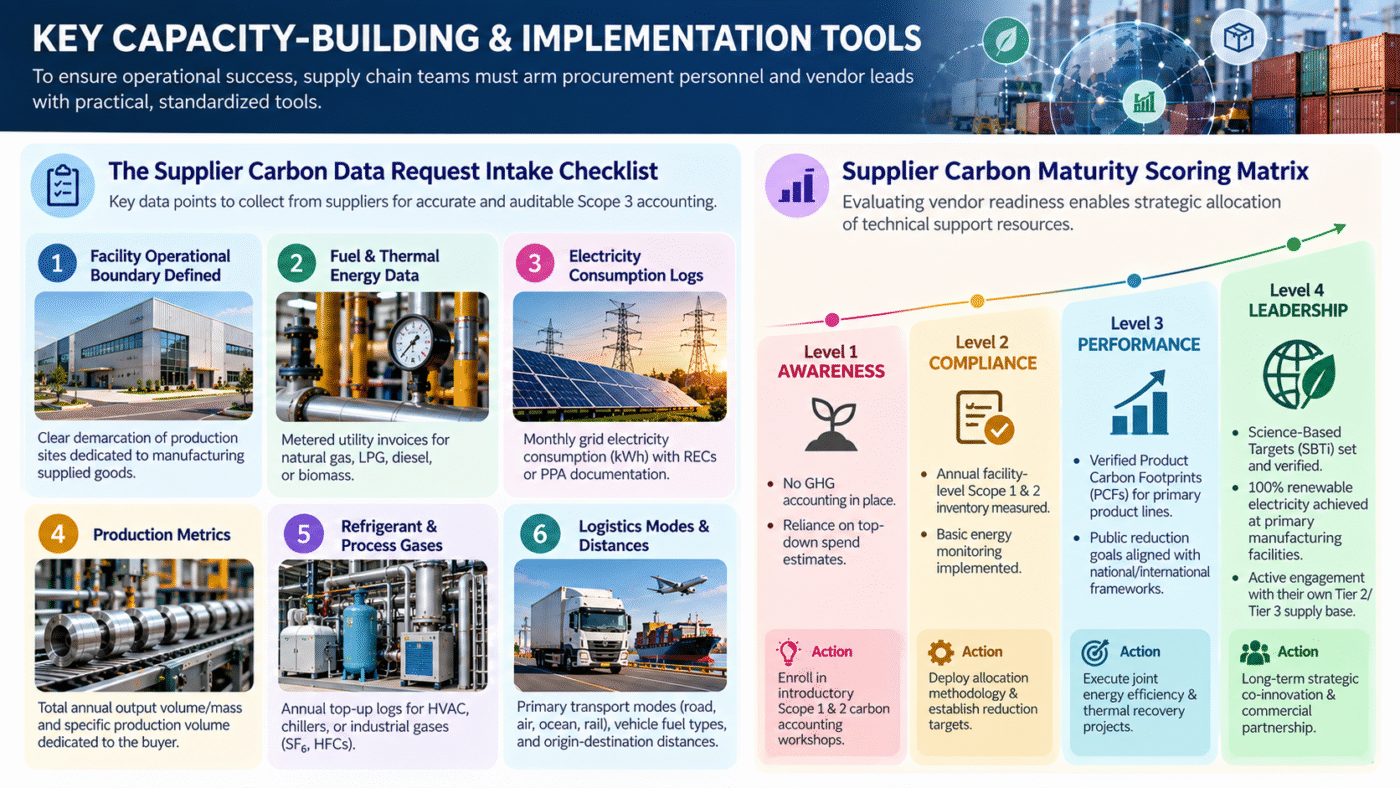
KEY CAPACITY-BUILDING & IMPLEMENTATION TOOLS
To ensure operational success, supply chain teams must arm procurement personnel and vendor leads with practical, standardized tools.
- The Supplier Carbon Data Request Intake Checklist
-
-
Facility Operational Boundary Defined: Clear demarcation of production sites dedicated to manufacturing supplied goods.
-
Fuel & Thermal Energy Data: Metered utility invoices for natural gas, liquefied petroleum gas (LPG), diesel, or biomass.
-
Electricity Consumption Logs: Monthly grid electricity consumption (kWh) paired with renewable energy certificates (RECs) or PPA documentation.
-
Production Metrics: Total annual output volume/mass and specific production volume dedicated to the buyer.
-
Refrigerant & Process Gases: Annual top-up logs for HVAC, chillers, or industrial gases (SF₆, HFCs).
-
Logistics Modes & Distances: Primary transport modes (road, air, ocean, rail), vehicle fuel types, and origin-destination distances.
-
-
Supplier Carbon Maturity Scoring Matrix
Evaluating vendor readiness enables strategic allocation of technical support resources.
- LEVEL 1: AWARENESS
-
- No GHG accounting in place.
- Reliance on top-down spend estimates.
- Action: Enroll in introductory Scope 1 & 2 carbon accounting workshops.
- LEVEL 2: COMPLIANCE
-
- Annual facility-level Scope 1 & 2 inventory measured.
- Basic energy monitoring implemented.
- Action: Deploy allocation methodology & establish reduction targets.
-
LEVEL 3: PERFORMANCE
-
- Verified Product Carbon Footprints (PCFs) for primary product lines.
- Public reduction goals aligned with national/international frameworks.
- Action: Execute joint energy efficiency & thermal recovery projects.
-
LEVEL 4: LEADERSHIP
-
- Science-Based Targets (SBTi) set and verified.
- 100% renewable electricity achieved at primary manufacturing facilities.
- Active engagement with their own Tier 2/Tier 3 supply base.
- Action: Long-term strategic co-innovation & commercial partnership.
STRATEGIC RISKS & GOVERNANCE PRINCIPLES
Establishing an auditable Scope 3 decarbonization model requires avoiding common implementation pitfalls:
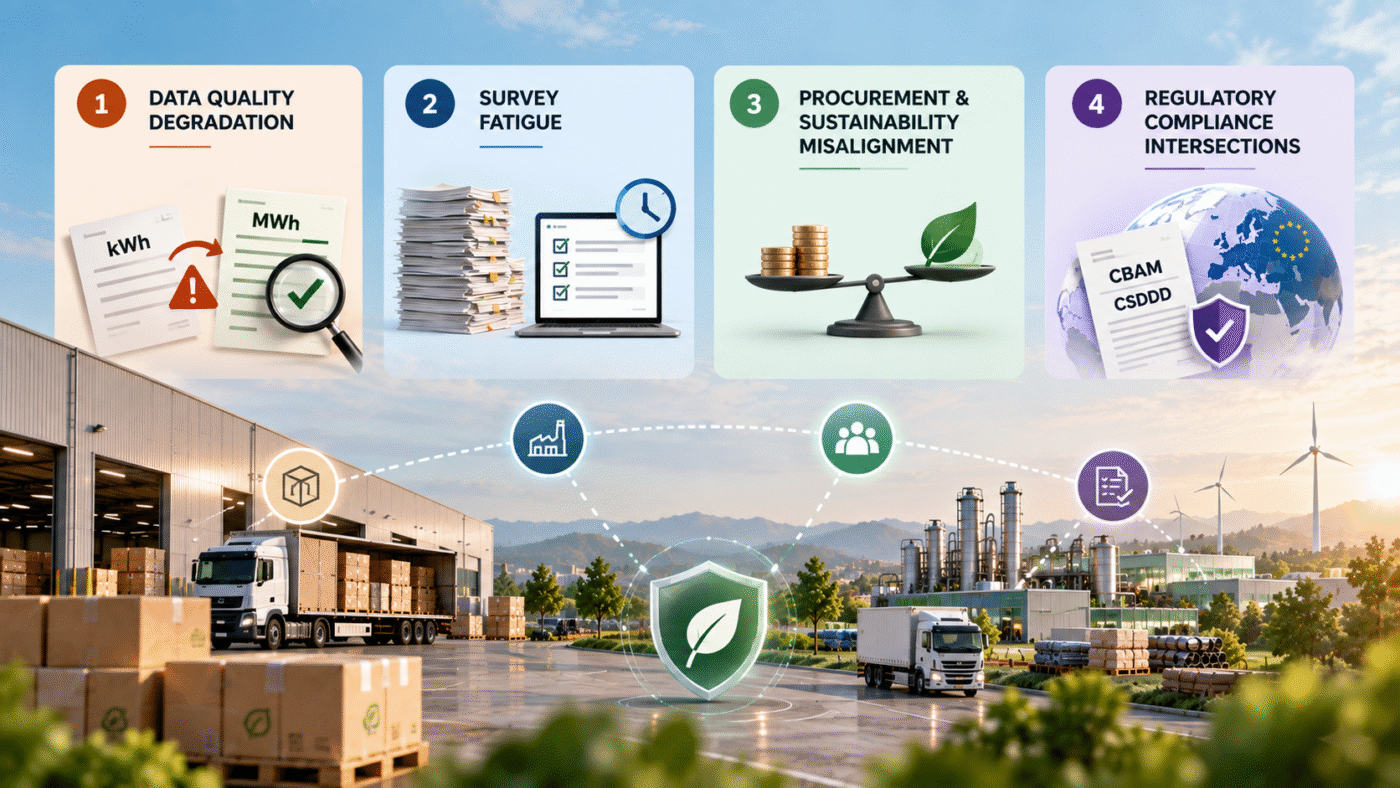
1. Guarding Against Data Quality Degradation
-
-
Issue: Unverified supplier self-reporting often introduces errors due to mismatched units (e.g., reporting kWh instead of MWh) or inaccurate allocation choices.
-
Mitigation: Implement automated threshold checks within data collection software. Require primary documentation (utility invoices, fuel logs) for Tier 1 suppliers.
-
2. Avoiding Survey Fatigue
-
-
Issue: Overwhelming vendors with lengthy, uncoordinated questionnaires leads to low response rates or inaccurate, rushed answers.
-
Mitigation: Harmonize data requests with widely accepted standards (e.g., CDP, EcoVadis, or Together for Sustainability). Ask only for data that directly feeds your primary calculation models.
-
3. Aligning Procurement & Sustainability Priorities
-
- Issue: Strategic misalignment occurs when sustainability teams demand carbon reductions while procurement teams evaluate vendors solely on lowest upfront purchase cost.
- Mitigation: Embed carbon performance criteria directly into standard vendor selection matrix models. Treat carbon intensity (tCO₂e per unit) as a core quality metric alongside price, delivery time, and defect rates.
4. Managing Regulatory Compliance Intersections
-
- Issue: Emerging global regulations—such as the European Union’s Carbon Border Adjustment Mechanism (CBAM) and Corporate Sustainability Due Diligence Directive (CSDDD)—demand strict primary data tracking and verifiable proof of carbon accounting methodologies.
- Mitigation: Align Tier 1 and Tier 2 primary data gathering protocols directly with ISO 14067 and GHG Protocol standards to ensure data
SUMMARY ARCHITECTURE FOR ENTERPRISE DEPLOYMENT
|
COHORT |
PRIMARY FOCUS |
DATA METHODOLOGY |
PRIMARY OUTCOME |
|
Tier 1 & Tier 2
|
Targeted Interventions & Technical Support |
Primary Data Integration (ISO 14067 / PCF) |
Joint Projects, Target Setting & CAPEX Co-Investment |
|
Tier 3 & Tier 4
|
Scaled Outreach & Automated Baselines |
Automated Portals & Spend-Based Secondary Averages |
Code of Conduct Signing & Basic Operational Baselines |
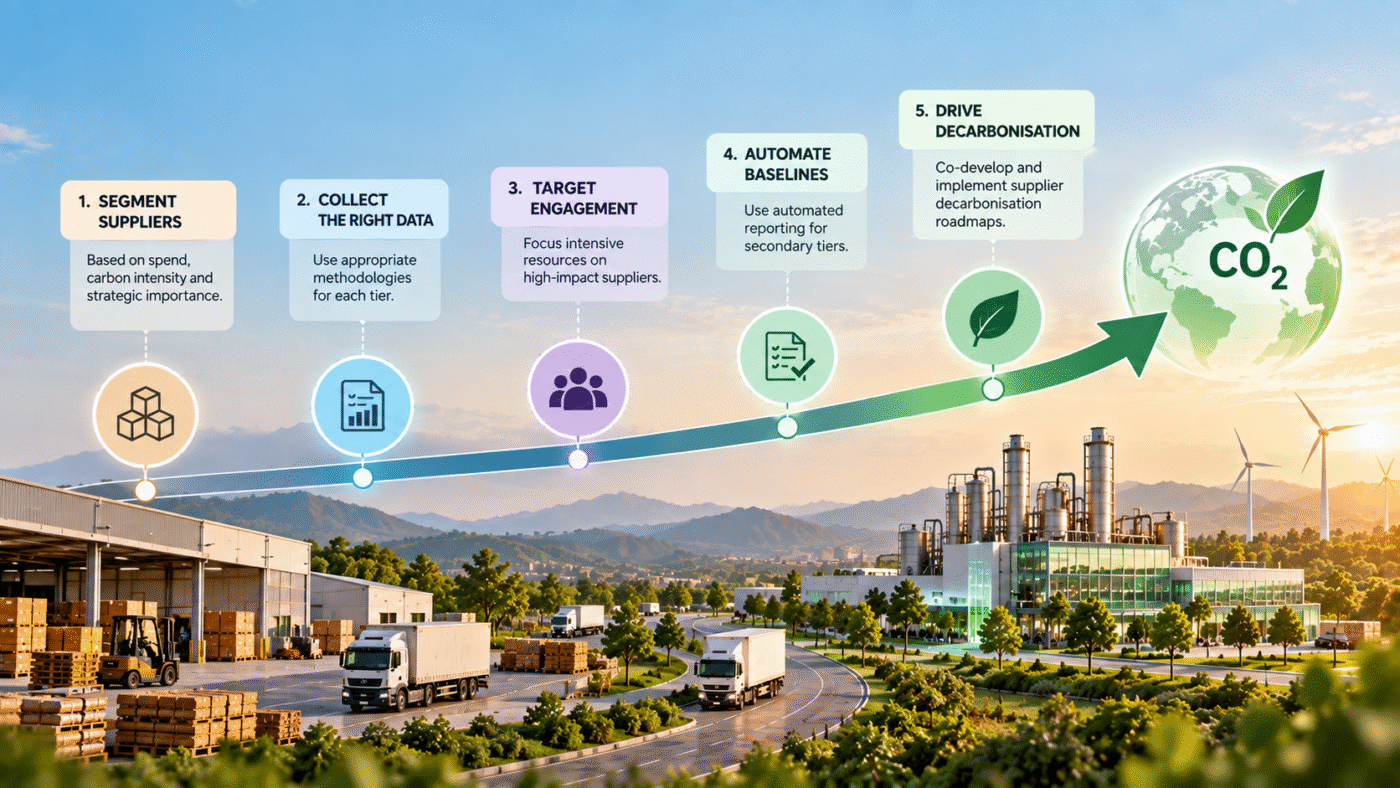
By transitioning from uniform data requests to a Tiered Supplier Engagement Model, enterprises can convert complex Scope 3 data collection into a structured, executable strategy. Focus intensive resources where carbon impact is highest, automate baseline reporting across secondary tiers, and build a resilient, low-carbon supply chain built for long-term commercial compliance.